




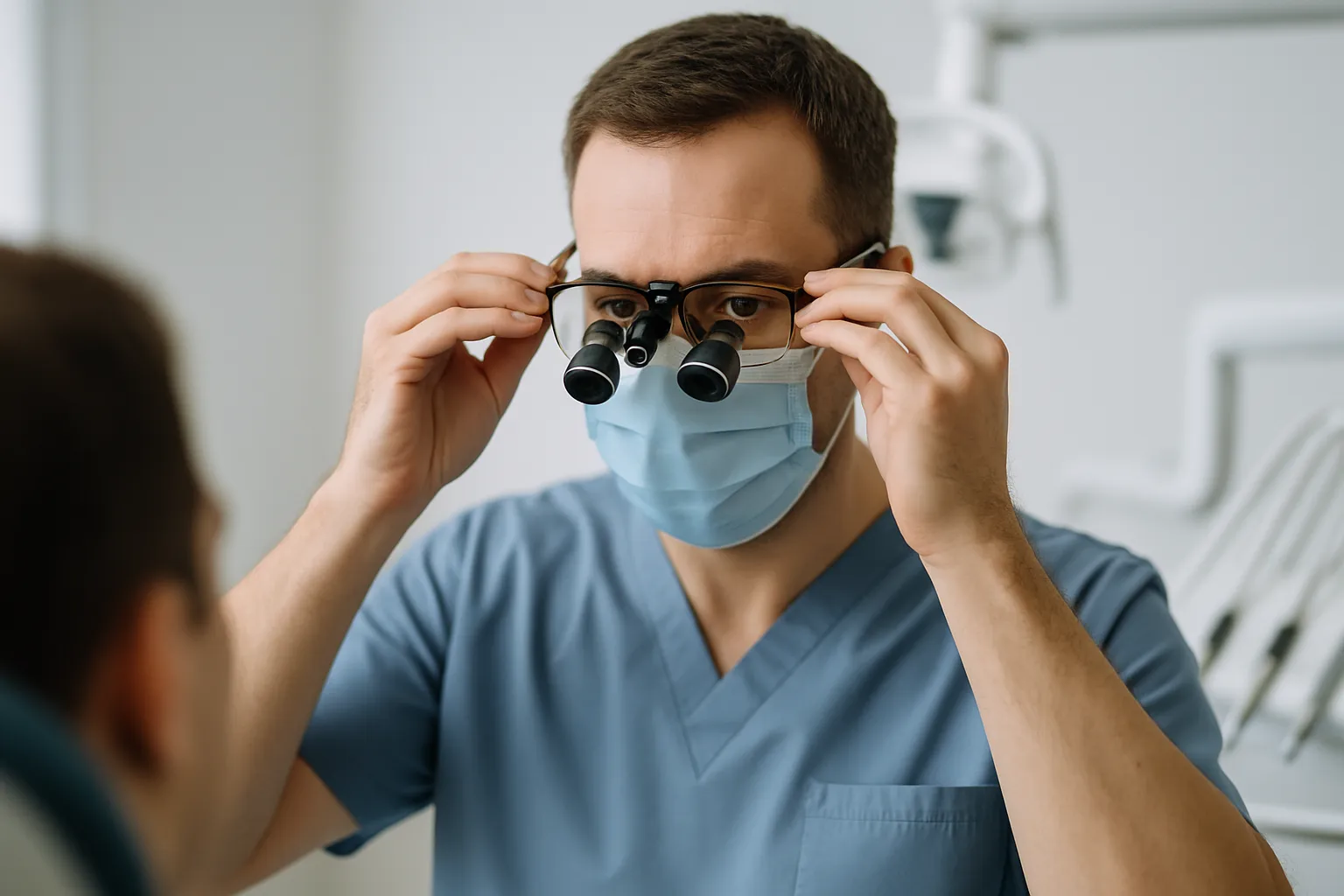
Selecting dental loupes that fit small or large faces requires careful attention to frame dimensions and customization options, as standard frames often fail to accommodate unique facial features. Poorly fitted loupes can lead to slippage, uncomfortable pressure points, increased fatigue, and compromised ergonomics, ultimately affecting clinical performance and practitioner well-being. Evidence suggests that ergonomic loupes and properly fitted frames may help reduce musculoskeletal strain and support healthier posture in dental practice, making the fit especially critical for dentists with facial dimensions at either end of the spectrum.1,2
Brands such as Lumadent, Surgitel, and Amtech offer a range of frame sizes and adjustable features, allowing for tailored solutions that enhance comfort and stability for both small and large faces. Their focus on user measurements and customization helps minimize common fitting issues and supports long-term practitioner comfort.
Understanding the Importance of Loupe Frame Fit
An ill-fitting dental loupe can contribute to significant ergonomic risks in daily clinical practice, including neck and back strain, poor posture, and increased fatigue. These issues often arise when loupes do not align properly with the user’s visual axis or fail to distribute weight evenly, leading to compensatory movements and musculoskeletal discomfort (see fitting guide). Evidence suggests that ergonomic loupes—designed with careful attention to fit and optical alignment—may help reduce the prevalence of musculoskeletal symptoms among dental professionals by promoting more natural posture and minimizing repetitive strain [S2, S5, S6]. Frame fit becomes especially critical for dentists with small or large faces, as standard frame sizes may not accommodate their unique anatomical needs, increasing the risk of slippage or pressure points and undermining ergonomic benefits [S1]. Properly fitted loupes, therefore, are essential for both comfort and long-term occupational health.
Key Measurements for Dental Loupe Fitting
Facial Dimensions That Matter
Proper dental loupe fitting relies on several core facial measurements. The interpupillary distance (IPD)—the space between the centers of the pupils—ensures that the optical barrels align with the user’s eyes, which is critical for clear vision and ergonomic posture. For small faces, IPD may be narrower, requiring precise adjustment; large faces often need a wider IPD setting. Temple width (the horizontal distance across the face at the temples), bridge width (the span across the nose where the frame rests), and nose pad adjustments are also essential. These dimensions affect overall comfort, stability, and the risk of slippage or pressure points. Manufacturers typically capture these measurements using specialized optical frames or digital tools to tailor loupes for individual users, accommodating both small and large facial structures for optimal fit and reduced musculoskeletal risk (S1, W4).
Frame Size Options: Small vs Large Faces
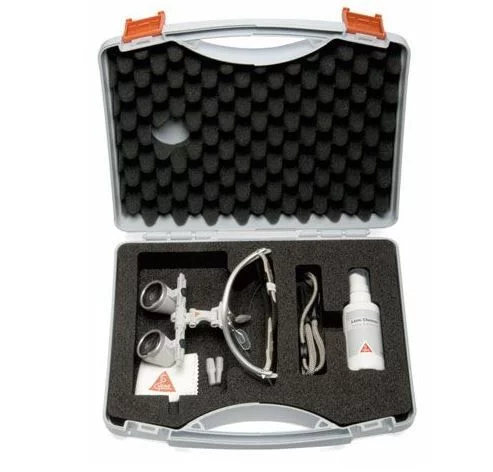
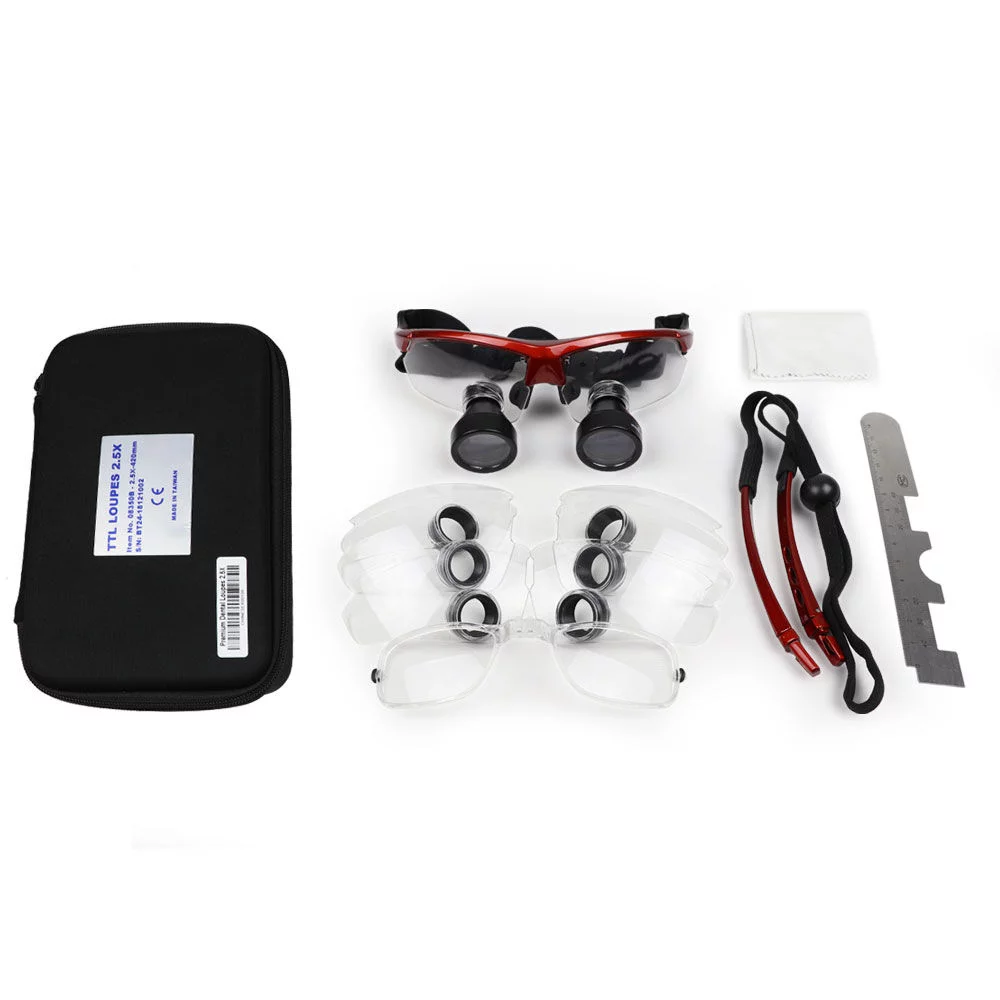
Dental loupe frames are typically available in several size categories—narrow, regular, and wide—to accommodate different facial dimensions. For small faces, narrow frames help prevent slippage and excessive pressure, while wide frames are designed for broader facial structures to ensure stability and comfort. Practical factors such as weight, flexibility, and adjustability are critical: lightweight frames like the Heine Dental Loupes S-Frame can reduce fatigue during long procedures, and flexible temples or adjustable nose pads allow for a more tailored fit. The Premium TTL Dental Loupes 2.5X (420mm Working Distance) offer independently adjustable PD controls and flexible coil temples, which can help fit both small and large faces. Some frame designs, such as those with wider bridges or enhanced adjustability, may better suit broader faces, while compact, lightweight frames are often preferred for narrower facial profiles.
| Frame Size | Best For | Key Features |
|---|---|---|
| Narrow | Small faces | Lightweight, compact, adjustable nose pads |
| Regular | Average faces | Standard width, moderate flexibility |
| Wide | Large faces | Wider bridge, longer temples, increased adjustability |
For a detailed comparison of frame types and features, see the Surgitel Loupe Frames guide.
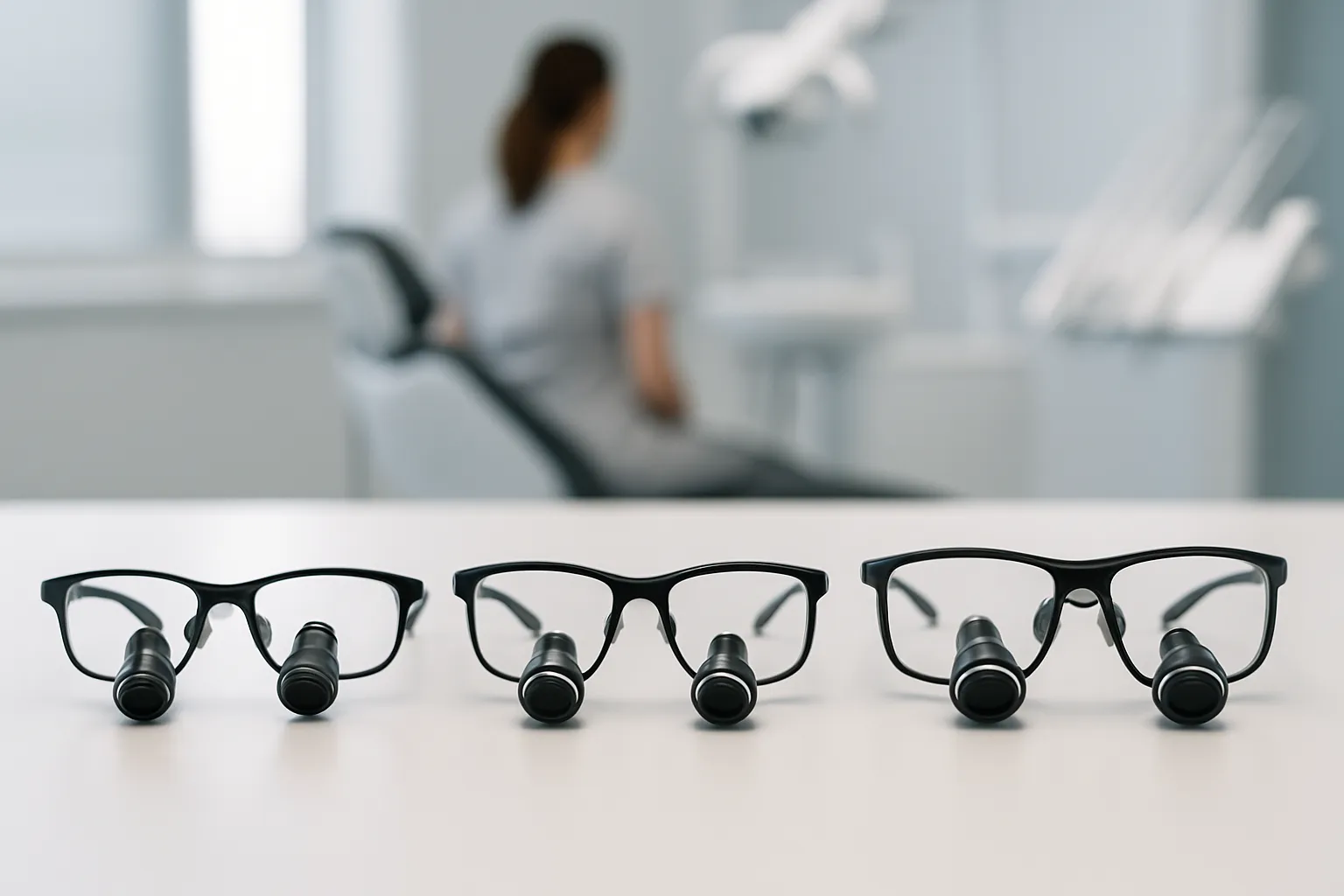
Customization and Adjustments for Comfort
Nose Pads, Temples, and Bridge
Adjustable features such as nose pads, temple arms, and the bridge play a central role in achieving a secure and comfortable fit for dental loupes, especially for practitioners with small or large faces. For example, adjustable nose pads allow the frame to rest evenly on the nasal bridge, minimizing pressure points and slippage. Flexible temple arms can be bent or extended to accommodate different head widths, ensuring the loupes remain stable during procedures. An adjustable bridge helps align the optics with the user’s interpupillary distance, which is crucial for clear vision and ergonomic posture.
Manufacturer guidance emphasizes the importance of customizing these features to reduce discomfort and enhance stability, recommending minor in-practice tweaks for optimal fit. For instance, after initial fitting, small adjustments to the Endoking Dental Loupes With Frame ( LED Headlight Free ) can be made by gently adjusting the nose pads and temple arms as needed. If persistent issues occur, consulting the manufacturer or a professional fitter is advised for further customization.
Brand Examples: Lumadent, Surgitel, and Amtech Loupe Frame Solutions
Major loupe brands such as Lumadent, Surgitel, and Amtech offer a range of frame sizes and customization features to accommodate both small and large facial dimensions. Lumadent and Surgitel provide high-precision loupes with adjustable frames designed to improve comfort and fit, including multiple frame size categories and customizable options for temple and bridge width (W6, W2). Surgitel, for example, emphasizes individualized fitting, capturing key user measurements such as interpupillary distance and facial width to ensure a secure fit for diverse face shapes (W2, W9). Amtech loupes are also available in various frame sizes, with manufacturer guidance supporting frame selection based on facial measurements and adjustment preferences (product id:3). Dentists are encouraged to use these measurement-based approaches and consult brand-specific fitting guides to optimize loupe comfort and stability for their facial profile.
Practical Fitting Steps for UAE Dentists: A Checklist
Achieving a precise loupe fit begins with a systematic trial process. Start by measuring interpupillary distance (IPD), temple width, and bridge width—key parameters for both small and large faces. At the clinic or during purchase, follow a stepwise fitting: 1) Position the loupes and confirm the nose pads rest comfortably without pinching; 2) Adjust temple arms to ensure the frame sits securely behind the ears; 3) Check for slippage by gently tilting the head; 4) Assess the field of view and clarity. A well-fitted loupe should provide stable positioning, minimal pressure points, and unobstructed vision for all facial dimensions.
- No slippage or excessive movement during use
- Even weight distribution and absence of pressure on the nose or temples
- Clear, centered field of view
Consulting a detailed dental loupe measurement and fitting guide and sharing accurate measurements with the manufacturer helps optimize customization and comfort. Manufacturer guidance and checklists support effective selection and adjustment for diverse facial profiles.
Common Mistakes and Troubleshooting
One frequent error in loupe fitting is selecting standard frame sizes without considering specific facial dimensions, which can result in slippage or excessive pressure—especially for those with small or large faces. Ignoring the correct interpupillary distance (IPD) is another common oversight; misaligned optics may cause eye strain or an unclear field of view. Over-tightening temple arms in an attempt to prevent movement can create uncomfortable pressure points and lead to headaches or skin irritation. To identify poor fit, practitioners should check for persistent slippage, discomfort at the nose bridge or temples, and any difficulty maintaining a clear, single image through the loupes. Adjustments such as modifying nose pads or gently bending temple arms may help achieve a better fit. If issues persist despite these efforts, consulting the manufacturer or seeking professional adjustment is recommended to ensure optimal comfort and performance.
Conclusion
Proper selection and adjustment of dental loupe frames are essential for both small and large facial profiles to ensure ergonomic safety, comfort, and clinical efficiency. Ill-fitting loupes can contribute to neck and back strain, fatigue, and compromised posture, underscoring the importance of a precise fit for every practitioner (S2, S4). Dentists are encouraged to prioritize ergonomic features and take advantage of available customization options—such as adjustable nose pads, temple arms, and multiple frame sizes—offered by leading manufacturers.
Consulting fitting guides and seeking manufacturer support can be invaluable in achieving an optimal fit, particularly for practitioners whose facial dimensions fall outside standard ranges (W4, W8). A practical approach involves careful measurement, trial fitting, and ongoing adjustment as needed.
- Measure interpupillary distance, temple and bridge width accurately
- Assess comfort and stability during trial fitting
- Adjust nose pads and temples for secure, pressure-free contact
- Seek professional assistance if persistent fit issues arise
By prioritizing these steps, UAE dentists can enhance daily comfort and long-term musculoskeletal health in their clinical practice.
Frequently Asked Questions
Are there dental loupes specifically designed for small faces?
Many manufacturers offer narrow or small frame options and custom fitting for small faces.
How do I measure my face for loupe fitting?
Key measurements include interpupillary distance, temple width, and bridge width, often guided by the manufacturer.
Can dental loupes be adjusted after purchase?
Most loupes allow minor adjustments to nose pads and temples; significant changes may require manufacturer support.
What should I do if my loupes feel uncomfortable?
Try minor adjustments, check fitting instructions, and consult the manufacturer if problems persist.
References
- Declination angle and its role in selecting surgical telescopes (1999)
- Human factors engineering in dentistry (2025)
- Integrating Ergonomics Education into Surgical Training: A Quality Improvement Study on Knowledge, Practices, and Perceived Barriers (2026)
Last updated: 2026-10-17
Related products at Nutrident

Dentist, Iran Medical Council registration No. 233463 · Last reviewed: 17 October 2026
Nutrident educational content is based on credible sources and reviewed under his supervision. This article is for professional education and does not replace clinical examination or the judgement of the treating dentist.