





Reciprocating and rotary endomotors are widely used devices in root canal treatment, each utilising a distinct motion to drive nickel-titanium files for canal shaping. Rotary endomotors operate with a continuous 360-degree rotation, while reciprocating endomotors use a back-and-forth movement, reversing direction periodically. This technical distinction influences file performance, shaping efficiency, and clinical outcomes, making the choice between these systems highly relevant for dental practitioners in the UAE.
Given the diversity of clinical scenarios and the increasing availability of advanced endodontic technologies in the UAE, understanding the comparative advantages and limitations of reciprocating versus rotary endomotors is crucial. Evidence-based selection supports optimal patient outcomes, procedural safety, and alignment with local practice standards. Recent systematic reviews and clinical trials provide valuable insights for clinicians aiming to match device features to specific treatment needs and regulatory requirements.
Clinical Mechanisms: Reciprocating vs Rotary Endomotors
Reciprocating and rotary endomotors are essential tools in root canal instrumentation, each operating with distinct motion principles. Rotary endomotors use a continuous 360-degree rotational movement to drive nickel-titanium files through the canal. In contrast, reciprocating endomotors move files in a back-and-forth (reciprocating) motion, alternating between clockwise and counterclockwise directions at specific angles. This difference in file movement can influence canal shaping: rotary systems tend to provide smoother, more continuous preparation, while reciprocating motion may reduce torsional stress on files and lower the risk of instrument fracture, particularly in curved canals.
Manufacturers specify that not all files are compatible with both systems. Rotary endomotors require files designed for continuous rotation, whereas reciprocating motors must be paired with files engineered for reciprocating movement. Additionally, manufacturers recommend using dedicated handpieces that match the motion type to ensure optimal performance and safety in clinical practice.
Evidence-Based Clinical Outcomes
Recent systematic reviews and clinical trials have compared reciprocating and rotary endomotors in terms of shaping efficiency, canal negotiability, and centering ability. Evidence indicates that reciprocating systems may result in less canal transportation and improved centering compared to rotary systems, especially in curved canals (W10). Regarding canal negotiability, studies suggest both systems are effective, with no significant difference in the ability to reach working length in challenging canals (S2).
When considering postoperative pain, multiple randomized clinical trials and reviews have found no significant difference in incidence, intensity, or duration of pain between reciprocating and rotary techniques (S3, S4, S5, S8). In terms of antibacterial effectiveness, both systems demonstrate similar reductions in intracanal bacteria after instrumentation (S6). Procedural errors, such as ledging or instrument fracture, appear to occur at comparable rates between the two systems in clinical settings (S9, S10). Overall, current evidence supports clinical equivalence in treatment success between reciprocating and rotary endomotors (S10).
Root Canal Endomotor Settings: Practical Tips for UAE Clinics
Optimizing endomotor settings is essential for safe and effective root canal instrumentation. For rotary endomotors, manufacturer recommendations typically specify a speed of around 300–500 rpm and torque settings between 2–3 Ncm, with a continuous rotational motion. For reciprocating systems, settings often involve lower speeds (e.g., 300 rpm) and programmed reciprocation angles, with torque and motion parameters set according to the file system used. A clinical trial reported using 450 rpm and 2 Ncm in a pecking motion for rotary instrumentation, following manufacturer protocols (S2). In the UAE, clinicians should ensure their endomotors are compatible with local power supply standards and that calibration aligns with both manufacturer guidance and regional requirements. For a detailed, evidence-based approach to configuring endomotor settings in UAE clinics, see this comprehensive guide on optimizing endomotor settings for root canal safety (W2).

Endomotor Comparison Table: Features, Clinical Applications, and Considerations
Understanding the distinct practical features of reciprocating and rotary endomotors enables UAE clinicians to align technology selection with clinical needs and workflow. The table below summarizes key differences and considerations for local practice environments.
| Criteria | Reciprocating Endomotors | Rotary Endomotors |
|---|---|---|
| Motion Type | Alternating back-and-forth movement | Continuous 360° rotation |
| File Compatibility | Specific reciprocating files only | Wide range of rotary NiTi files |
| Shaping Efficiency | Comparable to rotary in moderate/severe curves | Comparable to reciprocating in most scenarios |
| Learning Curve | Often shorter for beginners | May require more training for safe use |
| Maintenance | Single-use files common; reduced instrument fatigue | Reusable files; careful inspection needed |
| Clinical Scenarios | Useful for complex canals and reducing shaping errors | Preferred for multi-file sequential shaping |
| UAE Clinic Notes | Check local file availability; follow single-use guidance | Ensure power compatibility; maintain sterilization protocols |
Reciprocating Endomotor Advantages and Limitations
Reciprocating endomotors operate by alternating rotational directions, which can reduce the risk of canal transportation and improve centering compared to continuous rotary systems. Studies suggest that this motion may help maintain canal anatomy and minimize shaping errors, particularly in curved or complex canals (W10). A notable advantage is the ability to use single-file systems, streamlining the instrumentation process and potentially reducing instrument fatigue (S7). However, manufacturer guidelines generally recommend single use of reciprocating files, and some systems incorporate nonsterilisable components to reinforce this limitation (W5). Compatibility is also restricted to specific file types designed for reciprocating motion, requiring careful adherence to manufacturer instructions. Clinically, reciprocating endomotors may be preferred in cases with challenging canal morphology or when minimizing procedural errors is a priority, such as in undergraduate or less experienced operator settings (S9).
Rotary Endomotor in UAE: Practical Use and Maintenance
Rotary endomotors are widely used in UAE dental clinics for efficient root canal shaping. These devices operate endodontic files in a continuous rotary motion, requiring compatible file systems designed for rotary use. Common practical considerations include selecting files according to manufacturer recommendations and ensuring the endomotor’s settings match the file system’s requirements. Routine maintenance is essential: manufacturers typically advise regular cleaning of the handpiece, checking for debris in the file holder, and periodic lubrication as specified in the user manual to prolong device longevity. Common issues include file separation and overheating, often linked to improper use or inadequate maintenance. For clinics seeking advanced features, the Woodpecker Ecom Cordless Dental Endomotor With Latest Engineered Technology offers cordless operation and can connect with an apex locator for enhanced procedural monitoring, supporting modern endodontic workflows in the UAE context.
How to Choose: Decision Pathways for UAE Dentists
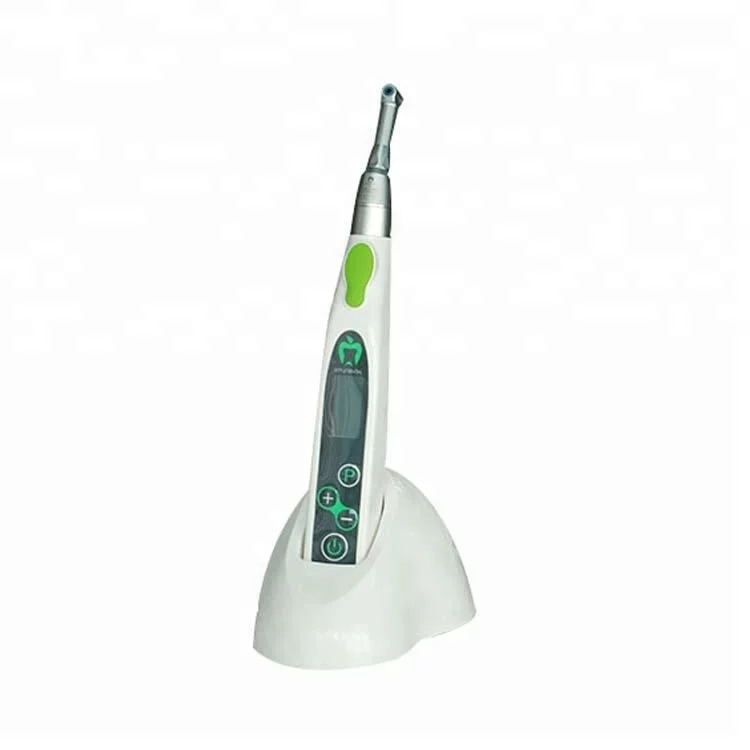
When selecting between reciprocating and rotary endomotors, UAE dentists should consider the clinical scenario, operator experience, and equipment availability. For complex canal anatomies or cases with higher risk of file separation, reciprocating systems may be preferred due to their reduced risk of shaping errors and compatibility with single-file techniques, as noted in comparative reviews (W3). Rotary endomotors may offer advantages in routine cases, especially for clinicians familiar with continuous rotation and multi-file protocols (W3). Equipment choice should also reflect clinic resources and the need for compatibility with preferred file systems (W8). Clinics upgrading or expanding their endodontic equipment may consider the Apple Dental Endomotor KO29, designed for efficient root canal procedures and featuring anti-retraction technology for enhanced longevity.
Conclusion
When selecting between reciprocating and rotary endomotors for root canal treatment, UAE dentists should consider the nuanced distinctions supported by current evidence. Systematic reviews and clinical trials indicate that both systems offer comparable shaping efficiency, canal negotiability, and antibacterial effectiveness, with no significant differences in clinical success or postoperative pain outcomes in the reviewed studies (S1, S3, S4, S5, S6, S10). However, reciprocating systems may be associated with reduced shaping errors and are often designed for single-file use, while rotary systems may require multi-file sequences and have specific maintenance routines (S7, W5, W9).
- Assess case complexity and canal anatomy.
- Match endomotor features to clinical scenario and operator experience.
- Follow manufacturer guidance on settings, file compatibility, and maintenance.
- Stay updated with the latest research and local regulatory standards.
Ultimately, the optimal choice depends on aligning device capabilities with the specific needs of your clinic and patient population. Regularly reviewing emerging evidence and manufacturer recommendations will help ensure safe, effective, and efficient endodontic care in the UAE context.
Frequently Asked Questions
What is the main difference between reciprocating and rotary endomotors?
Reciprocating endomotors use a back-and-forth motion, while rotary endomotors continuously rotate the file. Each has specific clinical implications and compatible file systems.
Does reciprocating instrumentation reduce postoperative pain?
Studies suggest that reciprocating and rotary systems show similar outcomes for postoperative pain in most cases.
Are reciprocating endomotors safer for curved canals?
Some evidence suggests reciprocating systems may help reduce canal transportation, but both systems require careful technique.
How often should endomotor files be replaced?
Manufacturer guidelines should be followed, with some reciprocating files designated as single-use due to safety considerations.
References
- Shaping efficiency of rotary and reciprocating kinematics of engine-driven nickel-titanium instruments in moderate and severely curved root canals using … (2024)
- Negotiability of MB2 root canals using rotary or reciprocating systems: a randomized clinical trial (2026)
- Current assessment of reciprocation in endodontic preparation: a comprehensive review—part II: properties and effectiveness (2015)
Last updated: 2026-11-03
Related products at Nutrident

Dentist, Iran Medical Council registration No. 233463 · Last reviewed: 3 November 2026
Nutrident educational content is based on credible sources and reviewed under his supervision. This article is for professional education and does not replace clinical examination or the judgement of the treating dentist.