




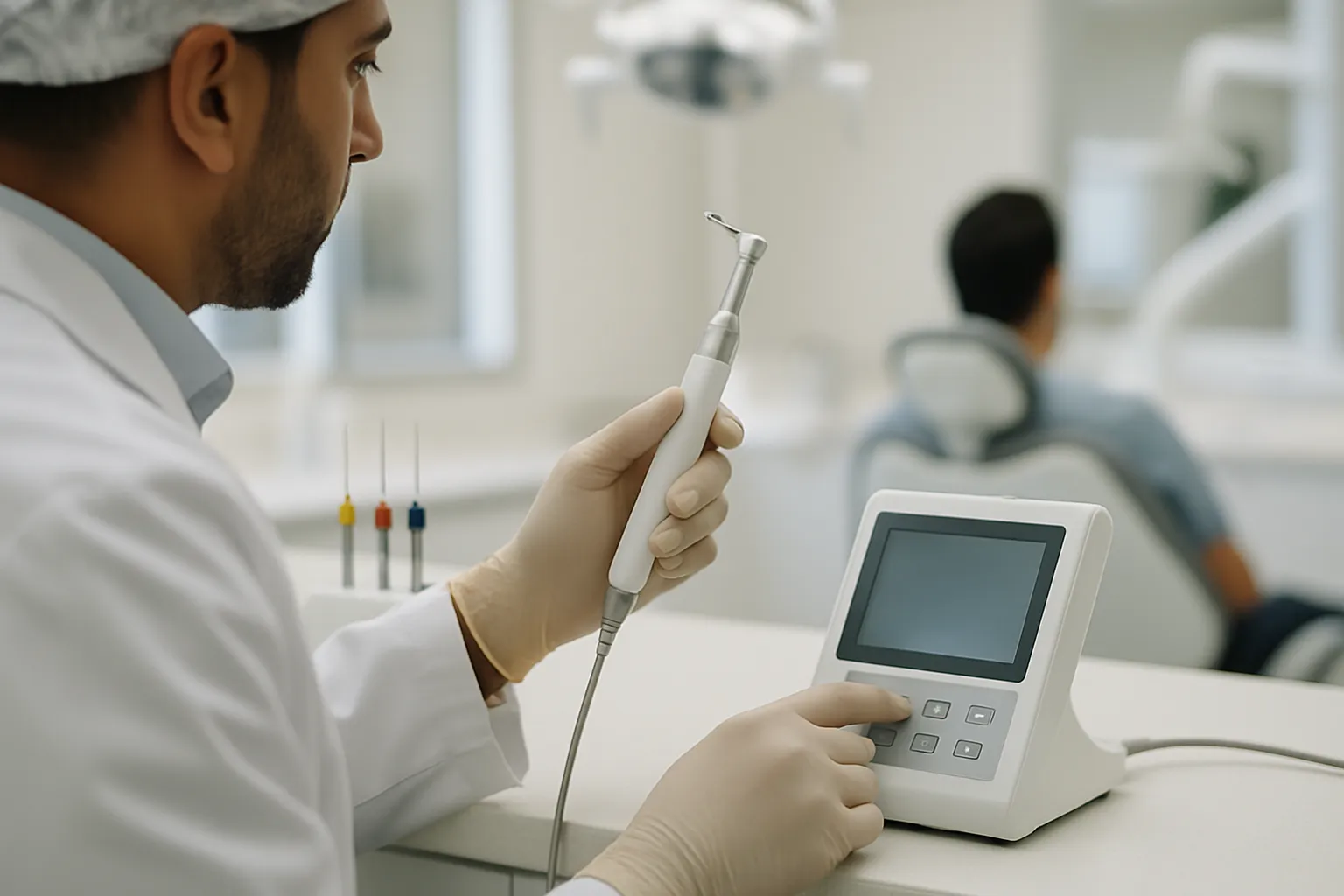
Optimizing endomotor settings is highly recommended for ensuring both the safety and efficiency of root canal treatment in UAE dental clinics. Accurate calibration of parameters such as speed, torque, and motion mode can help reduce the risk of file separation, canal transportation, and dentinal microcracks during instrumentation, which are recognized concerns in endodontic practice (S1, S6). In the UAE, clinicians often encounter a diverse patient population and anatomical variations, making it especially important to tailor endomotor settings to each clinical scenario.
If endomotor parameters are not carefully selected, practitioners may face increased rates of procedural errors, compromised canal shaping, and less predictable outcomes (S6, S7). This guide provides practical, evidence-based recommendations to help clinicians in the UAE select, calibrate, and adjust endomotor settings for different tooth types, canal anatomies, and available file systems, supporting safer and more effective root canal therapy.
Understanding Endomotor Settings: Key Parameters
Speed (RPM)
Speed, measured in revolutions per minute (RPM), determines how quickly a rotary file rotates within the canal. Most rotary endodontic files are used within a typical range of 250–350 RPM, as lower speeds may help reduce instrument fatigue and the risk of file separation, especially in curved or complex canals. Manufacturer guidance often recommends matching the speed to the specific file system and canal anatomy for optimal shaping and safety.
Torque (Ncm)
Torque is the rotational force applied to the file, usually adjustable from 1 to 4 Ncm. Setting an appropriate torque is critical: too high may increase the risk of file fracture, while too low can reduce cutting efficiency. Adjustable torque allows clinicians to tailor the force to the file design and clinical scenario, as recommended in manufacturer instructions and practical resources.
Motion Modes
Modern endomotors offer several motion modes, including continuous rotary, reciprocating, and adaptive motions. Each mode affects file stress and canal shaping differently. Selecting the correct mode based on canal anatomy and file compatibility enhances both safety and efficiency. For more details on available devices, see the dental endomotor device options.
Setting Speed and Torque: Practical Recommendations
Optimizing speed and torque settings is essential for safe and efficient root canal preparation. For most rotary files, manufacturer and published guidance suggest a speed range of 250–350 rpm and torque settings between 1–4 Ncm, depending on the file system and canal anatomy. For example, the ZX Endo motor was operated at 250 rpm with a constant low torque setting in a controlled study, demonstrating this as a safe starting point for many cases (S6). In contrast, certain reciprocating systems, such as WaveOne, are recommended to run at 350 rpm with torque set to 4–5 Ncm (W8). Using excessively high speed or torque increases the risk of file separation, canal transportation, or microcracks, while settings that are too low may result in inefficient shaping and procedural errors. Manufacturers advise tailoring these parameters to the degree of canal curvature and the specific file brand, as more curved or narrow canals generally require lower torque and speed to minimize stress on instruments (S6, W8).
Advanced Motion Modes: Rotary, Reciprocation, and Adaptive Control
Modern endomotors offer several motion modes to enhance safety and efficiency during root canal treatment. The main options are continuous rotary, reciprocation, and adaptive or auto-reverse modes. Continuous rotary motion provides smooth, consistent file rotation and is commonly used for straightforward anatomy. Reciprocating motion, which alternates the direction of rotation, may help reduce file fatigue and instrument separation risks in curved or complex canals. Adaptive control modes, such as Adaptive Torque Control (ATC), automatically adjust torque and rotation based on canal resistance, offering additional protection against instrument fracture (S3, W1).
| Motion Mode | Main Use | Advantages | Example Devices |
|---|---|---|---|
| Rotary | Straight, wide canals | Smooth shaping, fast | E-Value – Endomotor |
| Reciprocation | Curved/complex canals | Less file stress | E-Value – Endomotor |
| Adaptive/Auto-reverse | Variable anatomy | Torque safety, auto-adjust | E-Value – Endomotor |
Local options, such as the E-Value – Endomotor and E-Value – Endomotor, support both rotary and reciprocating files and feature adaptive torque modes, meeting the diverse clinical needs of UAE dental practices (W1). For further details, see the Eighteeth endomotors overview.
Integrating Apex Locator Functions for Enhanced Safety
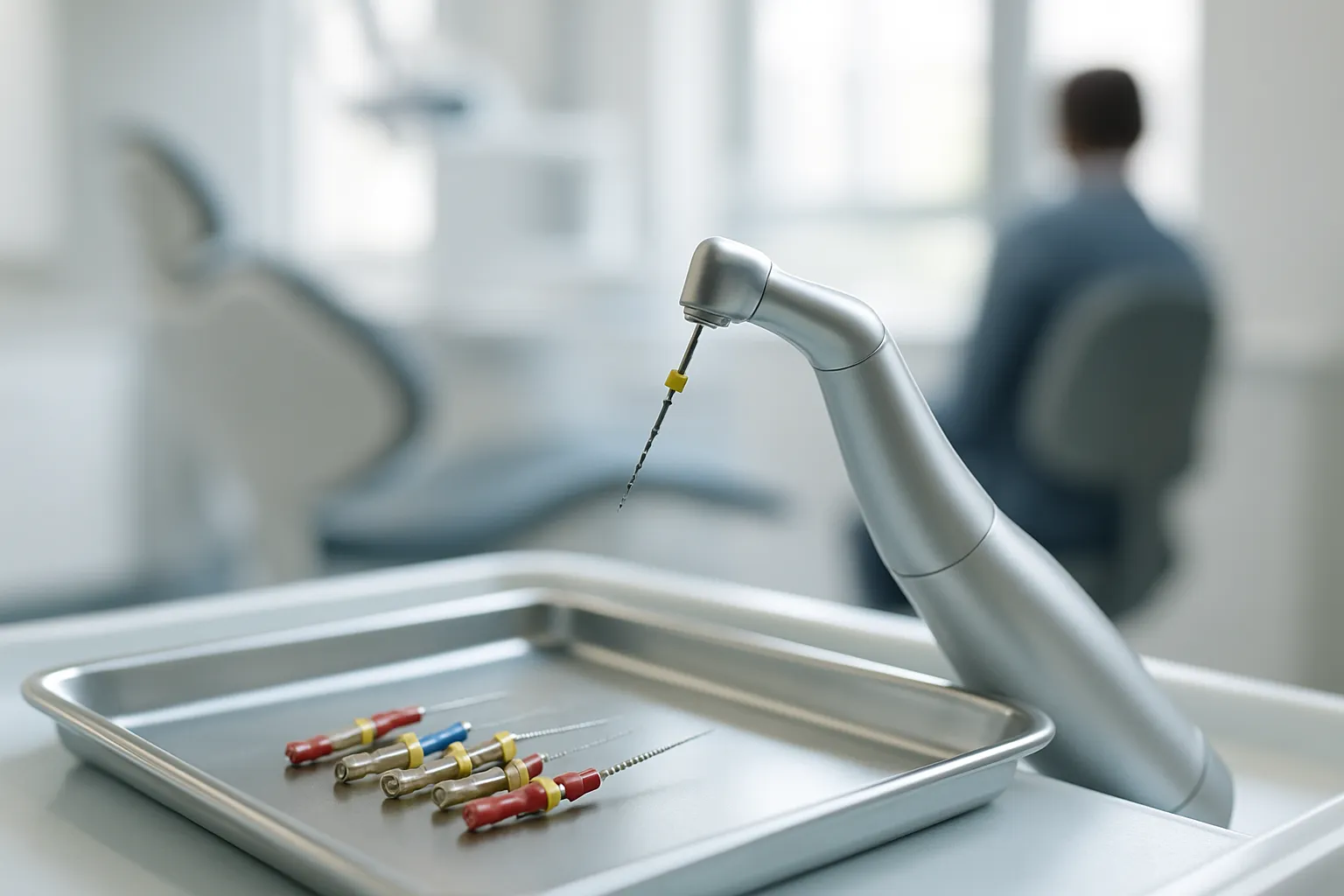
Integrating apex locator technology into endomotors can help reduce the risk of over- or under-instrumentation during root canal procedures, a key factor in achieving optimal clinical outcomes. Studies indicate that apex locator–integrated endomotors provide working length measurements with accuracy comparable to standalone apex locators, even in the presence of irrigants, supporting more predictable canal shaping and obturation (S4, S8, S9). Accurate working length determination is associated with improved clinical results, as it minimizes the likelihood of leaving residual infection or causing periapical damage (S4, S9). Devices such as the E-Connect S+ – Endomotor with built in Apex Locator, Coltene CanalPro CL2i Endomotor, and Woodpecker Motopex Brushless Endomotor offer real-time feedback and safety features. For best results, clinicians should calibrate the device before each case, confirm readings with radiographs when indicated, and follow manufacturer guidance on canal environment and file compatibility.
Customizing Settings for Different Canal Types and Cases
Endomotor settings should be tailored to the specific requirements of each case, particularly when treating primary versus permanent teeth. Evidence suggests that rotary instrumentation in primary teeth can reduce canal deviation and improve the amount of dentin removed compared to other methods, but clinicians must consider the thinner dentin walls and more complex anatomy of primary teeth when selecting speed and torque parameters (S2). For curved, narrow, or calcified canals, lower speed and torque settings are generally recommended to minimize the risk of file separation and canal transportation, as supported by manufacturer guidance and clinical studies (S3). Compatibility between the selected file system and the endomotor’s programmable settings is essential; local file systems may have specific recommended parameters that should be followed to optimize shaping outcomes and reduce procedural errors. Always consult the manufacturer’s instructions for both the endomotor and the file system to ensure safe and effective canal preparation in diverse clinical scenarios.
Routine Endomotor Maintenance: Key Steps for Reliability
Consistent maintenance is essential to ensure the reliability and longevity of endomotors in busy dental practices. Daily tasks typically include careful cleaning of the handpiece and motor surfaces, as well as inspection for visible debris or damage. Weekly routines may involve more thorough calibration checks and functional testing, following manufacturer guidance. Regular inspection helps identify early signs of wear, such as unusual noise or reduced torque delivery.
Common sources of malfunction include the accumulation of debris in moving parts, improper calibration, and battery issues in cordless models. Preventing these issues requires adherence to cleaning protocols and prompt attention to any error messages or performance changes. Manufacturers generally recommend using only approved cleaning agents and following device-specific instructions to avoid corrosion or internal damage. Proper storage—such as keeping the device in a dry, dust-free environment—also contributes to extending lifespan and maintaining safe operation.
Choosing Endomotors in the UAE: Features and Local Options
When selecting an endomotor for UAE dental clinics, several features are especially important for safe and efficient root canal treatment. Adjustable speed and torque settings allow clinicians to tailor performance to specific file systems and canal anatomies, reducing the risk of file separation or shaping errors (W4). Integrated apex locator functions can enhance safety by supporting accurate working length determination and minimizing over- or under-instrumentation (W9). Cordless designs are valued for operator comfort and flexibility in busy clinical environments (W3).
Popular models available locally include the NSK Endomate TC2 Endomotor With MPAS F10 R Handpiece and the Woodpecker Motopex Brushless Endomotor. The NSK Endomate TC2 offers ergonomic design, memory for multiple programs, and auto-reverse. The Woodpecker Motopex features a brushless motor, cordless portability, and real-time feedback with dynamic torque control.
| Model | Adjustable Parameters | Apex Locator | Cordless | Special Features |
|---|---|---|---|---|
| NSK Endomate TC2 | Speed, Torque | No | No | 5-program memory, Auto-reverse |
| Woodpecker Motopex | Speed, Torque | Yes | Yes | Brushless motor, Dynamic torque control |
For a comprehensive overview of leading endomotor brands and detailed feature comparisons in the UAE, see our local product reviews, selection guides, and our Woodpecker endomotor distributor page.
Conclusion
Optimizing endomotor settings is an important factor in safe and efficient root canal treatment, especially in the diverse clinical environments of UAE dental clinics. Individualizing parameters such as speed, torque, and motion mode according to the case and file system helps reduce risks like file separation, canal deviation, and dentinal microcracks, as suggested by recent studies and manufacturer guidance. Regular review of manufacturer instructions and consistent device maintenance are essential to ensure endomotor reliability and longevity in daily practice.
When selecting or calibrating an endomotor, UAE clinicians benefit from matching device features—such as adjustable parameters, apex locator integration, and cordless operation—to their specific workflow and local file systems. This approach supports predictable outcomes and operator comfort in a range of endodontic scenarios.
Quick Checklist:
- Always tailor speed and torque to the file system and canal anatomy
- Utilize appropriate motion modes for the case (rotary, reciprocation, adaptive)
- Leverage apex locator integration for more accurate working length determination
- Follow manufacturer maintenance protocols for device safety and performance
- Regularly update your knowledge of device features and local product options
Frequently Asked Questions
What is the safest torque setting for root canal files?
The safest torque setting depends on the file system and canal anatomy; most rotary files use 1–4 Ncm, but always refer to file manufacturer instructions.
Can I use the same endomotor settings for all cases?
No, settings should be adjusted for canal curvature, file size, tooth type, and specific file system guidance.
How often should I calibrate or check my endomotor?
Follow manufacturer recommendations, but regular calibration and inspection are advised to maintain accuracy and prevent malfunction.
Is an apex locator-integrated endomotor necessary?
While not essential, integrated apex locators may improve working length accuracy and workflow convenience.
References
- Evaluation of the efficacy of rotary vs. hand files in root canal preparation of primary teeth in vitro using CBCT (2014)
- Effect of adaptive, rotary, and manual root canal instrumentation in primary molars: A triple-armed, randomized controlled clinical trial. Biology 2021; 10 (1): 42 (2021)
- Micro-computed Tomography-aided Evaluation for Root Dentin Micro-cracks after Root Canal Instrumentation in Diabetic and Nondiabetic Older Patients: A … (2025)
Last updated: 2026-10-14
Related products at Nutrident

Dentist, Iran Medical Council registration No. 233463 · Last reviewed: 14 October 2026
Nutrident educational content is based on credible sources and reviewed under his supervision. This article is for professional education and does not replace clinical examination or the judgement of the treating dentist.