




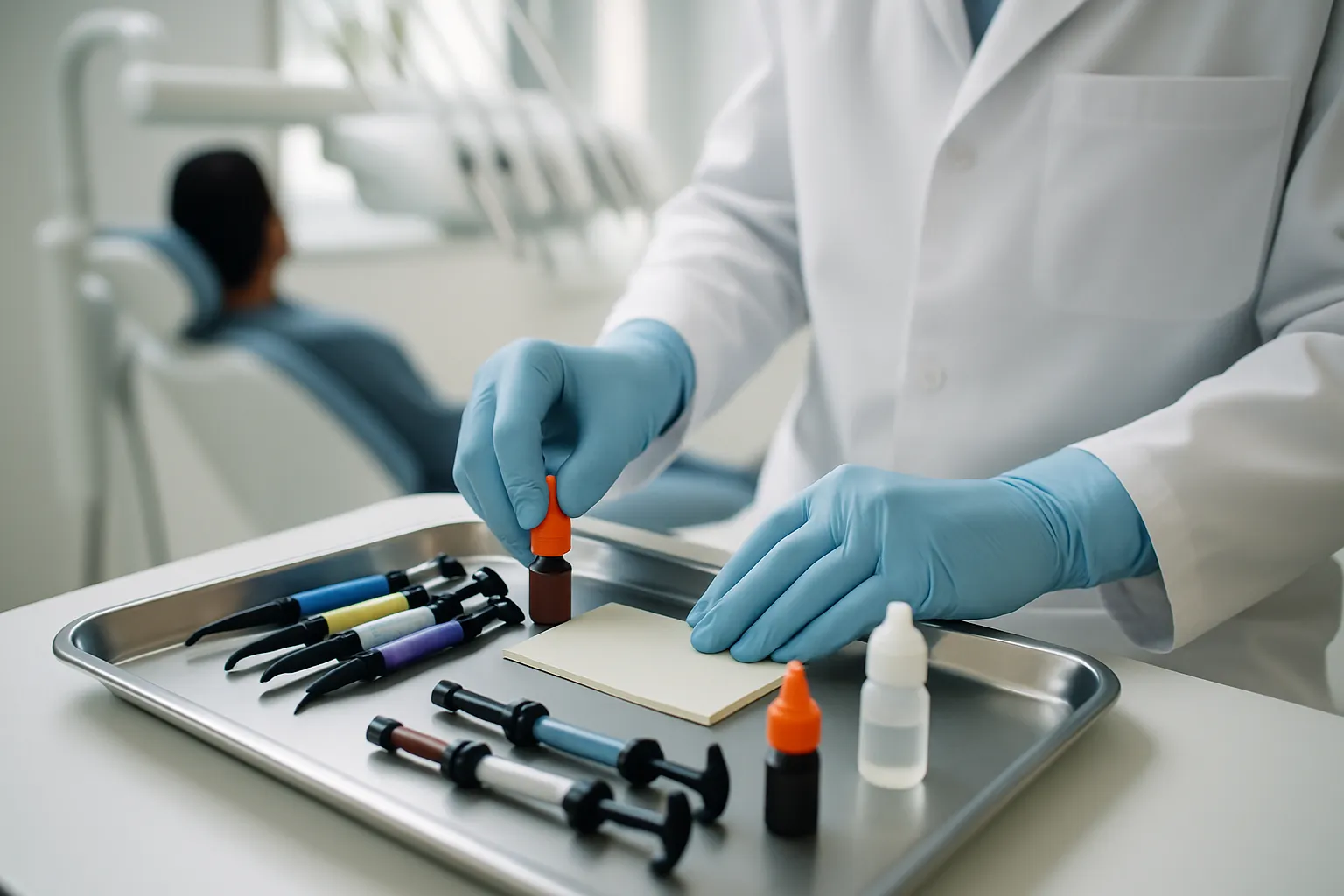
Material selection is a cornerstone of restorative dental success, especially for UAE dentists who must balance esthetic demands, functional durability, and the region’s unique clinical challenges. Dental composites, bonding agents, and dental cements each play distinct roles in achieving optimal results, and understanding their evidence-based indications is essential for predictable outcomes. These categories—composites for direct restorations, bonding agents for adhesion, and cements for luting indirect restorations—form the foundation of contemporary restorative dentistry.
In daily practice, UAE clinicians frequently ask: When should composite resin be chosen over glass ionomer? Which bonding protocol yields reliable adhesion in the region’s humid conditions? What type of cement is most suitable for zirconia crowns or complex indirect restorations? Addressing these questions with current evidence and practical context helps clinicians navigate material options, avoid common pitfalls, and enhance long-term restorative success.
Overview of Dental Restorative Materials: Key Definitions and Roles
Dental composites are tooth-coloured restorative materials primarily made of resin, widely used for restoring teeth due to their aesthetic and functional properties. They are typically applied directly to the tooth to repair defects, close gaps, or alter shape and colour (W1, W3). Bonding agents are adhesives that facilitate the attachment of composite resins to tooth structures, ensuring a durable bond and enhancing restoration longevity (S2, W2). Dental cements are luting materials used to secure indirect restorations, such as crowns, bridges, inlays, and onlays, to the prepared tooth surface (S2).
In restorative dentistry, composites and bonding agents are typically used in direct restorations, where materials are placed and cured in the mouth in a single visit. Indirect restorations involve fabricating the restoration outside the mouth (e.g., a crown), which is then cemented onto the tooth using dental cements (S2).
Direct Restorations: Indications for Composites and Bonding
Anterior vs Posterior Applications
Composite resins are widely used for direct restorations due to their ability to blend with natural tooth colour and offer functional durability. In anterior teeth, composites are indicated for closing small diastemas, repairing minor defects, and reshaping teeth where esthetics are critical and conservative intervention is preferred. Posterior applications focus on restoring carious lesions and minor fractures, with composites providing adequate strength for moderate occlusal loads (W3, W9).
Bonding agents play a crucial role in achieving long-lasting adhesion between composite and tooth structure. Proper adhesive selection and application are essential for clinical success; errors such as inadequate isolation, insufficient etching, or improper curing can compromise the restoration (W2, W5).
When comparing composite resin to glass ionomer, composites are generally preferred for esthetics and wear resistance, while glass ionomers may be preferred where moisture control is challenging or fluoride release is desired (S2).
Indirect Restorations: Choosing the Right Cement
Luting Options and Their Clinical Criteria
For crowns, bridges, inlays, and onlays, cement selection is guided by restoration type, substrate, and clinical environment. Resin cements typically provide higher bond strength and esthetics compared to conventional cements, but require careful isolation and multi-step protocols, making them technique-sensitive—especially in humid conditions common in the UAE (W4, S9). Self-adhesive resin cements simplify application and reduce technique sensitivity, but may deliver lower bond strengths compared to conventional resin cements (S6, S7, S9). Glass ionomer cements provide chemical adhesion and fluoride release, but are sensitive to moisture during setting and have lower mechanical properties (S4, S5). Conventional cements (e.g., zinc phosphate) are robust and less moisture-sensitive, but lack adhesion and esthetic benefits (S5). In the UAE, where maintaining a dry field can be challenging, self-adhesive or conventional cements may offer practical advantages for certain cases, while adhesive cements are best reserved for situations where ideal isolation is achievable (W4, S5).
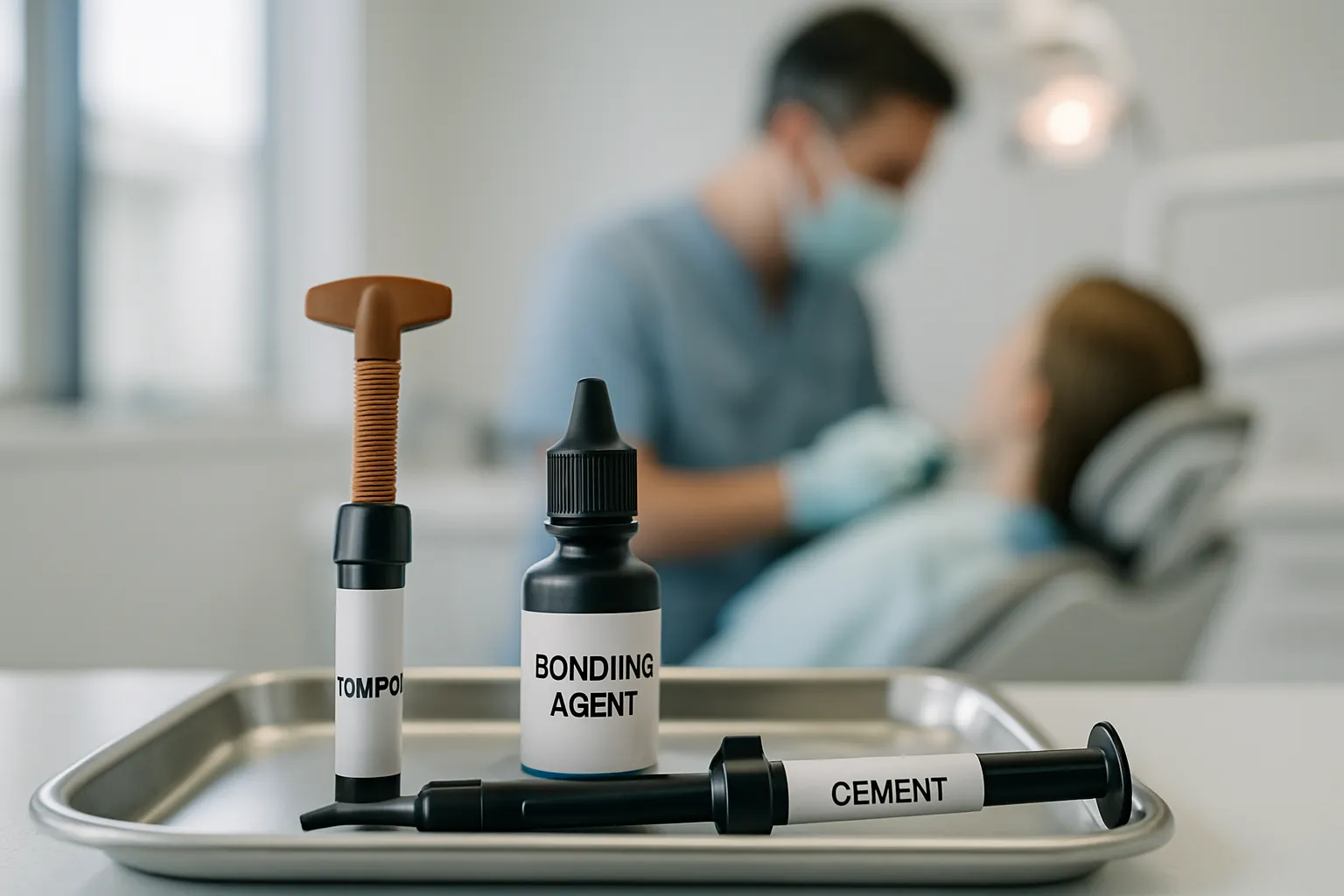
Bonding Agents: Selection, Application, and Evidence-Based Protocols
Dental adhesives fall into three main categories: etch-and-rinse (total-etch), self-etch, and universal systems. Etch-and-rinse adhesives require separate phosphoric acid etching, offering strong bonds to enamel but demanding precise moisture control. Self-etch adhesives combine etching and priming steps, reducing technique sensitivity but may provide lower bond strength to uncut enamel. Universal adhesives are versatile, allowing use in either etch-and-rinse or self-etch modes, and can be compatible with a wide range of restorative materials (W2).
Adhesive selection directly affects restoration longevity and compatibility with composites or indirect materials. Studies suggest that careful adherence to manufacturer protocols and appropriate adhesive choice can optimise bond strength and reduce failure risk (W2, W5). For challenging cases—such as those with limited isolation or deep cavities—practical tips include using rubber dam isolation, ensuring even adhesive application, and avoiding over-drying dentin to maintain hybrid layer integrity (W2, W6).
Comparative Decision Table: Dental Composites vs Bonding Agents vs Cements
Material selection for restorative procedures requires a clear understanding of each category’s indications, benefits, and limitations. The table below compares dental composites, bonding agents, and cements, highlighting direct versus indirect indications, esthetic and strength considerations, and practical notes relevant to UAE practice conditions.
| Material | Indications | Advantages | Limitations | Clinical Considerations (UAE) |
|---|---|---|---|---|
| Composite Resin | Direct restorations (anterior/posterior) | Esthetic, conservative, immediate placement | Technique-sensitive, requires dry field | Isolation may be challenging in humid environments |
| Bonding Agent | Adhesion for composites, some cements | Improves bond strength, enables minimally invasive prep | Protocol-sensitive, compatibility varies | Strict protocol adherence needed for reliable results |
| Dental Cement | Indirect restorations (crowns, inlays, onlays, bridges) | Variety of types for different needs, some moisture tolerance | Some types moisture-sensitive, variable bond strength | Choose cement type based on humidity, isolation, restoration type |
Direct restorations often prioritise esthetics (composites), while indirect cases require careful cement selection for strength and longevity. In the UAE, humidity and isolation challenges may affect material performance and protocol choice.
Case Examples: Material Selection in Common UAE Clinical Scenarios
Anterior diastema closure: Composite bonding is often chosen for closing minor gaps due to its esthetic adaptability and minimally invasive nature. In UAE clinics, composite bonding is used to restore small defects and close diastemas, offering natural results when properly applied (W3). Precise moisture control is essential; inadequate isolation may compromise adhesion.
Posterior Class II restoration: For posterior teeth, composite resin is frequently selected to balance strength and appearance. Studies suggest that composite resins provide reliable adhesion to dentine when used with appropriate bonding agents, but glass ionomer may be considered in cases with high caries risk or suboptimal isolation (S2). Ensuring correct layering and curing is key to avoid postoperative sensitivity.
Cementation of zirconia crown: Self-adhesive resin cements are commonly used for zirconia crowns, simplifying the clinical workflow and reducing technique sensitivity, which is valuable in the UAE’s humid environment (S6). However, careful surface preparation and following manufacturer protocols help prevent debonding.
Practical Tips for Optimising Restorative Outcomes in the UAE
Effective restorative dentistry in the UAE requires careful adaptation to local climate and practice realities. Dental composites, bonding agents, and cements should be stored according to manufacturer recommendations, ideally in temperature-controlled environments to minimise premature degradation, especially during hot and humid months. Allow materials to reach room temperature before use to prevent condensation and potential changes in handling properties. Team communication is crucial: document the specific material type, batch number, and clinical rationale for each case to support traceability and informed troubleshooting. When failures occur, consult manufacturer guidance for stepwise assessment—common issues such as debonding or marginal staining may relate to isolation, substrate moisture, or technique sensitivity. Regular team briefings and continuing education, including training on new restorative materials, can further reduce errors. For clinicians seeking to optimise visual accuracy when working with subtle restorative margins, choosing appropriate prescription lenses for dental loupes can enhance precision (prescription lenses for dental loupes).
Conclusion
Evidence-based selection of dental composites, bonding agents, and cements is an important factor in achieving predictable restorative outcomes. UAE clinicians must tailor material choices to specific clinical indications, considering both scientific evidence and the unique challenges of the local practice environment, such as temperature and humidity effects on material handling and isolation. Regularly consulting current literature and manufacturer guidance helps optimise outcomes and avoid common pitfalls.
- Assess the clinical scenario: direct vs indirect, esthetic vs functional demands.
- Review the latest evidence for material properties and indications.
- Consider UAE-specific factors like humidity and isolation challenges.
- Follow manufacturer protocols for storage, handling, and application.
- Document material choices and rationale for team communication and continuity of care.
Staying informed about advances in dental materials and maintaining open communication with manufacturers supports ongoing clinical excellence and patient satisfaction in the evolving UAE dental landscape.
Frequently Asked Questions
What is the main difference between dental composites and cements?
Composites are primarily restorative materials for filling cavities, while cements are used to lute or bond indirect restorations to tooth structure.
When should I use a bonding agent with composite?
A bonding agent is typically required with composite restorations to achieve reliable adhesion to tooth structure.
Are resin cements always better than glass ionomer cements?
Resin cements generally provide higher bond strength, but glass ionomer cements may be indicated where fluoride release or moisture tolerance is needed.
What factors affect cement selection for crowns in the UAE?
Material compatibility, isolation challenges, and environmental humidity should all be considered when selecting a cement for crowns.
References
- Adhesive dental materials—A review (1998)
- Cement selection criteria for full coverage restorations: A comprehensive review of literature (2021)
- Cements for use in esthetic dentistry (2007)
Last updated: 2026-10-18
Dentist, Iran Medical Council registration No. 233463 · Last reviewed: 18 October 2026
Nutrident educational content is based on credible sources and reviewed under his supervision. This article is for professional education and does not replace clinical examination or the judgement of the treating dentist.