




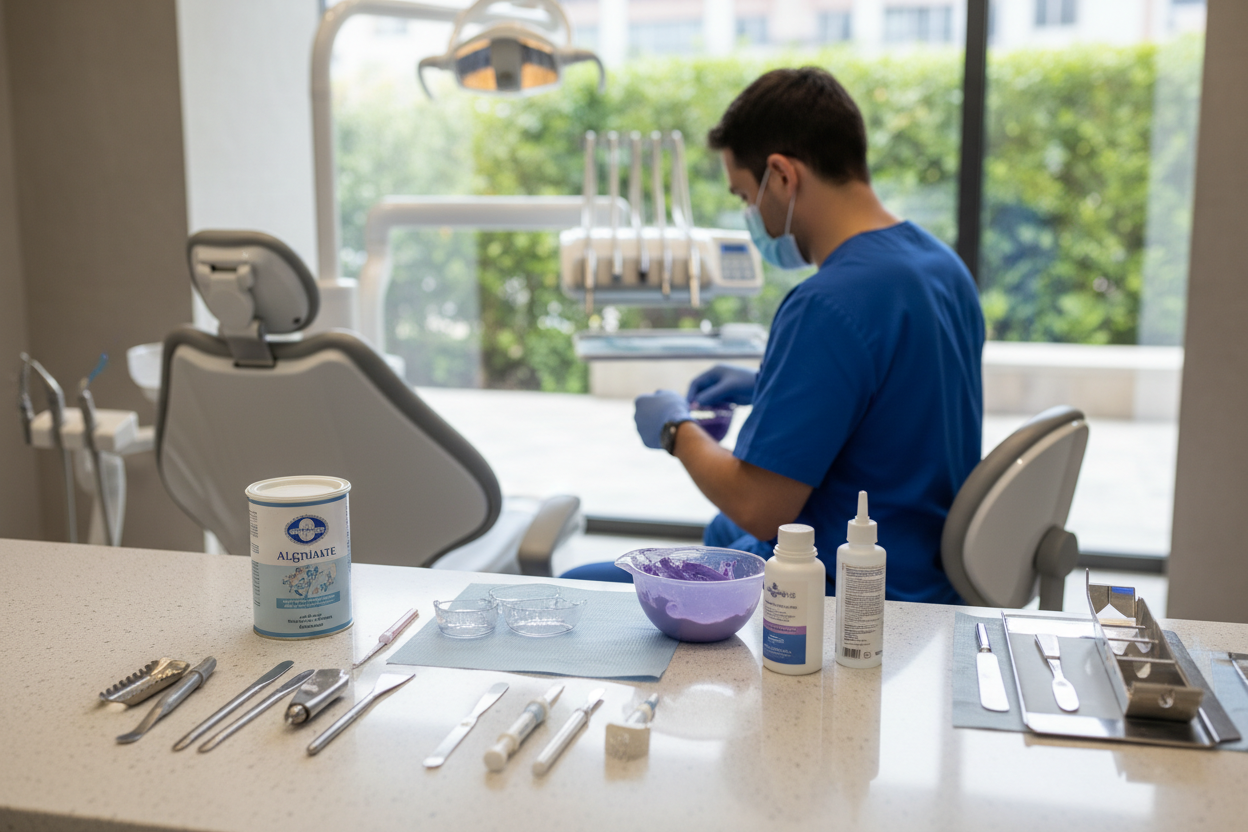
Choosing the appropriate dental impression material is critical for achieving clinical accuracy and optimal patient outcomes. The selection directly affects the precision of prosthodontic restorations, fit of appliances, and reproducibility of results. Dental impression materials fall into several main categories, including irreversible hydrocolloids (such as alginate), reversible hydrocolloids (agar), and elastomeric materials like polyvinyl siloxane (PVS), polyether, condensation silicone, and polysulfide. Each class differs in handling properties, accuracy, dimensional stability, and suitability for specific clinical applications.
Material selection is influenced not only by the clinical indication—such as crowns, bridges, or removable prostheses—but also by workflow efficiency and local regulatory requirements. In the UAE, clinicians must consider both international standards for detail reproduction and biocompatibility, as well as region-specific import and safety guidelines. Aligning material properties with procedural needs and regulatory compliance is essential for reliable outcomes in diverse dental settings.
Overview of Dental Impression Material Types
Hydrocolloids, Elastomers, and Other Categories
Dental impression materials are broadly classified into hydrocolloids, elastomers, and other specialty materials. Irreversible hydrocolloids, such as alginate, are valued for their ease of use and rapid setting, making them suitable for diagnostic casts and preliminary impressions. Reversible hydrocolloids like agar require specialized equipment for thermal manipulation and are less common in routine practice. Elastomeric materials include polyvinyl siloxane (PVS), polyether, condensation silicone, and polysulfide. These materials are generally preferred for their high detail reproduction and dimensional stability, especially in fixed prosthodontics and implant impressions. Other options, such as impression plaster and compound, are primarily used for edentulous cases and border molding.
International standards specify that an impression material should capture a line of 0.02 mm width or less, enabling the high level of detail required for prosthodontic accuracy. Each class presents distinct handling characteristics, including working and setting times, hydrophilicity, and tear resistance, which influence clinical selection in UAE dental practice.
Clinical Indications: Matching Materials to Procedures
Crowns and Bridges
For crowns and bridges, elastomeric impression materials—particularly polyvinyl siloxane (PVS) and polyether—are commonly indicated due to their high dimensional accuracy and excellent stability. These properties are critical for fixed prosthodontics, where precise marginal fit is essential. Evidence highlights the importance of using materials that maintain accuracy during tray removal and pouring, as even minor distortions can compromise the final restoration (S4). Alginate, while easy to handle, is generally not recommended for definitive fixed prosthodontic impressions due to its limited dimensional stability (S9).
Implants
Implant prosthetics demand materials with superior detail reproduction and minimal dimensional change. PVS and polyether are preferred for implant impressions, as their accuracy supports the precise transfer of implant position and angulation. Studies suggest that these materials help reduce the risk of prosthesis misfit compared to less stable alternatives (S4).
Dentures and Study Models
For removable dentures and diagnostic casts, alginate remains a practical choice due to its ease of use and adequate accuracy for non-definitive work. However, its dimensional stability is time-sensitive, requiring prompt pouring to avoid distortion (S9). Elastomeric materials may be selected for complex removable cases where higher accuracy is required (W4).
Dental Impression Materials Comparison Table
Key Properties and Indications
Choosing the right dental impression material depends on balancing accuracy, dimensional stability, handling, and clinical indication. The table below compares commonly used materials, including Dentsply Zelgan 2002 Alginate Impression Material, polyvinyl siloxane (PVS), polyether, condensation silicone, and others. International standards require materials to reproduce fine detail at 0.02 mm or less [W1]. Alginate is widely used for study models and preliminary impressions due to ease of use and cost, while PVS and polyether are preferred for definitive prosthodontic procedures requiring high accuracy and stability [W1][W4]. Manufacturer-specific products such as Zhermack Zetaplus Putty C Silicone Impression Material and Coltene Affinis Regular Body Impression Material offer additional options for clinical workflows.
| Material | Working/Setting Time | Accuracy | Dimensional Stability | Tear Strength | Cost | Recommended Uses |
|---|---|---|---|---|---|---|
| Alginate (Dentsply Zelgan 2002) | Short | Moderate | Low (pour within 1 hr) | Low | Low | Study models, diagnostics |
| PVS (Coltene Affinis Regular Body) | Medium | High (0.02 mm) | Very High | High | Higher | Crowns, bridges, implants |
| Condensation Silicone (Zhermack Zetaplus Putty C) | Medium | High | Moderate | Moderate | Moderate | Removable/fixed prosthodontics |
| Polyether | Short-Medium | High | High | Moderate | Higher | Implants, crowns/bridges |
In summary, alginate is suitable for preliminary impressions but requires prompt pouring due to limited stability [S9], while PVS and polyether offer high dimensional stability and accuracy for definitive restorative work [W1][W4]. Condensation silicone, like Zhermack Zetaplus Putty C, provides a balance for certain prosthodontic procedures. Workflow efficiency, patient comfort, and clinical indication should guide material selection.
PVS vs Alginate: Evidence and Clinical Considerations
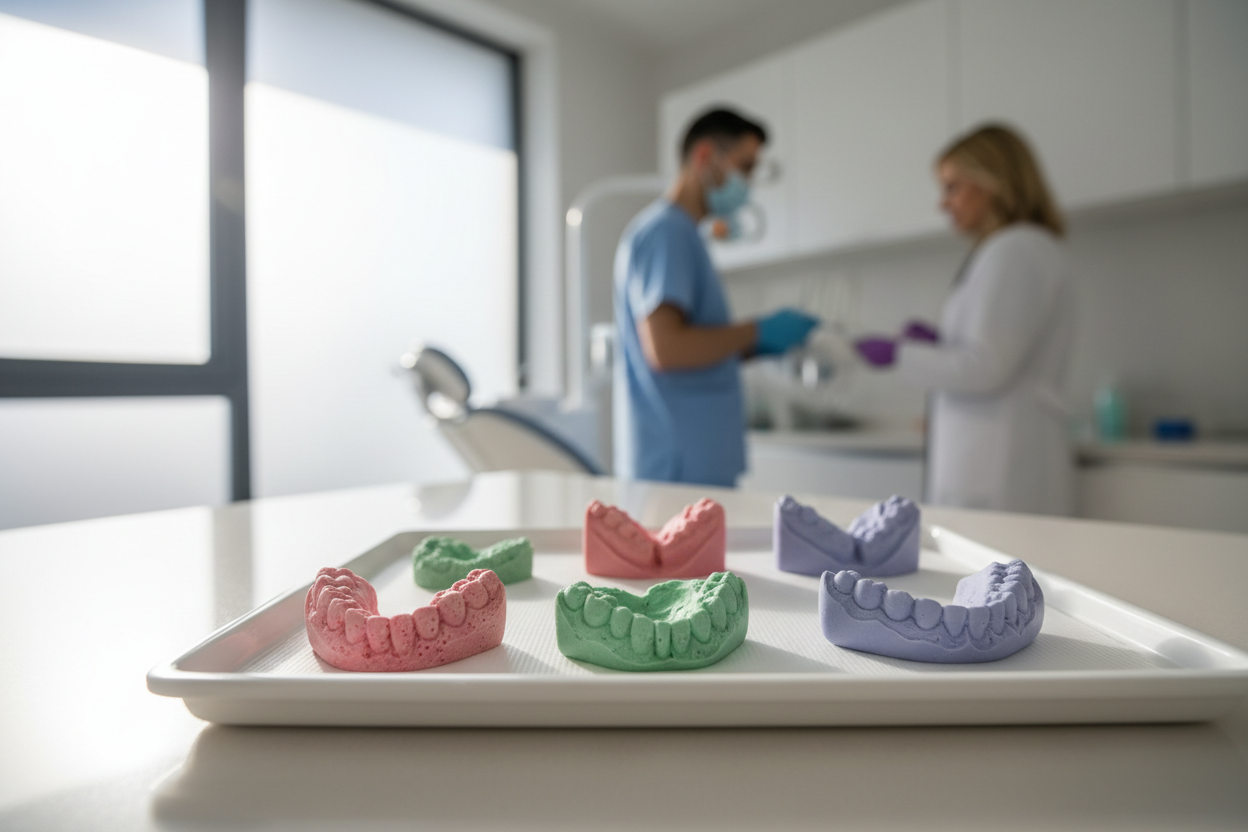
Polyvinyl siloxane (PVS) and alginate remain two of the most widely used dental impression materials, with distinct differences in clinical performance. PVS materials, such as Zhermack Zetaplus Putty C Silicone Impression Material, are noted for high dimensional stability and accuracy. In contrast, alginates like Dentsply Zelgan 2002 Alginate Impression Material are valued for ease of use and rapid setting, but demonstrate limited dimensional stability and should be poured promptly for best results (S9). International standards specify that impression materials should reproduce detail as fine as 0.02 mm (W1). Studies suggest PVS is preferable for procedures requiring high accuracy, such as crowns and bridges, while alginate may be suitable for preliminary impressions and study models (W1, S9). Practical handling tips include ensuring complete tray seating and prompt pouring for alginate, and careful mixing and moisture control for PVS to minimize voids or inaccuracies (W4).
Digital vs Conventional Impressions: Current Evidence
Digital impression workflows involve intraoral scanning to capture a virtual model of the dentition, eliminating the need for traditional trays and materials. Evidence from comparative reviews indicates that digital impressions can achieve comparable accuracy to conventional techniques for single crowns and short-span fixed prostheses, with some studies suggesting improved patient comfort and workflow efficiency (S1, S2). For implant prosthetics, digital systems may offer advantages in capturing implant positions, though limitations remain for full-arch and edentulous cases where conventional materials still provide reliable results (S1). In the UAE, integration of digital impressions is increasing, but clinics must ensure that chosen systems comply with local regulatory requirements and international standards for accuracy and data security. Successful implementation requires attention to clinical indication, staff training, and ongoing evaluation of digital system updates.
Regulatory and Safety Considerations in the UAE
ADA, ISO, and UAE Ministry Requirements
Dental impression materials used in the UAE must comply with international and national standards for performance and biocompatibility. The ANSI/ADA Standard No. 128 specifies requirements and test methods for hydrocolloid impression materials, including criteria for detail reproduction, dimensional stability, and working time (W2, W8). FDA guidance further outlines safety and performance benchmarks for impression materials, emphasizing reproducibility and patient safety (W3). UAE import regulations require that all dental materials be registered with the Ministry of Health and Prevention, referencing these international standards for approval.
Regarding safety, evidence suggests that most dental impression materials do not cause gross cytotoxic effects, but practitioners should remain vigilant for subtle adverse reactions in sensitive individuals (S3). Clinically significant systemic toxicity is considered rare, but ongoing monitoring and adherence to manufacturer handling instructions are recommended (S7).
Practical Tips for Material Selection and Workflow
Checklist for Selection: Start by identifying the clinical procedure (e.g., crown, bridge, removable prosthesis), then consider patient-specific factors such as gag reflex, allergy history, and oral anatomy. Assess workflow needs—such as chairside time and material setting characteristics—to match the impression material’s properties to each case (W4, W5).
Tray and Mixing Advice: Select a tray that ensures adequate extension and rigidity for the chosen material. For consistent mixing, use a dedicated pad such as the Zhermack Mixing Pad For Impression Material, which provides a stable, laminated surface for even hand-mixing and easy dosing, helping to reduce air entrapment and material waste (product, W5).
Technique and Error Reduction: Always follow manufacturer instructions for mixing and setting times. Seat the tray with steady pressure and avoid movement during setting. Carefully remove the impression along the path of insertion to minimize distortion. Inspect impressions immediately for voids or tears to ensure reproducibility (W4, W6).
Conclusion
Choosing the appropriate dental impression material is fundamental for achieving accurate clinical outcomes and streamlined workflows. The evidence suggests that material selection should be tailored to the specific clinical indication, whether for fixed or removable prosthodontics, implants, or diagnostic casts, as accuracy and dimensional stability requirements can differ significantly across applications (W1, S2). Dentists are encouraged to base their choices on up-to-date scientific evidence, considering both international performance standards and UAE-specific regulatory requirements (W2, W3). Regular review of material properties, manufacturer instructions, and updates is vital to maintain compliance and optimize patient safety.
- Match impression material to procedure and indication.
- Consider detail reproduction, dimensional stability, and handling properties (W1, W7).
- Ensure materials meet international and UAE-specific standards (W2, W3).
- Stay informed on manufacturer updates and regulatory changes.
By following an evidence-based, standards-driven approach, clinicians can enhance the predictability and quality of their restorative outcomes while ensuring patient safety and regulatory compliance.
Frequently Asked Questions
Which impression material is best for crowns and bridges?
Elastomeric materials such as PVS and polyether are commonly used due to their accuracy and dimensional stability, but the choice depends on clinical factors and workflow.
What is the main difference between PVS and alginate?
PVS offers higher dimensional stability and accuracy, making it suitable for definitive prostheses, while alginate is often used for study models or preliminary impressions.
Are digital impressions replacing conventional materials?
Digital impressions are increasingly adopted, especially for crowns and some implant cases, but conventional materials remain widely used depending on case and equipment.
What regulatory standards must impression materials meet in the UAE?
Materials should comply with international standards like ADA, ISO, and UAE Ministry of Health requirements for safety and performance.
References
- DIGITAL VS CONVENTIONAL IMPRESSIONS: ARE INTRAORAL SCANNERS READY TO REPLACE TRADITIONAL TECHNIQUES?
- Dimensional stability of irreversible hydrocolloid impression materials as a function of pouring time: a systematic review (2011)
- Effect of 3D‑printed custom tray wall thickness on the dimensional accuracy of elastomeric impressions: an in vitro study (2026)
Last updated: 2026-11-02
Related products at Nutrident


Dentist, Iran Medical Council registration No. 233463 · Last reviewed: 2 November 2026
Nutrident educational content is based on credible sources and reviewed under his supervision. This article is for professional education and does not replace clinical examination or the judgement of the treating dentist.