




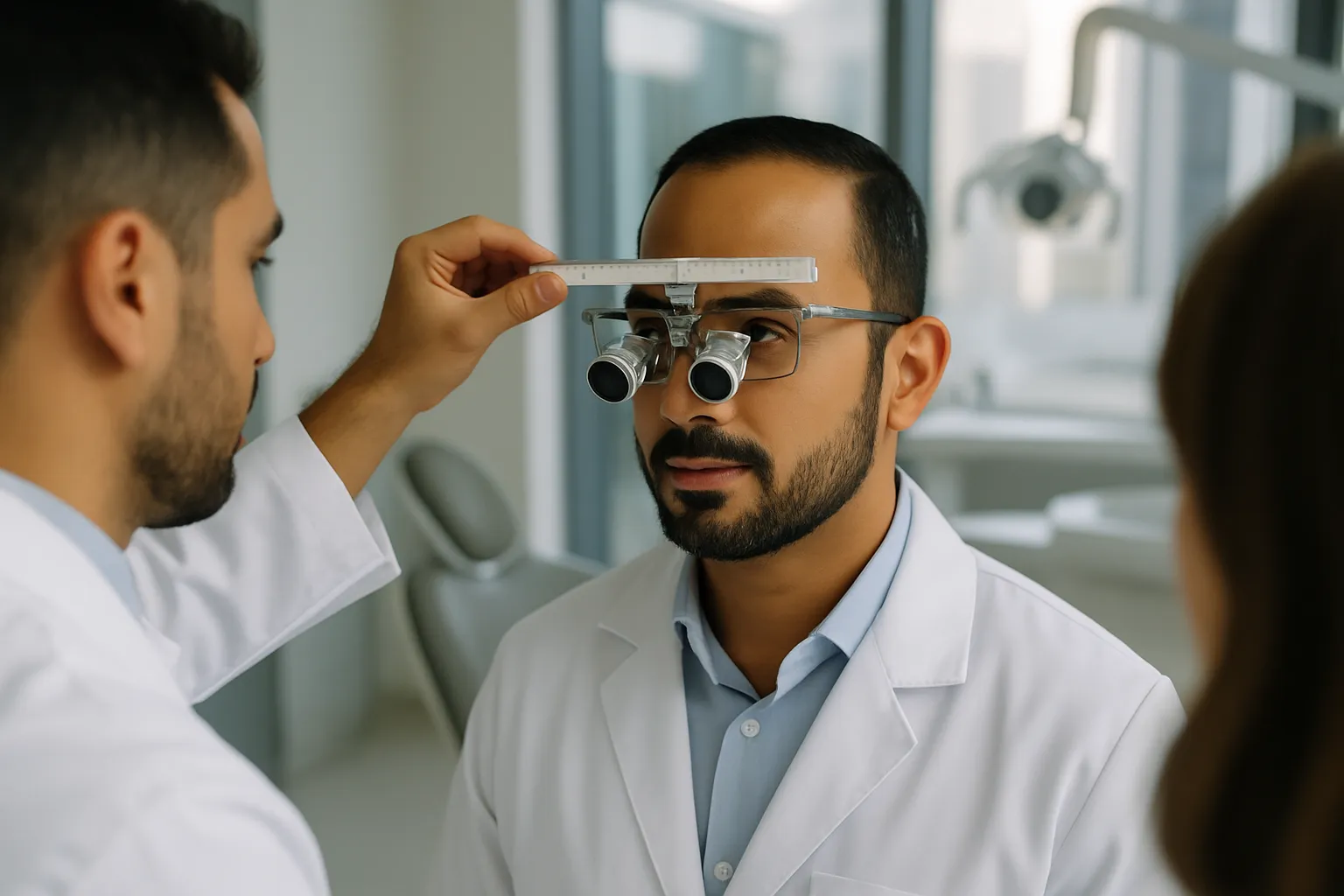
Accurate measurement and proper fitting of dental loupes are highly recommended for UAE dentists aiming to maintain optimal clinical performance and protect their long-term musculoskeletal health. Ill-fitting loupes can lead to poor posture, increased neck and back strain, and even contribute to the development of chronic pain syndromes—risks that are particularly relevant in the demanding clinical settings found across the UAE (S1, S4). Conversely, loupes that are tailored to the individual practitioner’s working distance, interpupillary distance, and ergonomic needs may help reduce these risks and support clinical efficiency (S3, S7).
Many guides offer general advice, but this step-by-step resource is designed specifically for UAE clinicians, addressing unique local challenges such as climate and practice culture. The guide provides evidence-based instructions for measuring and fitting loupes, practical troubleshooting tips, and brand-specific recommendations—helping ensure that your loupe setup supports both clinical excellence and practitioner wellbeing.
Understanding the Importance of Loupe Measurement and Fitting
Properly fitted dental loupes play a significant role in supporting healthy posture, reducing discomfort, and may help lower the risk of musculoskeletal disorders among dental professionals. Evidence suggests that ergonomic loupe fitting—particularly with attention to parameters such as working distance, declination angle, interpupillary distance, and frame fit—can positively influence operator posture and comfort during clinical procedures (S1, S3, S4). Studies indicate that loupes with individualized adjustments, especially those with steep declination angles, are associated with reduced neck and trunk flexion, which may contribute to decreased physical strain (S1, S4). The main fitting parameters include: working distance (the optimal space between the operator’s eyes and the patient), declination angle (the downward tilt of the lenses), interpupillary distance (the distance between the centers of the pupils), and frame fit (how securely and comfortably the loupes sit on the face). Accurate measurement and fitting of these parameters are essential for maximizing ergonomic benefits and clinical performance.
Key Measurements for Dental Loupe Fitting
Accurate loupe fitting relies on four main measurements: working distance, interpupillary distance (PD), declination angle, and frame size. Working distance is the space between your eyes and the patient’s mouth when you are seated in an ergonomic posture; this typically ranges from 30 to 50 cm, but should be individualized based on clinician height and seating position. Interpupillary distance ensures the optical barrels align with each eye, which is essential for clear, strain-free vision—PD varies widely among users and must be measured precisely. Declination angle refers to the downward tilt of the loupe optics; a steeper angle can promote a more upright head and neck position, reducing musculoskeletal strain. Frame size affects both comfort and stability, as an ill-fitting frame can lead to slippage or pressure points. Each measurement directly influences ergonomics and visual clarity, and considerable variability exists among clinicians, underscoring the need for individualized assessment and adjustment.
Step-by-Step Measurement Process
Preparing for Measurement
Accurate loupe fitting begins with proper preparation. Sit upright in your usual working posture, with feet flat on the floor and back supported. Position your patient chair and operatory instruments as you would during a typical procedure. This ensures that all measurements reflect your real clinical environment, reducing the risk of postural errors during practice.
Taking Essential Measurements
Start by measuring your working distance—the space between your eyes and the patient’s oral cavity—while maintaining your ergonomic posture. Use a manufacturer-supplied gauge or a measuring tape, keeping your eyes level and shoulders relaxed. Next, determine your interpupillary distance (PD) by aligning a PD ruler across your pupils or referring to a recent optometric measurement. For frame fit, select frames that sit comfortably on your nose and ears without slipping. Avoid common mistakes such as leaning forward or hunching during measurement, as these lead to an incorrect working distance and suboptimal loupe fit (W4, W9).
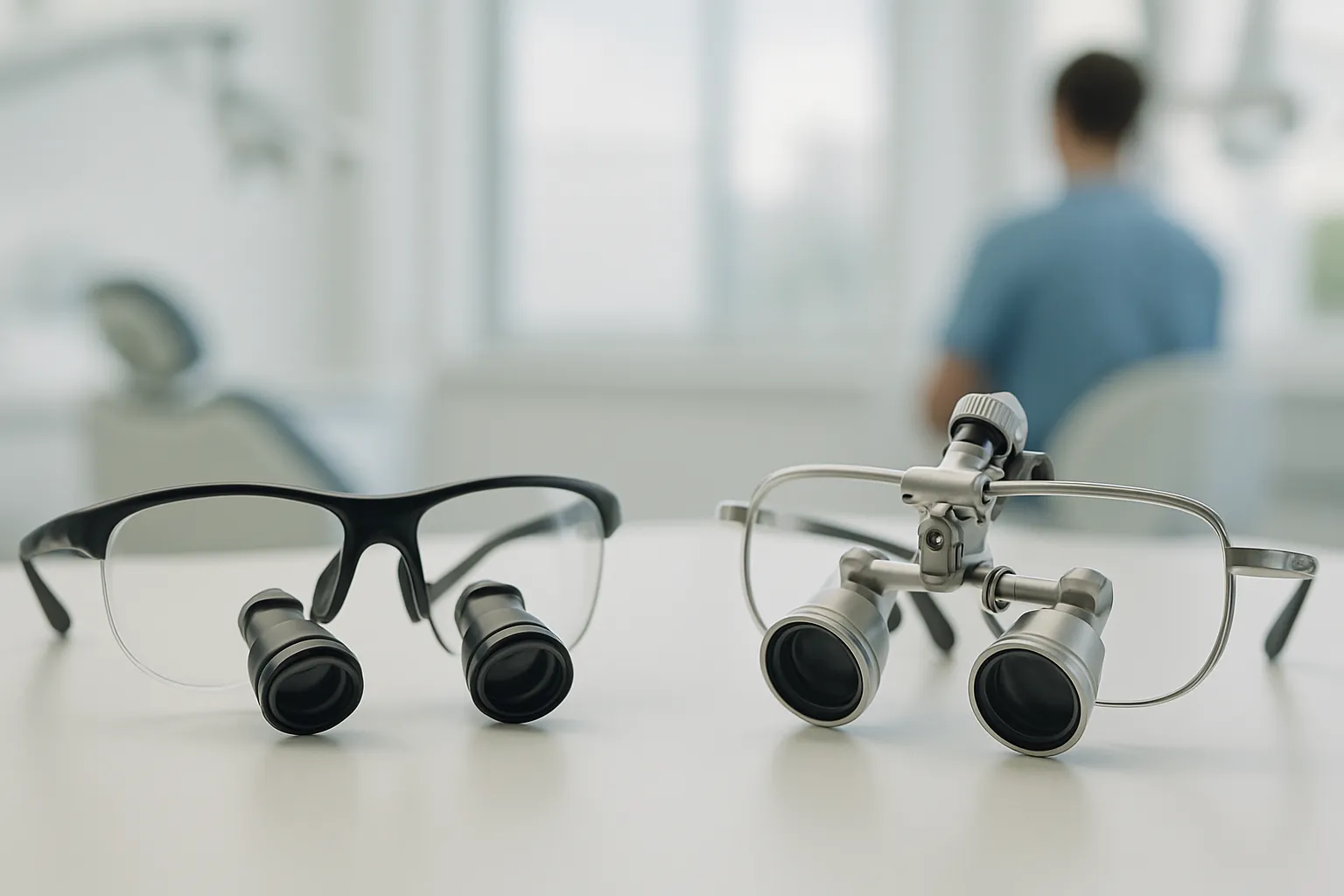
TTL vs Flip-Up Loupes: Fitting Differences and Considerations
Advantages and Limitations in Fitting
Through-the-lens (TTL) and flip-up loupes differ significantly in their fitting processes and ergonomic implications. TTL loupes are custom-built to the clinician’s specific measurements, including interpupillary distance and declination angle, making initial fitting critical for long-term comfort. Flip-up loupes, in contrast, offer greater adjustability after purchase, allowing clinicians to fine-tune the angle and positioning as needed in practice. However, this flexibility can sometimes lead to misalignment if not routinely checked.
| Feature | TTL Loupes | Flip-Up Loupes |
|---|---|---|
| Initial Fitting | Custom, precise | Manual, user-adjusted |
| Post-Purchase Adjustability | Minimal | High |
| Ergonomic Consistency | Stable if fitted well | Variable, depends on adjustments |
| Common Issues | Irreversible if misfitted | Potential for misalignment |
Evidence suggests that both TTL and flip-up loupes can improve operator posture when properly fitted, but TTL loupes require greater precision during the initial fitting to maintain ergonomic benefits over time. Flip-up loupes may be more forgiving for users needing ongoing adjustment, though consistent use of ergonomic settings is essential to maintain posture improvements.
Product-Specific Fitting Tips: Lumadent, Surgitel, and Amtech
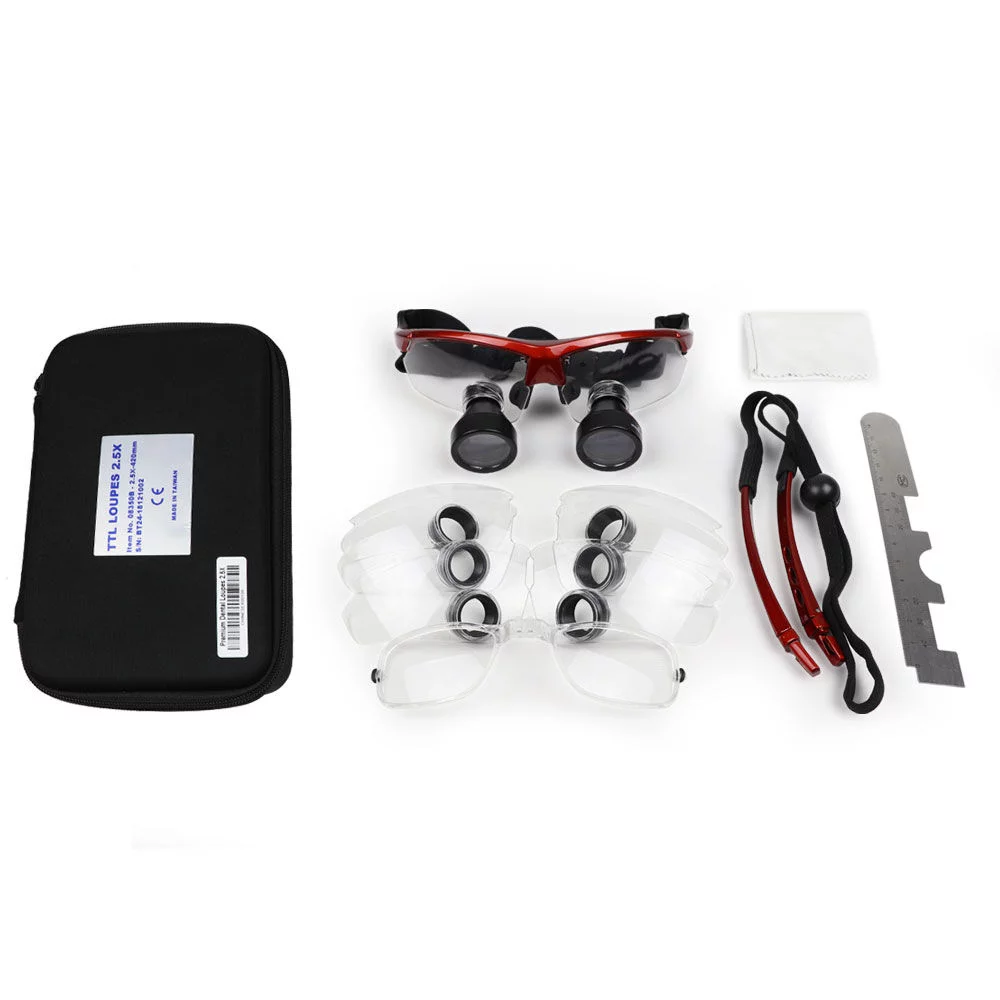
When fitting loupes from leading brands such as Lumadent, Surgitel, and Amtech, following manufacturer-specific recommendations helps optimize comfort and visual performance. For Surgitel loupes, precise measurement of both working distance and declination angle is emphasized, with guidance to maintain a natural head posture during fitting. Surgitel representatives recommend regular reassessment of fit as posture habits may change over time (W2). Lumadent and Amtech loupes are designed for magnification during dental procedures; users should confirm interpupillary distance (PD) and frame stability according to general manufacturer instructions (product id:1, product id:3). A common user issue across these brands is frame slippage, often addressed by adjusting temple arms or selecting a frame style suited to the wearer’s head shape (W3). For a versatile option with independently adjustable PD and a lightweight frame, the Premium TTL Dental Loupes 2.5X (420mm Working Distance) may offer practical advantages for personalized fitting.
Ergonomics and Adaptation: Ensuring Long-Term Comfort
Adapting to new dental loupes requires a period of adjustment, during which practitioners should focus on maintaining neutral posture and avoiding excessive neck or trunk flexion. Evidence suggests that properly fitted loupes—with attention to declination angle and working distance—may help reduce musculoskeletal strain and encourage improved operator posture over time, especially when ergonomic principles are emphasized early in training (S1, S5). Practically, clinicians should periodically reassess their posture during procedures, adjust seating and patient positioning as needed, and allow time for gradual adaptation to the loupe’s optical system. Ongoing adjustment is important, as studies indicate that both posture and comfort can evolve with continued loupe use (S4, S6). Routine maintenance, such as regular tightening of frame screws, cleaning of lenses, and inspection for wear, is recommended to preserve the loupe’s fit and optimal performance (W1).
Troubleshooting Common Fitting Problems in UAE Clinics
Dentists in the UAE frequently encounter fitting issues such as discomfort, eye strain, and loupe slippage during clinical use. Discomfort may stem from incorrect working distance or frame misalignment, while eye strain is often linked to improper interpupillary distance or declination angle. Slippage can result from ill-fitting nose pads or loose temple arms. Practical solutions include carefully adjusting the frame to sit securely without excessive pressure, centering the telescopes on the pupils, and confirming the correct working distance while seated in your usual posture (W9). The UAE’s high humidity and temperature can increase perspiration, affecting grip and stability; consider using anti-slip nose pads or adjustable straps as a preventive measure. Cultural factors, such as the use of head coverings, may also influence frame selection and fit. Persistent issues like ongoing discomfort or visual fatigue may warrant professional adjustment or consultation with the manufacturer for tailored support (W6).
Conclusion
Accurate measurement and individualized fitting of dental loupes are important for both clinical excellence and practitioner well-being. Evidence suggests that loupes tailored to the operator’s working distance, interpupillary distance, and declination angle can support improved posture and reduce musculoskeletal risks when compared to generic or poorly fitted devices (S1, S3, S4). By investing time in precise measurement and ongoing adjustment, UAE dentists can optimize comfort, minimize eye strain, and maintain ergonomic alignment throughout their careers.
For best results, consider this checklist:
- Adopt your usual clinical posture during measurement.
- Record working distance, interpupillary distance, and declination angle carefully.
- Confirm frame fit and stability, accounting for local climate conditions.
- Test loupes in real procedures and adjust as needed over time.
- Schedule routine maintenance and seek professional support for persistent fit issues.
Continual adaptation and periodic professional adjustment remain key to sustaining both comfort and clinical performance with dental loupes (W1, S7).
Frequently Asked Questions
How often should dental loupes be refitted?
Dental loupes should be reassessed if your posture, prescription, or clinical needs change, or if you notice discomfort.
Can I use the same loupe measurements for different brands?
Measurements may be transferable but slight variations in frame and optics design can affect the fit; always follow the manufacturer’s fitting process.
What is the most important measurement for loupe fitting?
Working distance is crucial, but interpupillary distance and declination angle are also key for comfort and vision.
Is professional fitting necessary, or can I measure myself?
Professional fitting is generally recommended for optimal results, though some manufacturers provide guidance for self-measurement.
References
- Magnification loupes influence on neck and trunk flexion of dental hygienists while scaling—a pilot study (2021)
- Using motion capture technology to measure the effects of magnification loupes on dental operator posture: A pilot study (2018)
- A comparative study of postural impact and benefits from loupes in undergraduate and graduate dentists (2025)
Last updated: 2026-10-11
Related products at Nutrident
Dentist, Iran Medical Council registration No. 233463 · Last reviewed: 11 October 2026
Nutrident educational content is based on credible sources and reviewed under his supervision. This article is for professional education and does not replace clinical examination or the judgement of the treating dentist.