




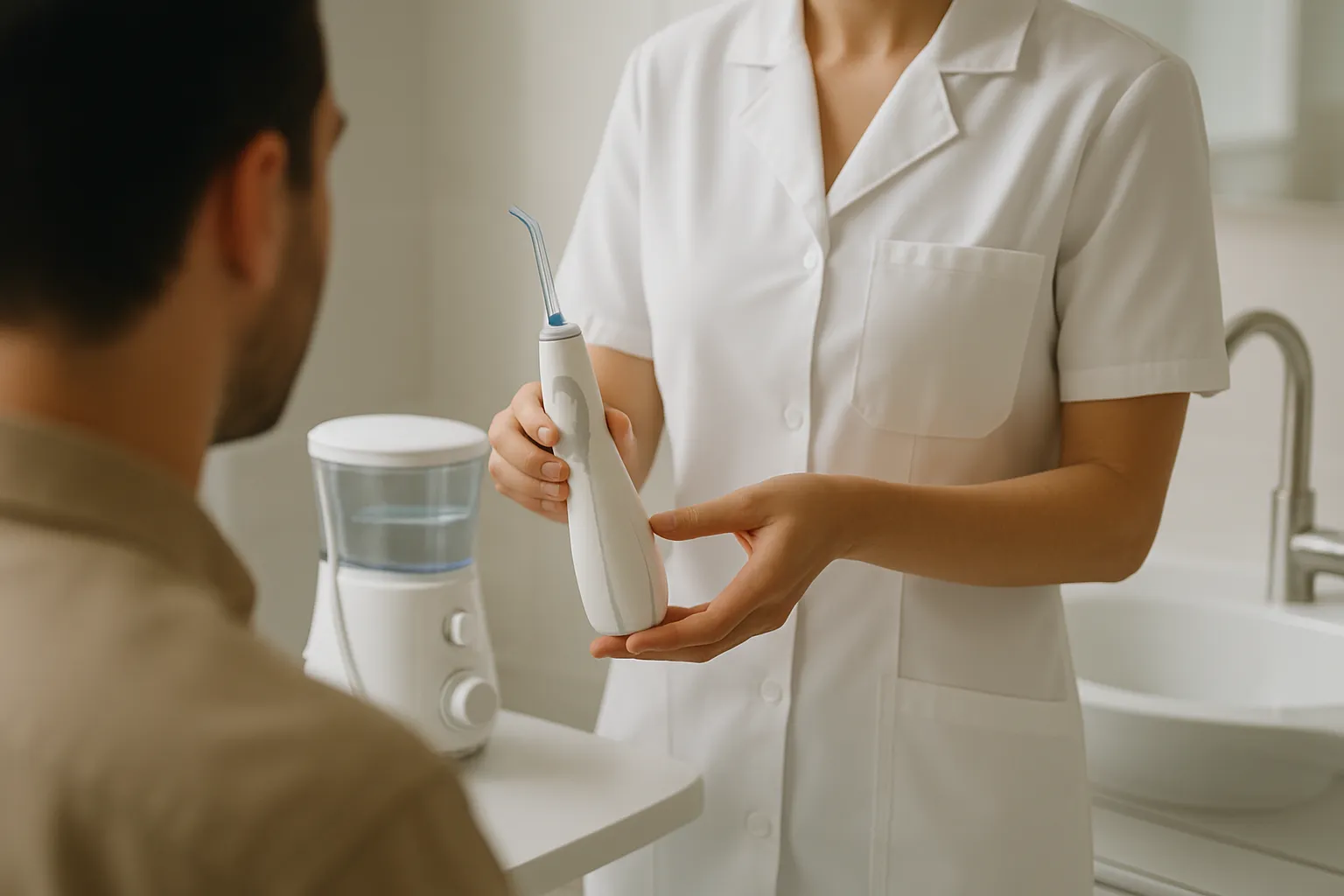
Clear, evidence-based instructions on water flosser use are essential to help patients achieve optimal oral hygiene, particularly in clinical settings where diverse patient needs and local factors must be considered. Studies suggest that water flossers can aid in reducing gingival inflammation and plaque, especially for patients who find traditional flossing challenging or have orthodontic appliances, implants, or limited dexterity (W1, W2, W6). In the UAE, unique considerations such as water quality, varying patient backgrounds, and local infection control protocols require dental professionals to tailor guidance for safe and effective use in UAE dental clinics.
This article provides practical, step-by-step instructions for correct water flosser use, addresses safety and contraindications, and offers advice for patients with braces, implants, or prostheses. It also covers device maintenance, hygiene, and strategies to improve patient compliance, ensuring UAE clinicians can confidently support their patients in integrating water flossers into daily oral care routines.
Clinical Indications and Limitations of Water Flossers
Who Benefits Most from Water Flossers?
Current evidence suggests that water flossers can help reduce gingival inflammation and may lower pathogenic bacteria, including patients with dental implants and orthodontic appliances (W1, W6). Studies also indicate that water flossers and interdental brushes are generally effective in reducing inflammation and are often preferred by patients over traditional string floss (W2). Individuals with fixed prostheses or motor limitations may find water flossers easier to use, as these devices require less manual dexterity and can access challenging interdental spaces (W6). For patients who struggle with or are non-compliant with traditional flossing, water flossers may serve as a useful adjunct to their oral hygiene routine (S10).
However, water flossers are not a universal substitute for all patients. In cases where precise mechanical plaque removal is essential, or for patients with certain oral lesions, alternative approaches may be more appropriate. Dentists should assess each patient’s clinical situation, dexterity, and preferences before recommending a water flosser as part of their oral hygiene regimen.
Contraindications and Safety Considerations
When to Avoid or Modify Water Flosser Use
Water flossers are generally well-tolerated, but clinicians should be aware of specific contraindications. Use is typically contraindicated in patients with certain oral lesions, such as ulcerations or open wounds, as water jets may aggravate tissue injury (S6). Patients with severe or uncontrolled periodontitis should also avoid water flossers until acute inflammation is managed, as forceful irrigation could potentially exacerbate tissue breakdown (S3). Individuals with Sjögren’s syndrome and significant oral dryness may experience discomfort and are often advised against water flosser use (S7). Recent oral surgery, especially involving open surgical sites, represents a temporary contraindication until healing is adequate (S6).
For children and special groups, safety depends on manual dexterity and supervision. Evidence suggests that, when used as directed, water flossers do not harm gingival or epithelial tissue at recommended settings (W8). In the UAE context, clinicians should consider local water quality; using sterile or bottled water may help reduce infection risk, especially for immunocompromised patients. Assess patient compliance and hygiene practices before recommending a device, and provide tailored guidance to minimise adverse events.
How to Use a Water Flosser Correctly: Step-by-Step Instructions
Clinic-Ready Patient Education
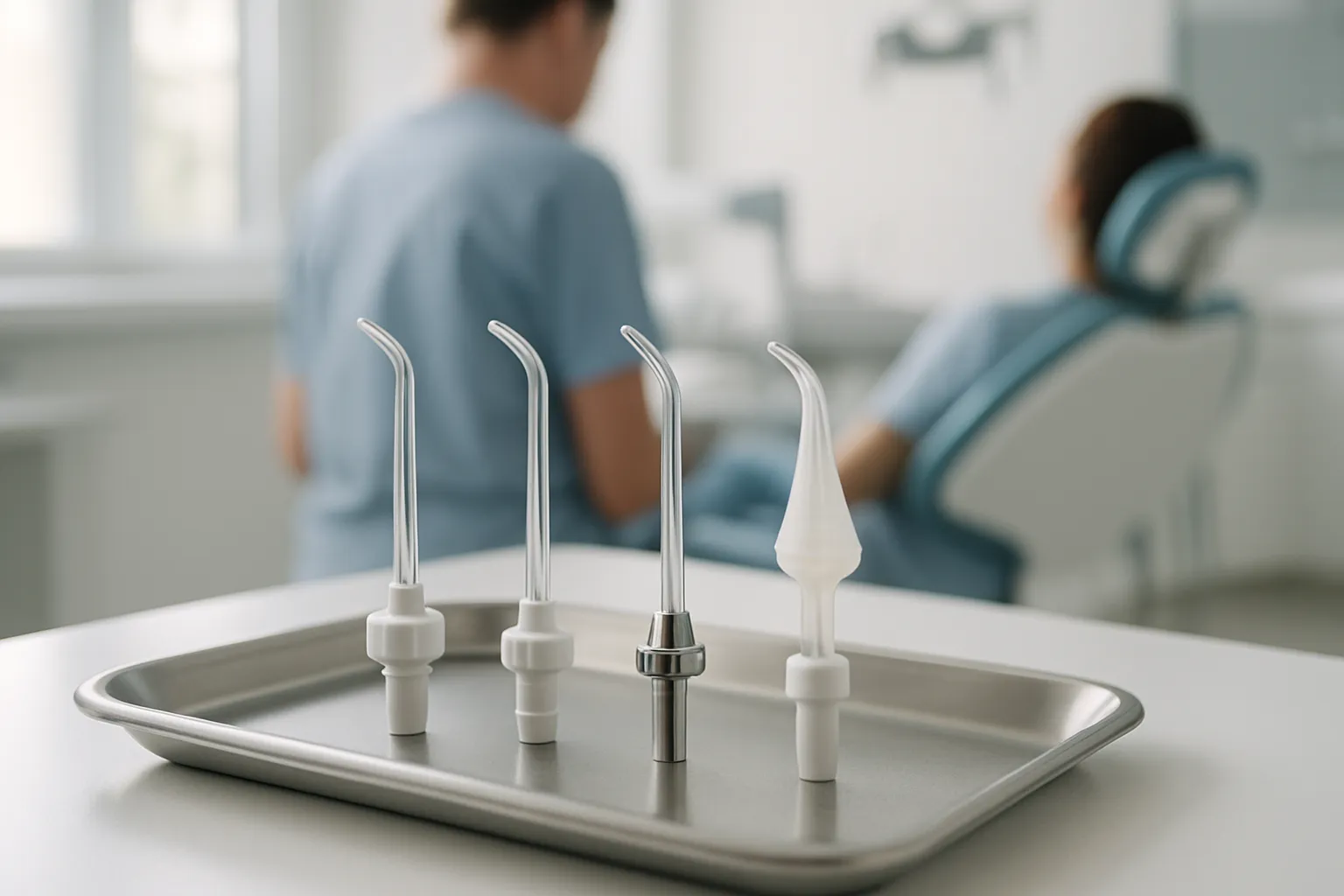
For optimal results, instruct patients to begin their oral hygiene routine by brushing first, then using the water flosser. Devices like the Waterpik Water Flosser WP-660 offer features such as adjustable pressure and multiple tip options, allowing customisation for individual needs. Patients should fill the reservoir with lukewarm water to enhance comfort and reduce sensitivity. Leaning over the sink and keeping lips slightly closed while directing the tip at a 90-degree angle to the gumline helps minimise splashing and maximise cleaning efficacy. Move systematically along the gumline, pausing briefly between teeth. Daily use is recommended. Dentists can use a demonstration checklist: confirm correct reservoir filling, proper tip selection, safe pressure setting, correct angulation, and systematic movement along both arches. Reinforce the importance of emptying and rinsing the device after each use to maintain hygiene.
Special Instructions: Braces, Implants, and Prostheses
Tailoring Guidance for Complex Cases
Patients with orthodontic appliances, dental implants, or fixed prostheses often need specific water flosser instructions for optimal results. Evidence suggests water flossers can reduce gingival inflammation and pathogenic bacteria in implant patients, and are effective for those with braces or prostheses who may struggle with traditional flossing methods (W1, W6, W9). For orthodontic patients, models like the API Aquapick Water Flosser/Oral Irrigator offer targeted cleaning around brackets and wires. Implant and prosthesis patients benefit from using standard or plaque seeker nozzles on devices such as the Waterpik Ultra Water Flosser WP-100, starting at lower pressure settings to avoid tissue trauma. Advise patients to angle the tip towards the gumline and interdental spaces, monitor for soft tissue irritation, and avoid use if peri-implant or oral lesions are present. Regular review of technique helps minimise risks and maximise hygiene benefits.
Water Flosser Maintenance and Hygiene
Cleaning, Storage, and Device Longevity
Proper maintenance of water flossers is essential to minimise infection risk and ensure optimal device performance. After each use, patients should empty the reservoir, rinse all removable parts with clean water, and allow components to air dry before reassembling. Weekly, it is advisable to soak the nozzle and reservoir in a mild disinfectant or diluted white vinegar solution, then rinse thoroughly to remove any residue. For products such as the Waterpik Cordless Express Water Flosser Wf-02e2, gentle cleaning of the tip and reservoir is recommended to maintain function and hygiene.
In the UAE, where water quality can vary, using bottled or filtered water may help reduce mineral buildup and microbial contamination, especially in areas with concerns about tap water safety. Common mistakes include leaving water in the reservoir, neglecting regular cleaning, or using unclean water sources—all of which can increase infection risk. Dentists should reinforce these hygiene steps at every recall visit.
Choosing the Right Water Flosser for Your Patient
Comparison Table: Features and Indications
| Model | Type | Reservoir Size | Pressure Settings | Nozzle Types | Portability | Best For |
|---|---|---|---|---|---|---|
| Waterpik Water Flosser WP-660 | Countertop | Large | 10 | 7 | Low | Comprehensive care, home use |
| Waterpik Ultra Water Flosser WP-100 | Countertop | Large | 10 | Multiple | Low | Chronic gingivitis, multiple users |
| API Aquapick Water Flosser/Oral Irrigator | Countertop | 600 ml | Multiple | Standard | Low | Orthodontic, implant care |
| Waterpik Cordless Express Water Flosser Wf-02e2 | Cordless | Small | 2 | 2 | High | Travel, limited space |
| Oracura Countertop Smart Water Flosser | Countertop | Large | Multiple | Standard | Low | Family, home use |
| Oracura Smart Plus Water Flosser | Cordless | Medium | Multiple | Standard | Medium | On-the-go, moderate dexterity |
| Oracura OCE01 Eco Water Flosser | Cordless | Small | 3 | 2 | High | Travel, simple needs |
Countertop models such as the Waterpik Water Flosser WP-660 and API Aquapick Water Flosser/Oral Irrigator offer larger reservoirs and multiple tips, making them suitable for patients with limited dexterity or complex oral hygiene needs. Cordless models like the Waterpik Cordless Express Water Flosser Wf-02e2 and Oracura OCE01 Eco Water Flosser are ideal for travel or patients with limited bathroom space. When selecting a device, consider dexterity, reservoir size, pressure options, and whether the patient requires portability or advanced features.
Practical Tips for Patient Communication and Compliance
Optimising Understanding and Daily Use
Effective patient education is essential for safe and consistent water flosser use. During chairside instruction, demonstrate the device step-by-step and invite patients to practise under supervision, ensuring they can replicate the correct technique. Address common misconceptions, such as the belief that water flossers replace brushing or that higher pressure always improves cleaning—clarify that water flossers are adjuncts and that excessive pressure may cause tissue trauma. Reinforce correct use by reviewing technique and outcomes during recall appointments, offering positive feedback and troubleshooting as needed. Provide take-home handouts with clear, illustrated instructions, common pitfalls, and device maintenance tips to support daily adherence. Practical, tailored communication helps patients integrate water flossing into their routines and improves long-term oral hygiene outcomes.
Conclusion
Providing individualised, evidence-based instructions for water flosser use is essential to optimise patient outcomes and minimise risks in UAE dental clinics. Dentists play a central role in selecting appropriate candidates, ensuring safety, and supporting ongoing patient education. Regular review of water flosser technique and oral hygiene status during recall visits helps reinforce correct practices and address any emerging concerns.
- Assess each patient’s oral and systemic health before recommending a water flosser.
- Provide clear, stepwise instructions and demonstrate correct use in the clinic.
- Tailor advice to special populations, such as those with orthodontic appliances, implants, or limited dexterity.
- Discuss device maintenance and water quality, especially in the UAE context.
- Schedule follow-up to review technique and monitor oral health outcomes.
By combining clinical expertise with patient-centred communication, dental teams can help patients safely integrate water flossers into their daily routines and achieve improved oral health.
Frequently Asked Questions
Can anyone use a water flosser?
Most patients can use a water flosser, but there are specific contraindications. Individual assessment is recommended.
Are water flossers safe for braces and implants?
Studies suggest water flossers may help reduce plaque and inflammation for these groups, but technique and settings should be adjusted.
How often should patients clean their water flosser?
Manufacturers typically recommend cleaning the device and nozzles at least weekly, with more frequent cleaning in high-use settings.
How can patients avoid making a mess with a water flosser?
Leaning over the sink, keeping lips slightly closed around the nozzle, and using moderate pressure can help minimise splashing.
References
- Oxford handbook of clinical dentistry (2014)
- Managing xerostomia and salivary gland hypofunction: executive summary of a report from the American Dental Association Council on Scientific Affairs (2014)
- Pocket guide for nonprescription product therapeutics (2005)
Last updated: 2026-10-19
Related products at Nutrident


Dentist, Iran Medical Council registration No. 233463 · Last reviewed: 19 October 2026
Nutrident educational content is based on credible sources and reviewed under his supervision. This article is for professional education and does not replace clinical examination or the judgement of the treating dentist.