




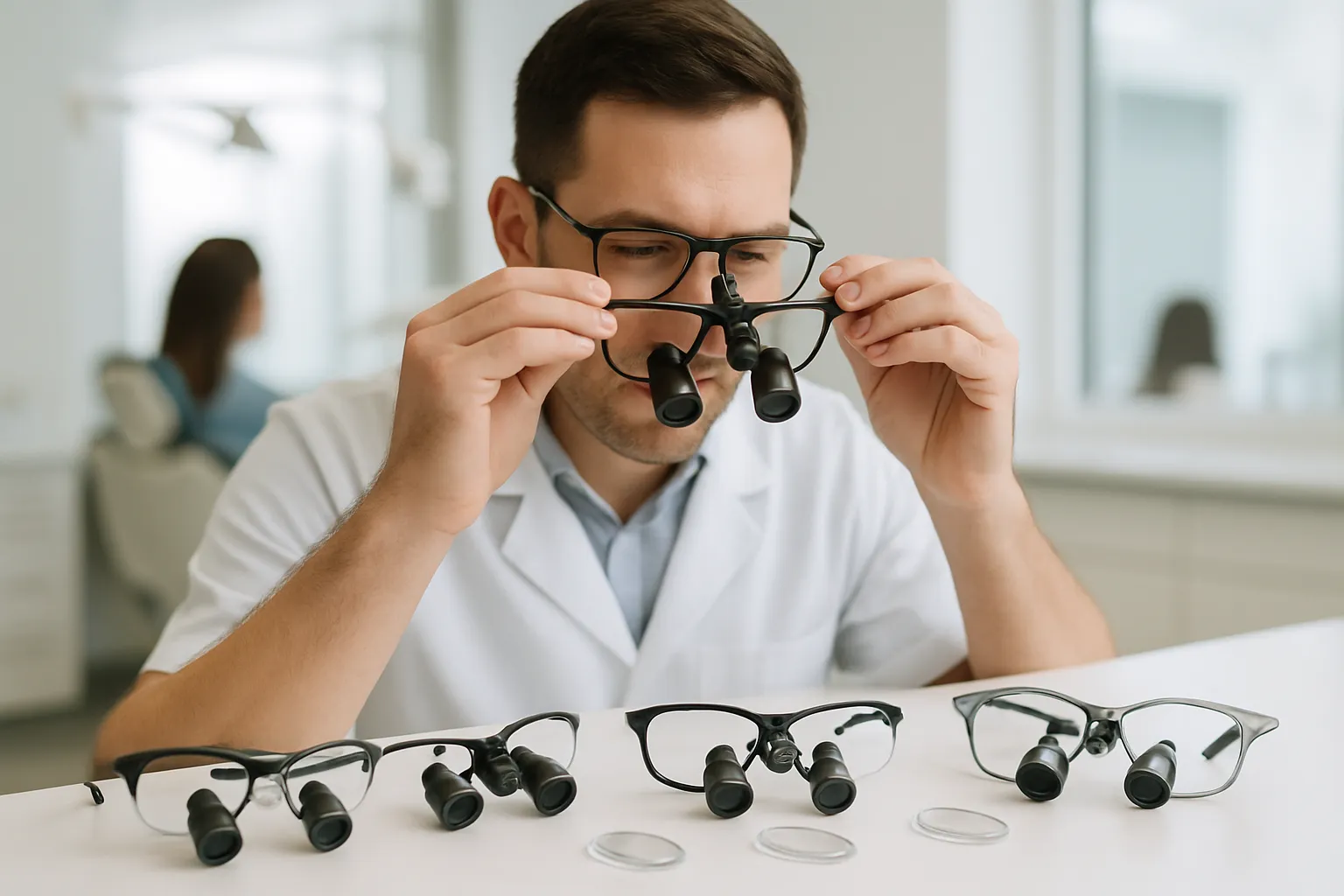
Choosing the right prescription lenses for dental loupes is essential to ensure both clear vision and optimal ergonomics during clinical procedures. When prescription needs are properly integrated into loupes, clinicians may experience improved visual performance and posture, which can help reduce fatigue and musculoskeletal discomfort over long procedures (S1, S4, S5). However, combining prescription corrections with magnification presents unique challenges, such as compatibility with loupe designs, maintaining a wide field of view, and ensuring that updates to prescriptions are straightforward.
Dentists often face practical questions about how best to select, order, and maintain prescription lenses for their loupes, especially when considering different brands and models. This article will guide you through the key considerations for prescription integration: from understanding compatibility and safety issues, to practical steps for ordering custom lenses, and best practices for ongoing maintenance and adjustment. By addressing these factors, clinicians can make informed decisions about prescription dental loupes and maintain both safety and visual clarity throughout their careers.
Understanding Prescription Lenses in Dental Loupes
Prescription lenses play a vital role in modern dental loupes, enabling clinicians with refractive errors to achieve improved visual clarity during procedures. Integrating individual prescriptions into loupes allows practitioners to benefit from magnification without compromising their visual correction needs. This integration is particularly important for clinicians who would otherwise have to wear their own glasses beneath the loupes, which can lead to discomfort and reduced visual performance.
For dentists with refractive errors, prescription lenses in loupes are associated with improved ergonomics and visual clarity. Studies have reported that using prescription-corrected loupes may help reduce musculoskeletal strain by promoting a more upright posture and decreasing the need for compensatory head or neck movements. Improved clinical performance, visual acuity, and operator comfort have all been observed when prescription needs are properly addressed in loupe design, supporting both efficiency and practitioner well-being in daily practice.
Types of Prescription Integration: Built-in vs. Inserts
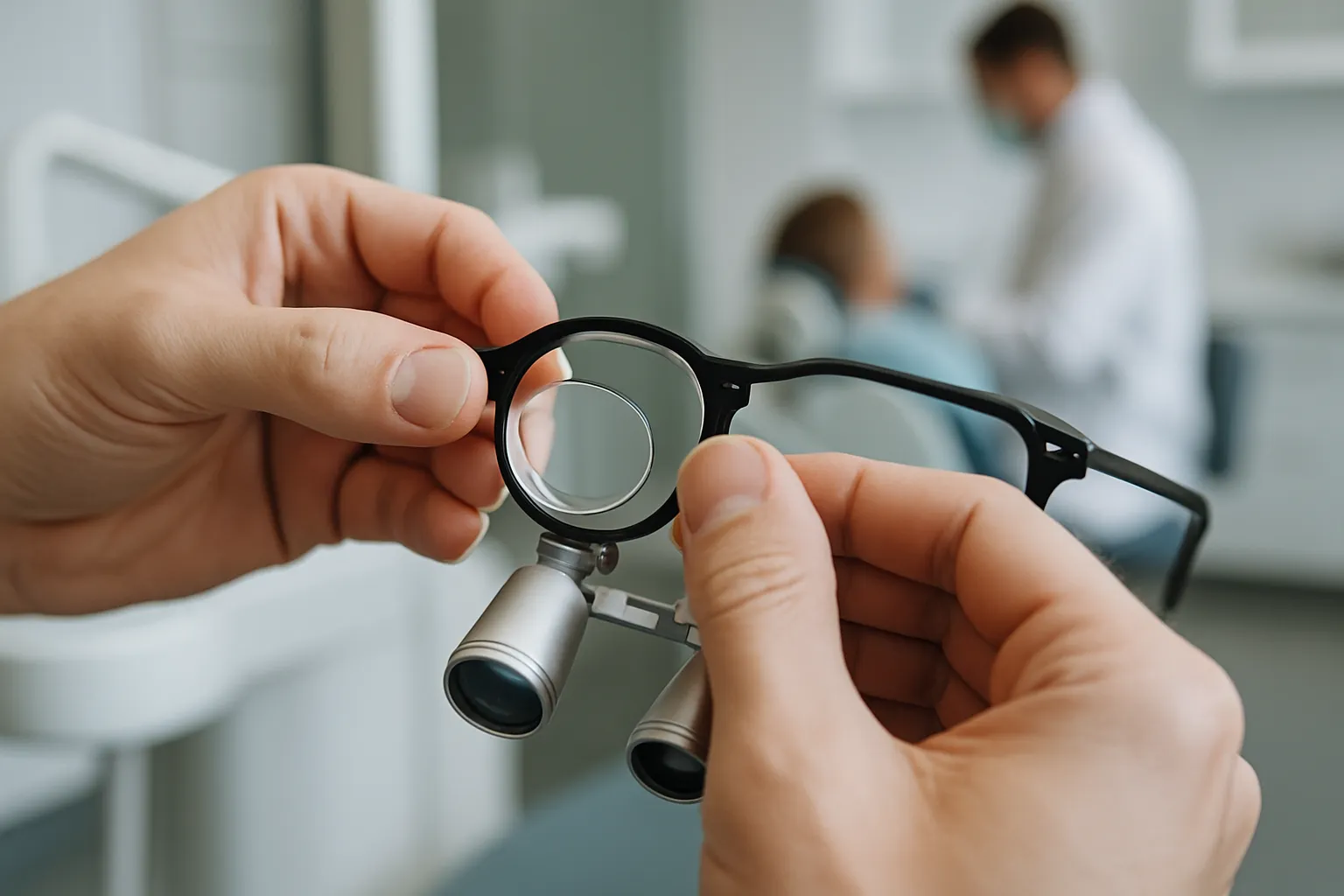
Dental loupes can accommodate prescription needs through two primary approaches: built-in prescription lenses (custom carriers) and clip-in or insert options. Built-in lenses are fabricated directly into the loupe frame, matching the clinician’s prescription for a seamless visual experience. Inserts or clip-ins, by contrast, are removable prescription carriers that fit behind or within the loupe frame.1
| Feature | Built-in (Custom Carrier) | Insert/Clip-in |
|---|---|---|
| Weight | Usually lighter | May add bulk |
| Field of View | Optimized | Slightly reduced |
| Prescription Updates | Requires return to manufacturer | Can be swapped locally |
| Cost Over Time | Higher for updates | Lower for updates |
Manufacturer guidance indicates that through-the-lens (TTL) loupes with built-in prescriptions must be returned to the manufacturer for any prescription changes, whereas inserts can be updated more conveniently.2,3
Compatibility with Leading Loupe Brands
Prescription compatibility varies among leading dental loupe brands, making it important to review manufacturer guidance before ordering. Lumadent Loupe frames, for example, can generally accommodate a wide range of prescriptions, though the Argon frame has restrictions for higher prescriptions, so clinicians should confirm their specific needs with the manufacturer (W3). Surgitel Loupe models support several prescription options, including single distance, reading, or bifocal prescriptions, but custom through-the-lens (TTL) designs may have additional requirements (W4). Amtech loupes, as discussed in comparative reviews, can be customised for most prescriptions, but frame shape and lens size may affect compatibility (W5). To ensure a successful order, practitioners should check prescription range limits, provide accurate prescription details, and confirm compatibility with both the loupe supplier and their optometrist.
Selecting the Right Prescription: Clinical and Optical Criteria
When customising dental loupes with prescription lenses, several key optical parameters must be specified: sphere (for myopia or hyperopia correction), cylinder and axis (for astigmatism), and reading addition if required for presbyopic clinicians. The choice between distance-only and bifocal prescriptions depends on the intended working distance of the loupes. Depending on the clinician’s needs and working distance, either a bifocal or single-vision prescription may be appropriate, based on individual needs and manufacturer capabilities (W4). It is advisable to work closely with an optometrist experienced in occupational prescriptions, providing them with your intended working distance and loupe specifications. This collaboration helps ensure the final prescription matches both your clinical requirements and the technical constraints of the loupe design (W5).
Ordering and Customisation Process
Ordering custom prescription dental loupes involves several important steps to ensure optimal visual performance and comfort. First, obtain a current and accurate eye prescription from your optometrist, including sphere, cylinder, axis, and any reading addition if needed. Next, measure your pupillary distance (PD), as this is essential for aligning the lenses correctly within the loupe frame. Manufacturers typically require these prescription details and PD, along with your choice of loupe frame and magnification preferences, to begin customisation. After submitting your information, the manufacturer will integrate your prescription into the loupe lenses, a process that is tailored to your prescription. The entire process, from order to delivery, usually takes several weeks, including time for precise lens fitting and quality checks. During fitting, expect to verify comfort and clarity before commencing clinical use.
Maintenance and Adjustments for Long-Term Clarity
Proper care and timely adjustments are critical to maintaining the clarity and longevity of prescription lenses in dental loupes. To preserve optical quality, clinicians should clean lenses daily with a soft, lint-free cloth and use manufacturer-recommended cleaning solutions, avoiding abrasive materials that can scratch coatings. When prescription changes occur, particularly with through-the-lens (TTL) loupes, most manufacturers require the entire loupe unit to be returned for lens replacement; this process ensures optimal alignment and visual performance but may result in some clinical downtime while the update is completed. Signs that prescription lenses may need adjustment include persistent eyestrain, difficulty maintaining focus at working distance, or a noticeable decline in visual clarity. In such cases, prompt consultation with both the loupe manufacturer and an eye care professional is advised to determine whether a prescription update or realignment is necessary for safe and effective clinical practice.
Prescription Lenses in Popular Loupe Models: Practical Examples
Prescription lens integration varies by loupe model, affecting both user experience and optical performance. The Heine Dental Loupes S-Frame feature a modern, lightweight frame designed for comfort, making them suitable for users requiring prescription lenses. Their achromatic optics and multi-coating support crisp imaging, and the frame accommodates prescription integration without significant added weight. The Premium TTL Dental Loupes 2.5X (420mm Working Distance) offer independently adjustable pupillary distance and a flexible frame, allowing for custom prescription lens fitting. This model’s design supports eyewear integration, enabling personalized comfort for clinicians with refractive needs. The Endoking Dental Loupes With Frame ( LED Headlight Free ) are also compatible with prescription lenses, with a frame structure that supports lens customization. For each model, it is advisable to consult the product page and manufacturer guidance to confirm prescription compatibility and integration steps.
Conclusion
Choosing the right prescription lenses for your dental loupes is essential for maintaining both clear vision and ergonomic posture in daily practice. Dentists should confirm compatibility between their prescription and the loupe model, carefully considering whether built-in or insert options best suit their clinical and optical needs. Accurate prescription details—including sphere, cylinder, axis, and reading addition—are critical and should be specified in consultation with an eye care professional familiar with loupe requirements. Regular review and timely updates of your prescription are important, as changes may require manufacturer intervention, especially for through-the-lens (TTL) designs.
- Verify prescription compatibility with your chosen loupe brand and frame style before ordering.
- Provide complete, up-to-date prescription information and pupillary distance.
- Collaborate with your optometrist for lens specification tailored to your loupe’s working distance.
- Follow recommended maintenance and cleaning routines to preserve lens clarity.
- Monitor for signs of visual strain or reduced clarity, and seek adjustments or replacements as needed.
Ultimately, a collaborative approach involving the loupe manufacturer and your eye care provider will help ensure optimal visual performance and long-term safety in clinical practice.
Frequently Asked Questions
Can I use my existing eyeglass prescription for dental loupes?
Yes, but the prescription may need to be adjusted based on the loupe’s working distance and manufacturer requirements.
What happens if my prescription changes after I purchase loupes?
For built-in prescription loupes, lenses typically must be replaced by the manufacturer. Insert options may allow for easier updates.
Are all loupe brands compatible with prescription lenses?
Most major brands offer prescription options, but specific frame or prescription range limitations may apply.
Does adding prescription lenses affect loupe weight or comfort?
Prescription lenses may modestly increase weight or alter frame balance, depending on design and lens thickness.
References
- Magnifying loupes in modern dental practice: an update (2010)
- Use of dental loupes among dental trainers and trainees in the UK (2013)
- Using motion capture technology to measure the effects of magnification loupes on dental operator posture: A pilot study (2018)
Last updated: 2026-10-06