




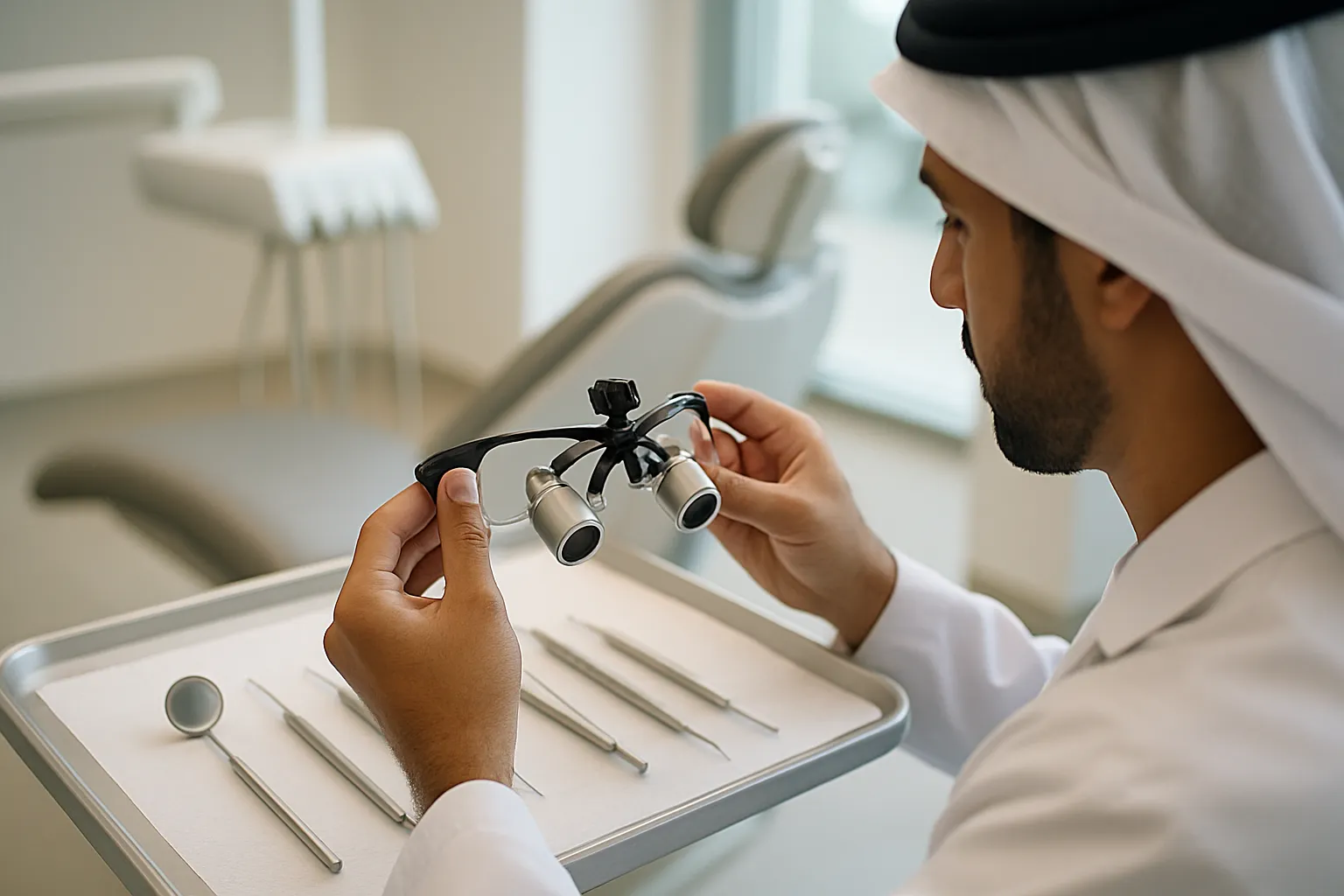
Choosing between prism (Keplerian) and Galilean dental loupes is a key decision that directly affects a dentist’s visual acuity, ergonomic posture, and daily clinical workflow. Galilean loupes use a compound lens system to provide lower magnifications (typically up to 3.5x), while prism (Keplerian) loupes incorporate a more complex prismatic design, enabling higher magnifications and enhanced image clarity at increased powers.
This optical distinction is clinically significant because it influences not only the level of detail a dentist can see, but also the field of view, weight, and comfort during extended procedures. The right choice can help reduce musculoskeletal strain and support better clinical outcomes. This article will guide UAE dentists through the practical differences between these loupe systems, helping you make an informed selection tailored to your clinical needs, ergonomic preferences, and the demands of modern dental practice.
Understanding Dental Loupe Optical Systems: Galilean vs Prism (Keplerian)
Dental loupes rely on two primary optical systems: Galilean and prism (Keplerian). Galilean loupes use a simple system of convex and concave lenses to produce magnification, typically resulting in a lightweight design with moderate magnification levels. In contrast, prism (Keplerian) loupes incorporate a series of lenses and prisms, enabling higher magnification and greater image clarity, especially at increased powers.1,2
The Galilean system is valued for its simplicity and relatively wide field of view at lower magnifications, making it suitable for general dental procedures. Prism loupes, with their more complex optical pathway, provide enhanced detail and clarity at higher magnifications, which can be advantageous for microsurgical or endodontic applications.2,3 Understanding these optical differences is clinically significant, as the choice of loupe system can influence both visual acuity and ergonomic comfort during dental procedures.3
Optical Performance: Magnification, Field of View, and Image Quality
Galilean dental loupes typically offer magnification up to 3.5x, making them suitable for general dental procedures where a broad field of view and ease of use are priorities. In contrast, prism (Keplerian) loupes can achieve higher magnifications, often ranging from 3.5x to 4.5x or more, which may be advantageous for procedures requiring enhanced visual detail, such as endodontics or microsurgery (S1, W2, W9).
At comparable magnifications, prism loupes generally provide a wider field of view and greater image clarity than Galilean systems (W8, W5). However, as magnification increases, Galilean loupes may exhibit more noticeable image distortion and a narrower field, while prism loupes maintain better clarity and less distortion at higher powers (W9, W5). These optical differences are significant when selecting loupes for tasks demanding precise visualization and minimal eye strain.
Ergonomics and Clinical Posture: Evidence and Practical Considerations
Proper loupe selection directly impacts dental ergonomics and musculoskeletal health. Studies indicate that using Galilean loupes at magnifications around 2.5x–3.5x can significantly improve operator posture, increasing compliance with ergonomic recommendations and reducing neck and upper back strain during clinical procedures (S3) (S4). Prism (Keplerian) loupes, which support higher magnifications, may be beneficial for procedures requiring extreme precision but can add weight and complexity, potentially affecting comfort over long sessions (S5). Regardless of system, suboptimal loupe adjustment or excessive magnification may still promote forward head posture if not matched to the user’s working distance (S10). Practical selection should prioritise lightweight designs, appropriate magnification for daily tasks, and custom fitting. For a detailed ergonomic guide, see the dental loupe ergonomics guide for UAE dentists.
Clinical Use Cases: When to Choose Galilean or Prism Loupes
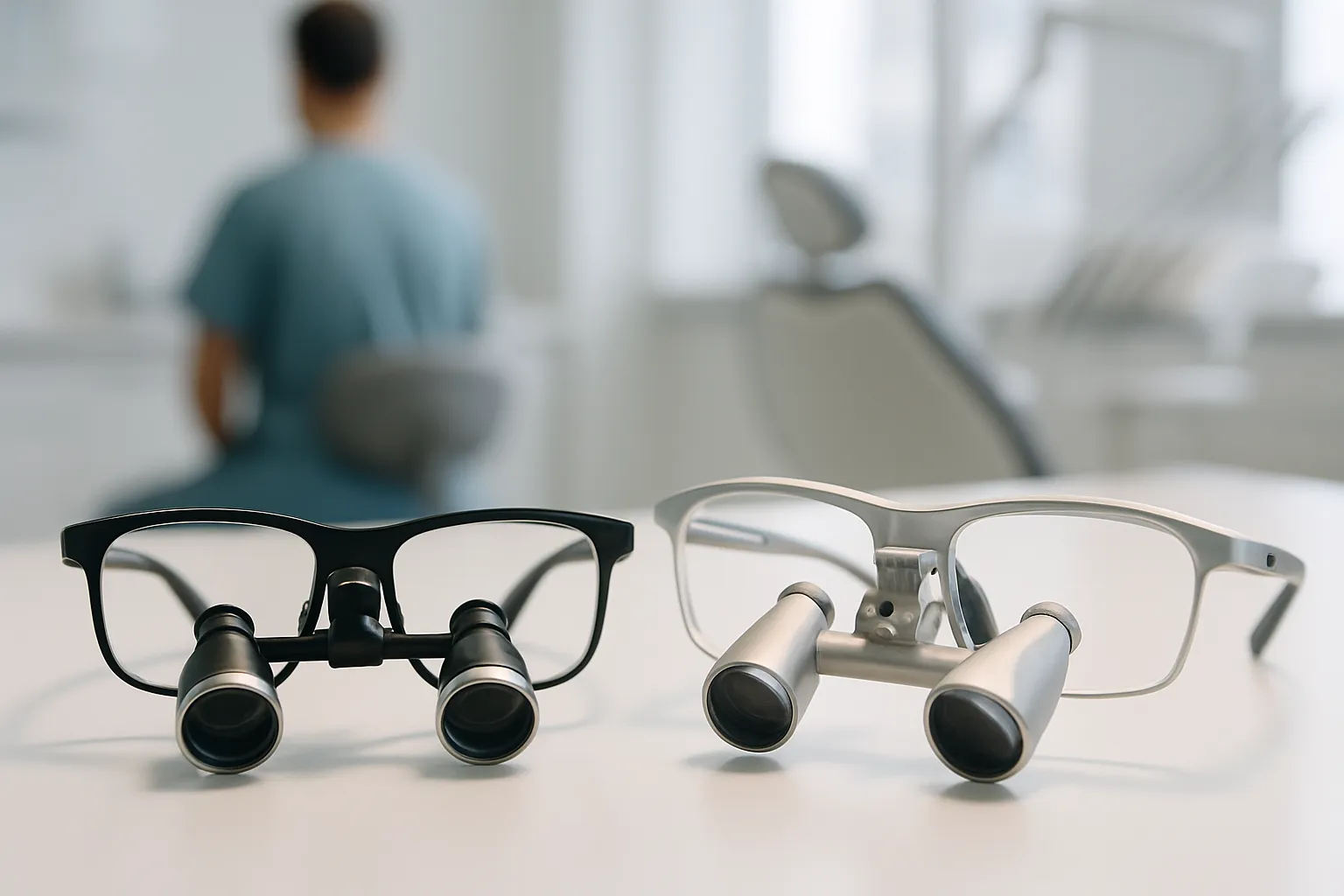
Galilean loupes are typically favoured by general dentists and hygienists for routine restorative procedures, examinations, and prophylaxis due to their lighter weight and ease of adaptation. Their magnification range, usually up to 3.5x, provides a broad field of view suitable for most general dental tasks, making them practical for clinicians who require frequent repositioning or who are new to magnification systems Galilean Dental Loupes (W1, W9). In contrast, prism (Keplerian) loupes offer higher magnifications (3.5x and above) with superior image clarity, making them preferred for endodontics, microsurgery, and procedures demanding enhanced visual detail Prism Dental Loupes (S1, W1). However, prism loupes are heavier and may require a longer adjustment period, which should be considered for clinicians with neck or back concerns or those working extended hours (W6). Ultimately, the choice depends on the specific clinical workflow, visual demands, and ergonomic priorities of the practitioner.
Comparison Table: Galilean vs Prism Loupes at a Glance
Choosing between Galilean and prism (Keplerian) dental loupes involves balancing optical performance, ergonomics, and clinical needs. The following table summarises the main differences to support quick, evidence-based decision-making:
| Feature | Galilean Loupes | Prism (Keplerian) Loupes |
|---|---|---|
| Magnification Range | 2.0x–3.5x | Up to 4.5x and higher |
| Weight | Lighter | Heavier |
| Field of View | Smaller at higher magnification | Wider at equivalent magnification |
| Clarity/Image Quality | Good at low–mid powers | Greater clarity at higher powers |
| Cost | Generally lower | Generally higher |
| Ergonomic Suitability | Well-suited for routine, prolonged use | Preferred for detailed, high-magnification tasks |
| Ideal Use Cases | General dentistry, hygiene, restorative | Endodontics, microsurgery, complex procedures |
This overview is intended to assist clinicians in matching loupe type to their workflow and ergonomic requirements.
Choosing Leading Brands in the UAE: Lumadent, Surgitel, and Amtech
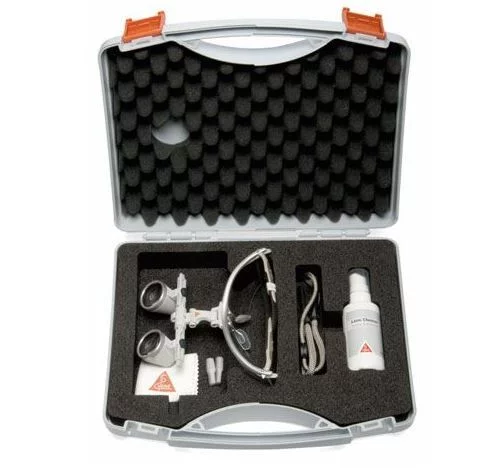
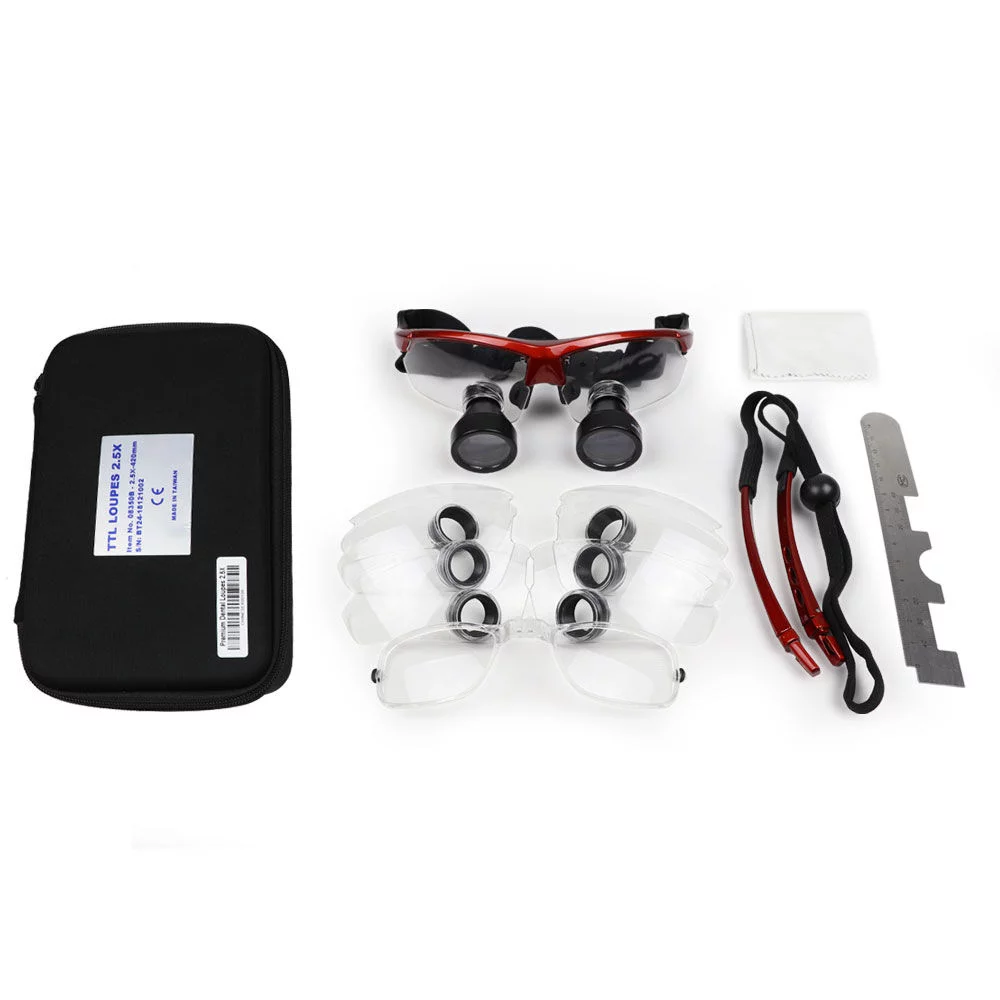
For UAE dentists considering dental loupes, Lumadent, Surgitel, and Amtech are established brands offering both Galilean and prism (Keplerian) optical systems. Each is recognised for providing magnification solutions suited to a variety of dental procedures. Lumadent and Surgitel offer a range of optical systems with various magnification and field of view options, while Amtech provides entry-level solutions suitable for clinicians new to magnification.1,2,3 When selecting a brand, practical considerations include the availability of after-sales support, warranty coverage, and compatibility with essential accessories such as headlights or prescription inserts. Dentists are encouraged to review leading options—including Heine Dental Loupes S-Frame, Premium TTL Dental Loupes 2.5X (420mm Working Distance), and Endoking Dental Loupes With Frame ( LED Headlight Free )—and to explore the best dental loupes at Nutrident booth. Comprehensive warranty and support information is also available for UAE practitioners here.
Practical Tips for Selecting the Right Loupe
When choosing dental loupes, consider a checklist of key factors: required magnification (e.g., 2.5x–3.5x for general work, higher for microsurgery), loupe weight, comfort during extended wear, field of view, and the types of procedures most frequently performed. Support and after-sales service from suppliers are also important for ongoing adjustments and maintenance. An in-person trial is highly recommended to assess fit and comfort, as individual facial features and working distances vary. Peer recommendations can provide valuable real-world insights into day-to-day usability. Manufacturers and suppliers often provide specific guidance for first-time buyers to help match loupes to clinical needs and ergonomics; for example, resources like the Dental Loupes Face Fit Guide offer practical advice on achieving an optimal fit for comfort and posture.
Conclusion
Choosing between prism (Keplerian) and Galilean dental loupes requires careful consideration of optical performance, ergonomics, and clinical needs. Evidence suggests Galilean loupes are well-suited for general dentistry and routine procedures at lower magnifications (up to 3.5x), offering lighter weight and ease of use (S1, W2). Prism loupes, on the other hand, provide higher magnification and improved image clarity at these powers, which may benefit specialists in endodontics or microsurgery, though they are often heavier and may involve a steeper learning curve (S1, W5).
For an evidence-based selection, UAE dentists should assess their typical procedures, required magnification, and ergonomic needs. Key steps include:
- Determine the magnification range suitable for your practice.
- Prioritise comfort, weight, and field of view for extended use.
- Consider the type of dentistry performed most frequently.
- Seek opportunities to trial different systems and consult with suppliers for after-sales support and compatibility with accessories.
Ultimately, trialling loupes in person and obtaining peer feedback can help ensure the chosen system aligns with both clinical demands and long-term practitioner well-being.
Frequently Asked Questions
What is the main difference between Galilean and prism (Keplerian) dental loupes?
Galilean loupes use a simpler optical system for lower magnification, while prism (Keplerian) loupes employ prisms for higher magnification and clarity.
Are prism loupes always better than Galilean loupes?
Not always; each has strengths depending on magnification needs, weight, and clinical application.
Which type of loupe is more ergonomic?
Both types can improve ergonomics if properly selected; lower magnifications (often Galilean) are lighter, while higher magnifications (prism) may require more adjustment.
Can I use prescription lenses with both types of loupes?
Yes, many modern loupes can be customised with prescription lenses; check with the manufacturer for compatibility.
References
- Influence of different loupe systems and their light source on the vision in endodontics (2019)
- Benefits of utilization of magnification in dentistry: A review (2020)
- Dental Magnification
Last updated: 2026-10-20
Related products at Nutrident

Dentist, Iran Medical Council registration No. 233463 · Last reviewed: 20 October 2026
Nutrident educational content is based on credible sources and reviewed under his supervision. This article is for professional education and does not replace clinical examination or the judgement of the treating dentist.