




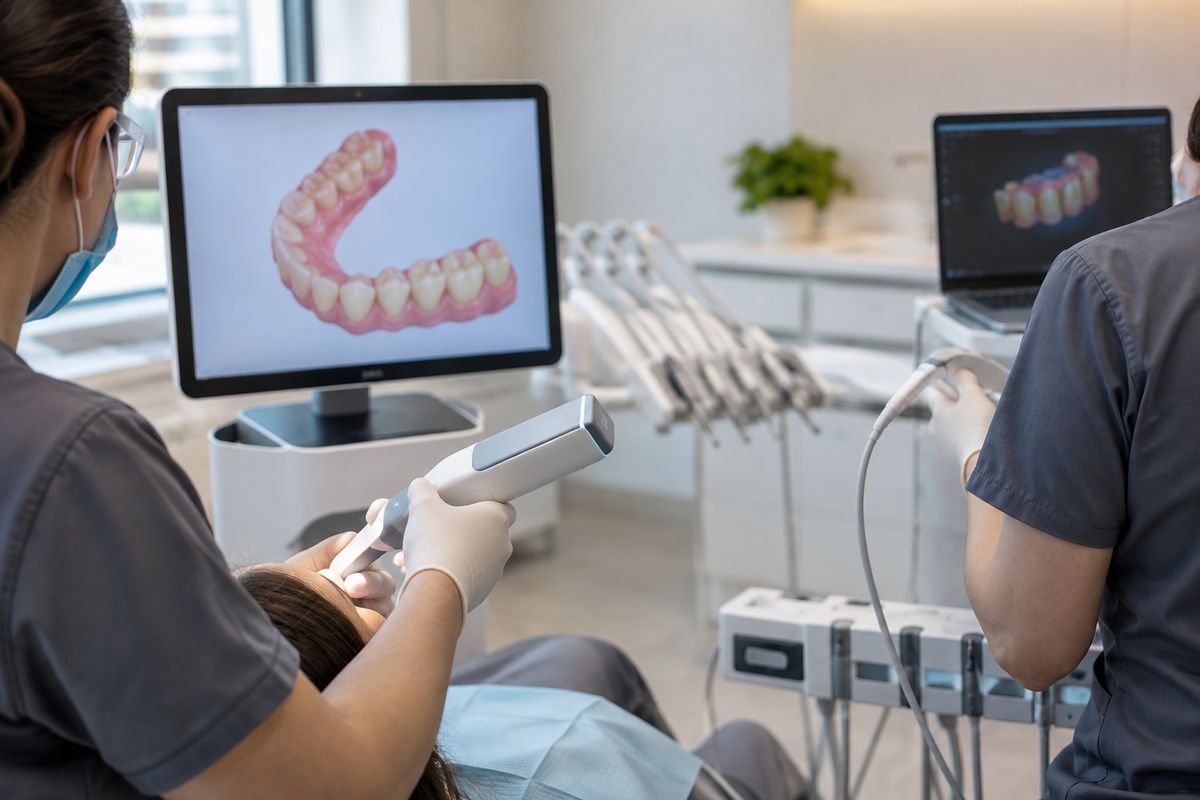
Wireless and wired intraoral scanners are digital devices used to capture precise 3D images of the oral cavity, with wireless models transmitting data via Wi-Fi or Bluetooth and wired models relying on a physical cable connection. As digital dentistry adoption expands in the UAE, the choice between wireless and wired scanners is becoming increasingly relevant for clinics aiming to optimise workflow and patient experience. This comparison matters because the type of scanner can influence daily efficiency, ergonomic comfort, infection control, and ultimately, clinical outcomes.
UAE dentists evaluating intraoral scanners commonly ask: Does wireless technology improve workflow flexibility without compromising scan accuracy? Are there significant differences in learning curve, reliability, or infection control between the two types? And what practical considerations—such as battery management or connectivity—should be prioritised in busy multi-chair practices? Addressing these questions is key to selecting the most suitable intraoral scanner for each clinical environment.
Understanding Wireless and Wired Intraoral Scanners
Intraoral scanners are digital devices that capture 3D images of the dental arches for applications such as prosthodontics, orthodontics, and restorative dentistry. They are available as either wired or wireless models. Wired intraoral scanners connect directly to a computer or workstation via a physical cable, transmitting data in real time. In contrast, wireless scanners operate on built-in batteries and transmit scan data through Wi-Fi or Bluetooth, offering greater mobility and reducing cable clutter (S7, W3).
Typical workflow steps for both types include patient preparation, scanning of the relevant dental area (either full-arch or segmental), real-time visualization, and data transfer to CAD/CAM systems. Medit and Panda both offer wired and wireless scanner options. For example, the Intraoral scanner MEDIT i900 Mobility (i900M) is a wireless solution, while the Intraoral scanner MEDIT i900 represents a wired alternative, each designed to support digital workflows in modern dental practices. For a detailed comparison of intraoral scanner models, see our dental scanner comparison guide.
Clinical Workflow Impact: Efficiency and Flexibility
Wireless intraoral scanners may improve ergonomic comfort and scanning freedom by eliminating cables, which can reduce cable management issues and enhance clinician mobility during procedures. This increased flexibility is particularly relevant in multi-chair UAE clinics or when scanning requires movement around the patient. Despite these workflow advantages, recent studies have found no significant difference in the learning curve or scan time between wireless and wired intraoral scanners, indicating that clinicians can achieve similar efficiency with either type (digital workflow guide).1,2 Both full-arch and segmental scanning workflows are supported by modern scanners, with segmental-and-merge strategies offering reliable alternatives for complex cases.3 Wireless flexibility is especially advantageous when scanning in multiple operatories or accommodating patient movement, while wired models provide consistent connectivity for uninterrupted scanning sessions.
Accuracy and Clinical Performance: What Does the Evidence Say?
Recent comparative studies indicate that both wireless and wired intraoral scanners deliver similar accuracy in common clinical applications, including full-arch scans, implant positioning, and prosthodontic workflows. A 2025 clinical study found no significant difference in trueness or precision between modern wireless and wired models for full-arch and segmental scanning strategies, supporting their interchangeability in most cases (see detailed review) [S2][S3][S6]. Investigations into implant-position reproducibility and prosthodontic scanning further confirm that wireless scanners, such as the Intraoral scanner MEDIT i900 Mobility (i900M) and Intraoral scanner MEDIT i900, perform comparably to their wired counterparts in standard workflows [S4][W2]. Evidence also suggests that factors like battery level and Wi-Fi distance do not significantly affect scan accuracy in most modern wireless systems, though workflow interruptions can occur if battery management is neglected [S9].
Battery Management and Connectivity: Practical Considerations
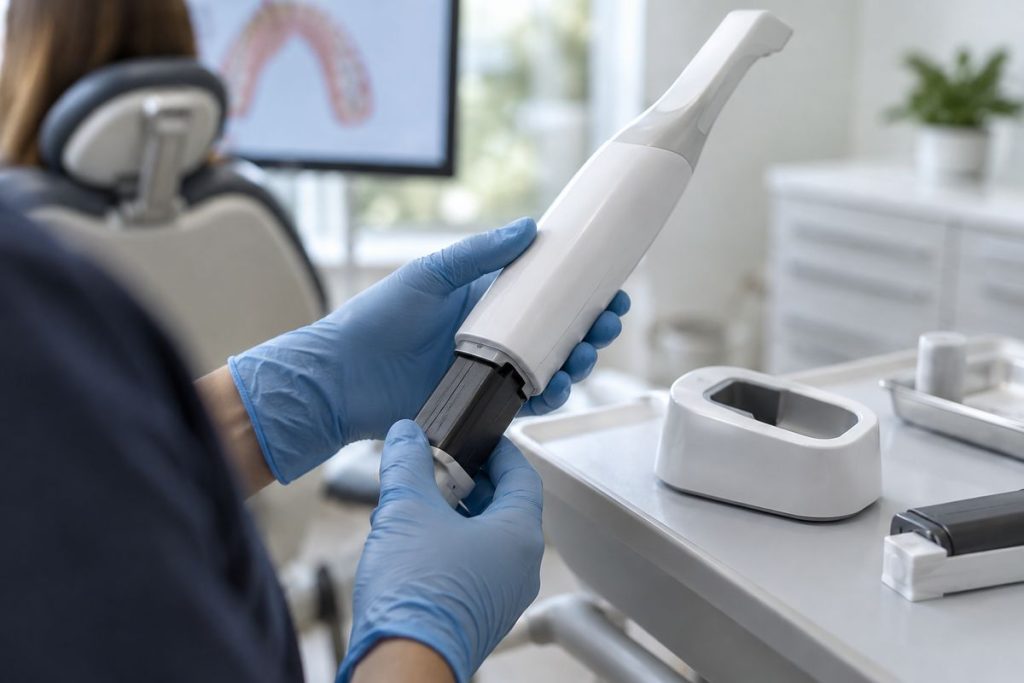
Wireless intraoral scanners introduce practical considerations related to battery life and connectivity that differ from their wired counterparts. Battery-powered scanners require routine charging and battery swaps to avoid workflow interruptions, particularly in high-throughput environments. If not managed carefully, depleted batteries or unexpected downtime can disrupt scanning sessions, especially in busy UAE clinics. However, evidence indicates that battery level and Wi-Fi transmission distance do not significantly affect scan accuracy or scan time in most modern wireless models; the main impact is on workflow continuity and convenience, rather than clinical results (S9, S4). To minimise interruptions, clinics may implement backup batteries, scheduled charging routines, and regular equipment checks. In contrast, wired intraoral scanners offer continuous operation without concerns about battery status or wireless connectivity, providing straightforward plug-and-play reliability for extended clinical sessions (W3).
Infection Control and Maintenance in UAE Practice
Infection control is a critical factor in the selection and daily use of intraoral scanners in UAE dental clinics. Wireless models may help reduce the risk of cable contamination and can simplify cleaning routines, as there are fewer external surfaces and cables to manage during and after procedures. In contrast, wired scanners require diligent cable management and regular cleaning of both the handpiece and connecting cables to minimise cross-contamination risks, especially in multi-patient settings (S7).
Some wireless models, such as the Intraoral scanner MEDIT i900 Mobility (i900M) and Intraoral scanner MEDIT i900, feature detachable, autoclavable tips that support enhanced hygiene protocols and facilitate efficient turnover between patients, aligning with best practice standards. Both wireless and wired scanners require routine maintenance, including inspection of optical surfaces, periodic calibration, and adherence to manufacturer cleaning instructions to ensure reliable performance and patient safety (S5, S7).
Comparing Panda and Medit Intraoral Scanners: Features and Applications
Panda and Medit both offer intraoral scanners in wired and wireless configurations, supporting digital impression workflows in diverse clinical settings. The Intraoral scanner MEDIT i900 Mobility (i900M) is a wireless, iPad-compatible model designed for maximum mobility, while the Intraoral scanner MEDIT i900 is a wired version with ergonomic handling. Panda’s product line also includes both wired and wireless scanners, each supporting digital impression capture.
| Feature | Medit i900M (Wireless) | Medit i900 (Wired) | Panda (Wired/Wireless) |
|---|---|---|---|
| Mobility | Wireless, multi-op use | Fixed, cable required | Wired or wireless options |
| Ergonomics | Lightweight, cable-free | Ergonomic handle | Varies by model |
| Compatible Workflows | iPad & PC integration | PC integration | PC integration |
| Infection Control | Detachable, autoclavable tip | Detachable, autoclavable tip | Detachable tip (select models) |
| Lab Integration | Supported | Supported | Supported |
For UAE clinics, wireless models such as the i900M may offer greater flexibility in multi-chair environments, while wired options provide continuous operation. For a detailed side-by-side analysis, see our Panda Smart Scanner comparison and Medit i600 vs i700 review.
Decision Guide: Choosing the Right Scanner for Your UAE Clinic
Selecting between wireless and wired intraoral scanners requires careful consideration of workflow, operator preference, infection control, budget, maintenance, and integration with your clinic’s digital systems. Studies indicate no significant difference in learning time or scan accuracy between wireless and wired models, so the choice often depends on practical and ergonomic factors relevant to your environment (S1, S2).
| Clinic Scenario | Recommended Scanner Type | Key Considerations |
|---|---|---|
| Multi-chair/Operatory Use | Wireless | Mobility, reduced cable clutter |
| High Patient Volume | Wired | Continuous use, no battery downtime |
| Strict Infection Control | Wireless | Fewer cables, easier cleaning |
| Budget Constraints | Wired | Typically lower upfront costs |
| Lab Integration Priority | Both | Check software compatibility |
For a deeper analysis of scanner costs and workflow integration in the UAE, see our comprehensive guide to intraoral scanner total cost in UAE.
Conclusion
Both wireless and wired intraoral scanners can deliver reliable clinical results when matched to the needs and workflows of UAE dental clinics. Recent studies indicate that, in standard clinical scenarios, there is no significant difference in accuracy, learning curve, or scan time between wireless and wired models (S1, S2, S3). The choice between these systems should be guided by practical factors such as workflow flexibility, infection control protocols, operator preference, and the realities of daily practice in the UAE.
For UAE dentists, a tailored approach is essential. Consider the following checklist when selecting an intraoral scanner:
- Assess workflow needs: Do you require mobility across multiple operatories?
- Evaluate infection control priorities: Would cable-free operation simplify cleaning?
- Consider maintenance and uptime: Can you manage battery charging routines, or do you prefer uninterrupted scanning with a wired system?
- Review integration with current digital systems and software.
Ultimately, hands-on evaluation and careful review of the latest evidence will support informed decision-making. Matching scanner type to your clinic’s workflow and infection control requirements will help ensure successful clinical outcomes for your patients.
Frequently Asked Questions
Are wireless intraoral scanners more accurate than wired models?
Current studies suggest most modern wireless and wired scanners have similar clinical accuracy in standard cases.
What are the main workflow advantages of wireless intraoral scanners?
Wireless models may offer better ergonomics and scanning freedom, especially in multi-chair or mobile settings.
Do wireless intraoral scanners require special maintenance?
Wireless scanners require battery management and regular charging routines, in addition to standard cleaning protocols.
How should UAE clinics decide between wireless and wired scanners?
Consider workflow needs, infection control, operator preference, and integration requirements before choosing.
References
- Intraoral scanner systems and acquisition technologies: A technical review of optical principles, hardware architectures, software pipelines, and contemporary … (2026)
- Clinical study on the accuracy of wireless intraoral scanners for digital full arch impressions of dentate arches (2025)
- Prediction of learning curves of wired and wireless intraoral scanners (2023)
Last updated: 2026-11-17
Related products at Nutrident


Dentist, Iran Medical Council registration No. 233463 · Last reviewed: 17 November 2026
Nutrident educational content is based on credible sources and reviewed under his supervision. This article is for professional education and does not replace clinical examination or the judgement of the treating dentist.