




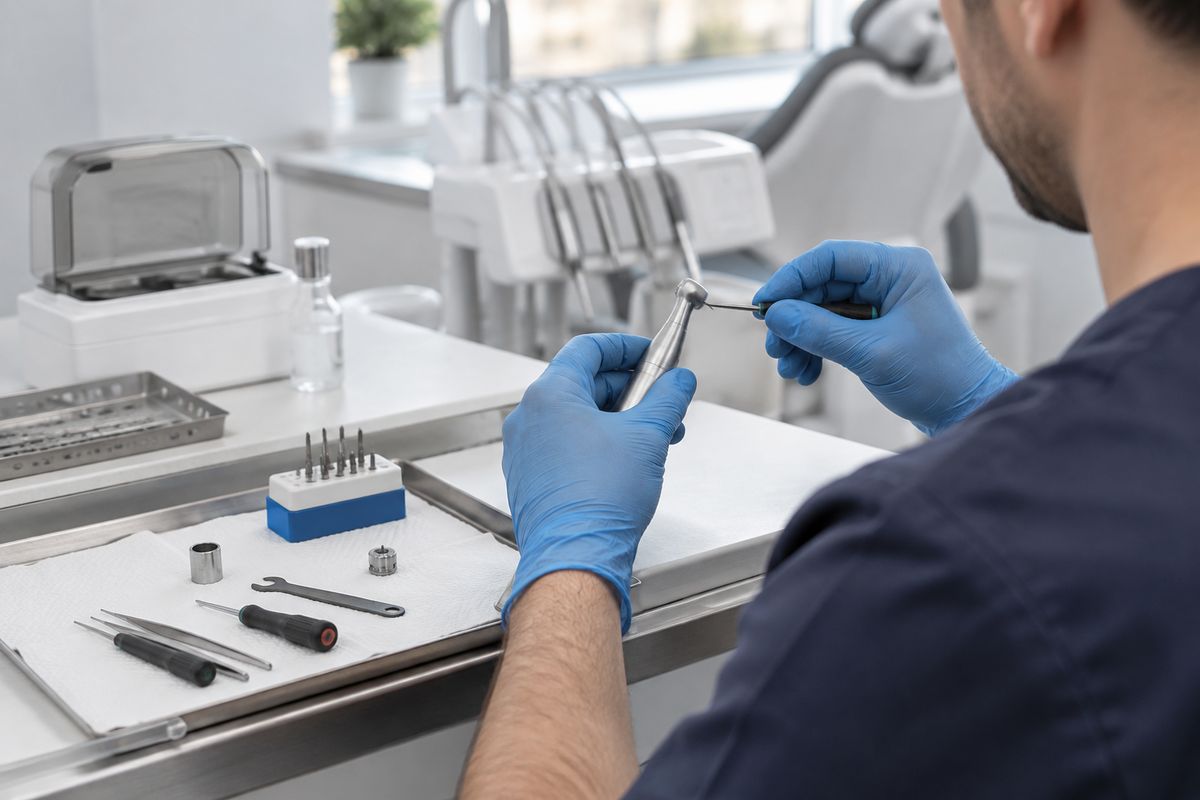
Reliable endomotor performance is highly important for consistent root canal treatment outcomes, as accuracy in canal shaping and working length directly impacts success rates and instrument safety. In the UAE, high temperatures, humidity, and airborne dust can increase the risk of endomotor malfunction, leading to issues such as calibration drift, battery degradation, and mechanical wear. While manufacturers provide baseline maintenance instructions, these often do not address the unique demands of daily clinical workflows or the intensified environmental stressors found in UAE dental clinics.
This guide offers stepwise, evidence-aligned protocols for maintaining and calibrating endomotors, tailored to the realities of UAE practice. Readers will find practical, climate-conscious checklists that bridge the gap between manufacturer recommendations and everyday clinical needs, supporting reliable device function and safer root canal treatments.
Understanding Endomotor Function and Risks
Endomotors are essential in root canal therapy, providing controlled rotary or reciprocating motion for NiTi instruments during canal shaping and cleaning. Key settings include speed (rpm), torque (Ncm), and direction of rotation, all of which must be precisely adjusted according to the file system and clinical scenario. Many modern units integrate apex locator technology, allowing real-time monitoring of working length to help avoid over-instrumentation or ledging (see our range of endomotor devices for root canal treatment).
Accurate calibration and routine maintenance are critical: studies indicate that improper settings or poor upkeep can compromise canal shaping, risk instrument separation, and lead to inaccurate working length determination, ultimately affecting treatment outcomes [S1, S2, S3, S5]. In the UAE, elevated heat, humidity, and dust can exacerbate wear, increase the risk of fluid ingress, and challenge electronic reliability, making diligent care and climate-adapted protocols especially important.
Daily Endomotor Maintenance Checklist
Consistent daily maintenance of endomotors is essential for reliable root canal performance and device longevity. Begin each day with a visual inspection, looking for visible wear, accumulated debris, or any signs of fluid ingress on the handpiece and control unit. Such checks can help identify early warning signs before they lead to operational faults. Clean all external surfaces using manufacturer-approved wipes or solutions, taking care to avoid excess moisture near electronic components. Pay particular attention to the handpiece and contra-angle, verifying that there are no cracks, looseness, or abnormal resistance during rotation. Confirm that the file attachment and removal mechanism operates smoothly and securely, as improper engagement can risk instrument separation or motor strain. Finally, follow manufacturer guidance for daily cleaning and lubrication of the contra-angle, which supports smooth operation and prolongs component life. Documenting these steps in a maintenance log is a practical way to ensure consistency and accountability across the team.
Weekly and Monthly Maintenance Protocols
Establishing a structured maintenance schedule supports endomotor reliability and extends device lifespan. Each week, perform a deeper cleaning of the handpiece and contra-angle, inspecting for signs of wear or damage and checking battery contacts for corrosion or debris. Monthly, open accessible panels to inspect and clean internal electrical contacts, and confirm the motor’s calibration status according to manufacturer guidance. If your device features updatable software, check for and install updates as recommended. Manufacturer instructions typically advise lubricating the contra-angle and sterilizing components according to approved protocols to prevent malfunction and cross-contamination. Maintaining a detailed maintenance log—including dates, performed tasks, and any findings—helps ensure accountability and supports early detection of recurring issues. Always refer to the specific endomotor manual for model-appropriate procedures, as maintenance needs may vary between devices.
Endomotor Calibration: When and How
Calibration Frequency
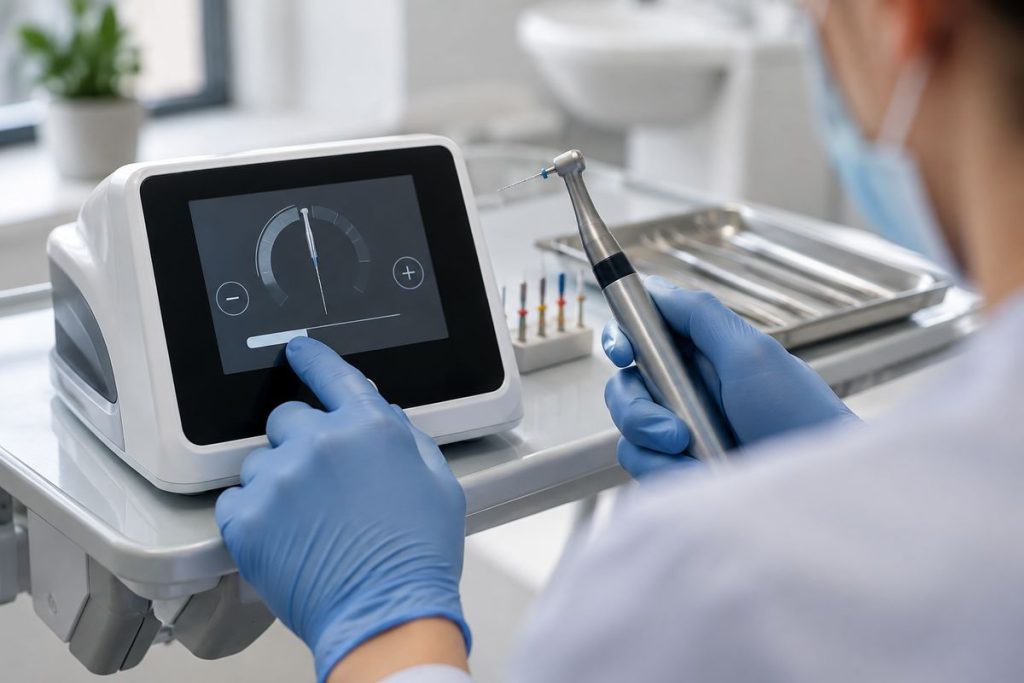
Regular calibration of endomotors is critical for maintaining accurate speed and torque delivery, as well as ensuring reliable apex locator function during root canal treatment. Studies and manufacturer guidance recommend calibration at least monthly, or more frequently if advised by the manufacturer or after changing the handpiece or contra-angle attachment. This routine helps reduce the risk of inaccurate working length determination and instrument stress due to torque discrepancies.
Calibration Steps
The calibration process typically involves securing a file or bit in the handpiece, as required by most endomotor models. The device is then set to its calibration mode, and the calibration cycle is run according to the manufacturer’s instructions. Once complete, results should be confirmed on the display. If calibration is interrupted or fails, the process should be repeated to rule out device or handpiece issues. Persistent failure may require cleaning, lubrication, or manufacturer support.
Troubleshooting Common Endomotor Issues
Frequent endomotor error messages may indicate calibration faults, battery depletion, or connection problems between the handpiece and motor. For instance, calibration errors often arise if the process is interrupted or if a new handpiece is attached. In such cases, repeat the calibration cycle as per manufacturer guidance to rule out motor faults. Battery-related errors may present as power loss or inconsistent performance; checking and, if necessary, replacing or recharging the battery is advised. Connection issues can stem from improper assembly or debris at contact points—inspect and clean the contra-angle and ensure all components are securely attached.
A systematic troubleshooting approach includes: (1) visually inspecting all connections, (2) cleaning and lubricating the contra-angle, (3) recalibrating the device with a secured file or bit, and (4) verifying battery status. If problems persist after these steps, or if error codes are unclear, consult the manufacturer’s support or authorised service provider for further assistance.
Recommended Root Canal Endomotor Settings: Evidence and Manufacturer Guidance
Establishing the correct speed and torque settings for root canal endomotors is essential for safe and effective canal shaping. Studies indicate that most endomotors support speeds from 150 to 600 rpm, with the appropriate value determined by the file system in use and clinical situation (see our detailed guide on recommended endomotor settings for root canal treatment in UAE clinics) [W9]. Torque settings typically range from 1.0 to 4.0 Ncm, and should be selected according to file manufacturer recommendations to reduce instrument separation and canal transportation [S9]. Failing to match endomotor settings to the file system may increase the risk of file fracture and compromise canal shaping [S1, S9]. Always confirm these parameters before use, and refer to both the endomotor and file system instructions.
| Parameter | Typical Range | Selection Criteria |
|---|---|---|
| Speed (rpm) | 150–600 | Follow file system guidance |
| Torque (Ncm) | 1.0–4.0 | Refer to file manufacturer |
| Direction | Rotary/Reciprocating | Match file kinematics |
Choosing and Caring for Endomotors in the UAE: Environmental Considerations
UAE dental clinics face unique challenges due to high temperatures, humidity, and airborne dust. These factors can accelerate wear, compromise electronic components, and increase the risk of fluid ingress in endomotors. To mitigate these risks, clinics should store endomotors in climate-controlled environments and avoid leaving devices exposed to direct sunlight or unfiltered air. After each use, ensure thorough cleaning according to manufacturer-approved methods, as dust and condensation can accumulate rapidly in local conditions. When selecting an endomotor, consider models with enhanced ingress protection and sealed interfaces, which may help reduce maintenance needs in harsh climates. Always refer to manufacturer maintenance protocols, as regular care is essential for optimal function and longevity in demanding environments1. For further guidance on device selection, see this detailed comparison of reciprocating and rotary endomotors in the UAE here.
Conclusion
Consistent maintenance and accurate calibration of endomotors are important for predictable root canal treatment outcomes. Evidence indicates that well-calibrated and properly maintained endomotors help preserve working length accuracy and reduce the risk of procedural errors during canal shaping and obturation (S1, S2, S4). In the UAE, where environmental factors such as heat, humidity, and dust can accelerate equipment wear, it is especially important to tailor maintenance protocols to local conditions.
To support reliable performance, dental teams should implement a documented protocol that includes:
- Daily visual inspection and cleaning
- Weekly and monthly internal checks and calibration as per manufacturer guidance
- Regular software updates and documentation of all maintenance activities
Always refer to the manufacturer’s instructions for your specific endomotor model to ensure safe use and avoid invalidating warranties (W1, W2, W3). By embedding these routines into your clinical workflow, you can help safeguard both your equipment and your clinical outcomes.
Frequently Asked Questions
How often should I calibrate my endomotor?
Most manufacturers recommend calibration monthly or after changing the handpiece, but always check your device’s instructions.
What should I do if my endomotor displays an error code?
Refer to your user manual for the specific code, check for common issues like battery or connection problems, and recalibrate if needed.
Can I use any file system with my endomotor?
No, always ensure the file system is compatible with your endomotor and use the recommended settings.
Does the UAE climate require special endomotor care?
Yes, additional attention to dust prevention and careful storage is recommended due to local environmental conditions.
References
- In vitro assessment of integrated apex locator systems: working length accuracy, operational parameters, and mechanical effects on NiTi instruments (2026)
- Real‐time dynamic torque values and axial forces during preparation of straight root canals using three different endodontic motors and hand preparation (2019)
- Micro-CT evaluation of canal shaping extent with apex locator–integrated endodontic motors: An in vitro study (2026)
Last updated: 2026-11-14
Dentist, Iran Medical Council registration No. 233463 · Last reviewed: 14 November 2026
Nutrident educational content is based on credible sources and reviewed under his supervision. This article is for professional education and does not replace clinical examination or the judgement of the treating dentist.