




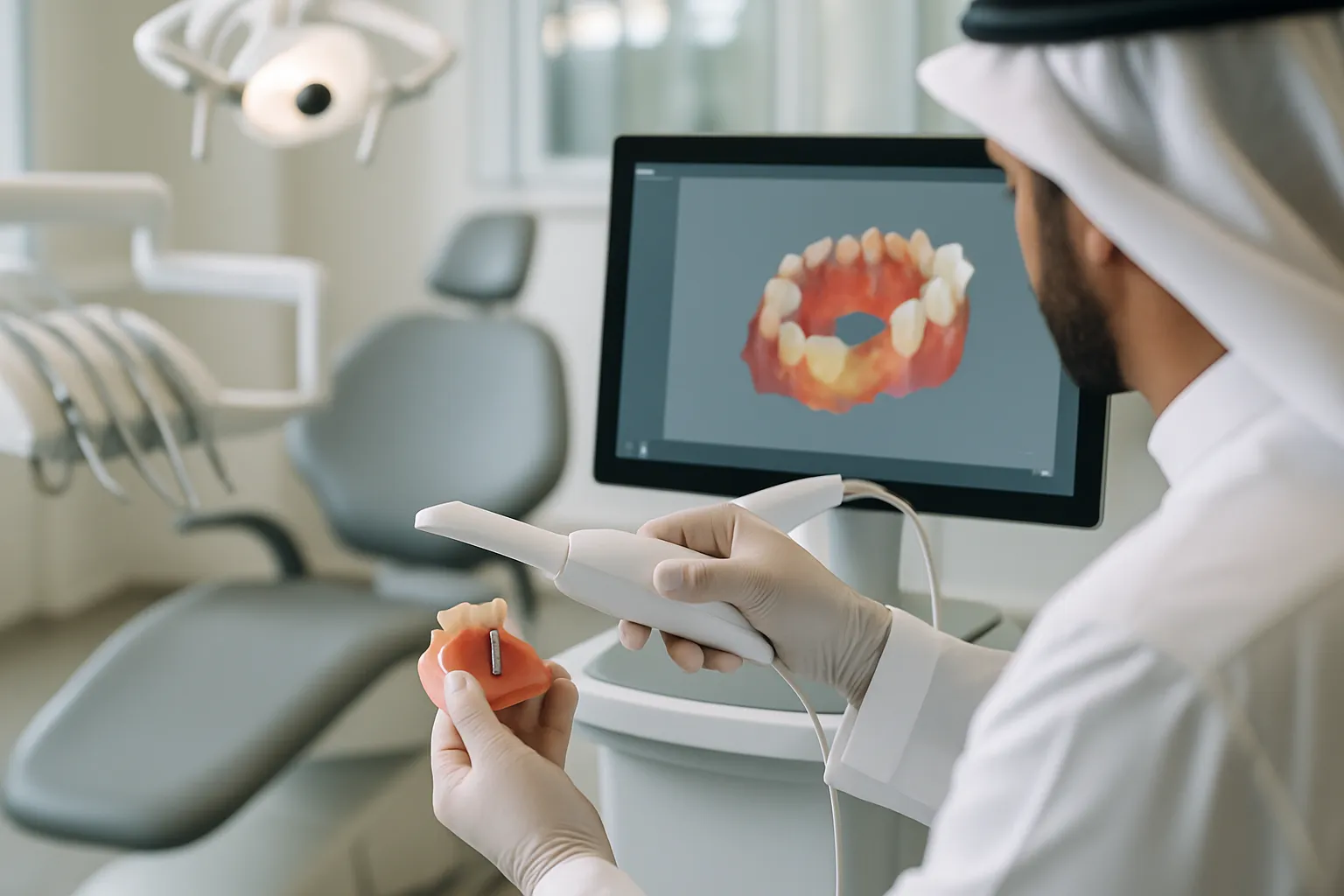
Intraoral scanner accuracy is a key factor in successful implant workflows in UAE dental clinics, as even minor deviations in digital impressions can impact the fit and longevity of implant-supported restorations. Implant scanning presents greater technical demands than tooth-borne cases, largely due to the absence of natural anatomical landmarks and the need to accurately capture the three-dimensional position of scan bodies within edentulous spans. Evidence highlights that factors such as scan body design, scanning protocol, arch length, and environmental conditions all influence the trueness and precision of digital impressions for implants (S1, S6, S10).
Unlike conventional impressions, digital impressions for implants must account for variables like the material and geometry of scan bodies, as well as the complexity of full-arch or extended edentulous cases. Studies indicate that these elements can significantly affect the reliability of intraoral scans, making careful assessment and protocol adaptation essential for optimal results in the UAE’s unique clinical environment (S1, S5, S10).
Understanding Intraoral Scanner Accuracy for Implants
Accuracy in implant digital impressions is defined by two key parameters: trueness (how closely a scan matches the actual anatomy) and precision (the consistency of repeated scans). Achieving high accuracy is more challenging for implant cases than for tooth-supported scans due to the absence of natural landmarks, increased edentulous spans, and the necessity for exact implant positioning. Unlike teeth, implants require the use of scan bodies—specialised components whose design, material, and fit directly influence scan results. Studies indicate that the characteristics of scan bodies, as well as the chosen digital workflow, can significantly affect both trueness and precision of the final impression. Therefore, careful selection and handling of scan bodies, along with a validated scanning protocol, are essential to optimise outcomes in implant digital dentistry.
Key Clinical Criteria for Implant Scanning Accuracy
Assessing intraoral scanner accuracy for implant dentistry requires understanding two main criteria: trueness (how closely a scan matches the actual anatomy) and precision (the consistency of repeated scans). For implant cases, these criteria are especially critical, as misfits can compromise prosthesis fit and long-term success (S4). Full-arch scans pose greater challenges than partial-arch scans, with evidence indicating that digital impressions may show increased deviation over longer edentulous spans, particularly in full-arch implant restorations (S9). Systematic reviews suggest that while digital impressions offer efficiency, conventional impressions may still provide higher accuracy for full-arch implant cases, with conventional impressions showing reported marginal gaps around 135.1 μm (W5). In the UAE, clinicians must also consider lab compatibility, the impact of local climate (such as high humidity on scanning environments), and patient expectations for comfort and digital workflows. For practical evaluation tips, see how to evaluate intraoral scanner files in UAE clinics.
Critical Role of Scan Bodies and Scanning Protocol
Scan bodies are pivotal in determining the accuracy of digital impressions for implant dentistry. Material properties—such as titanium or PEEK—can influence both trueness and precision, with some studies indicating that reflective or highly polished surfaces may lead to scanning errors due to light reflection or scatter (S10). The shape and surface roughness of scan bodies also play a significant role: smoother surfaces may reduce scan accuracy, while controlled roughness can enhance scanner recognition and data capture (W9). Recent systematic reviews confirm that scan body characteristics—including fit, material, and surface treatment—are closely associated with the reliability of intraoral scans in implant workflows (S1, S10).
To optimise outcomes, clinicians should handle scan bodies with gloves, ensure complete seating without rotation, and follow manufacturer alignment marks. Consistent scanner calibration and adherence to a validated scanning protocol—such as the calibrated intraoral scan protocol (CISP)—may help improve full-arch implant scan accuracy (S8).
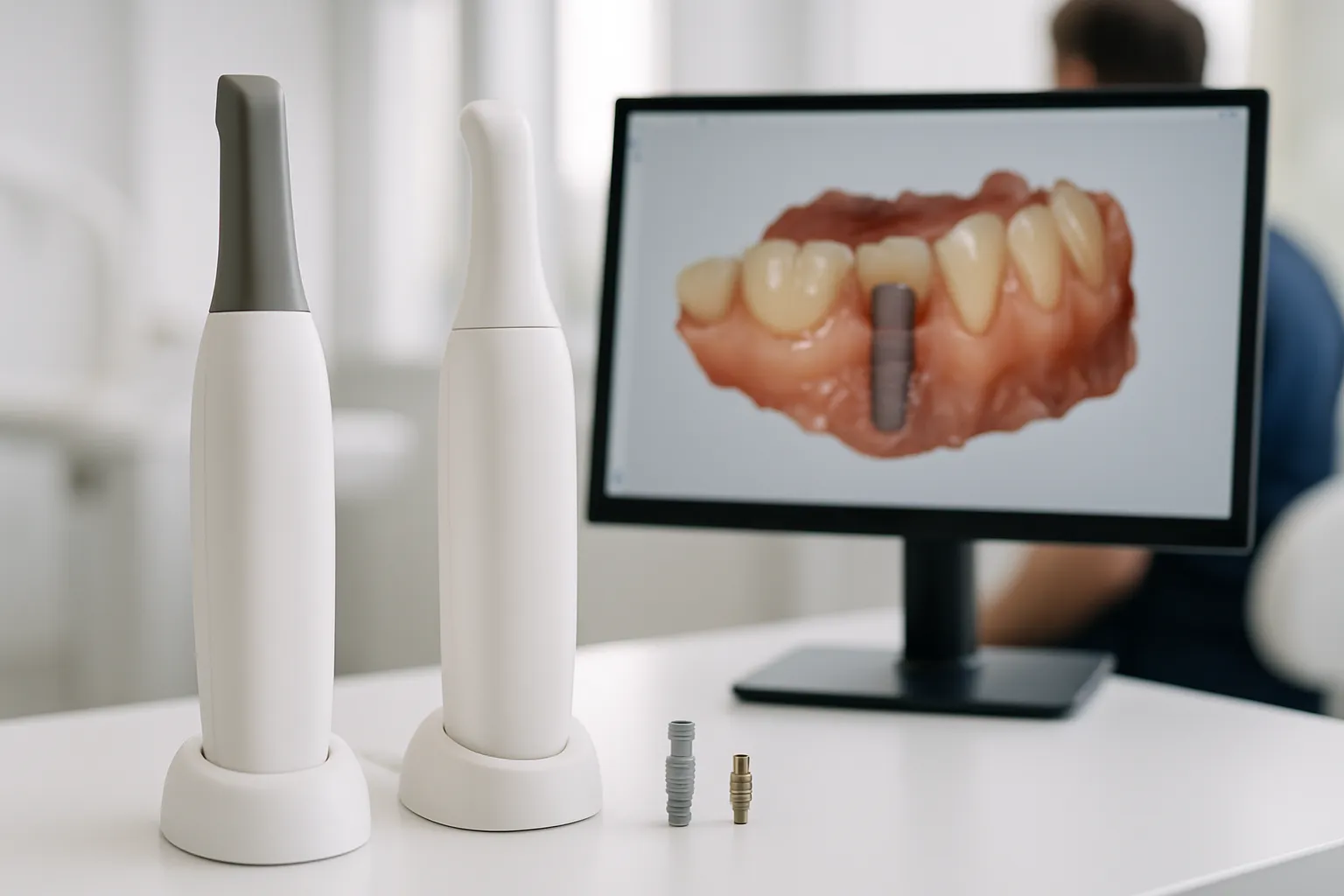
Comparing Leading Intraoral Scanners for Implant Workflows
Panda vs Medit for Implant Scanning
When selecting an intraoral scanner for implant workflows, UAE clinics often compare the Intraoral scanner MEDIT i900 Mobility (i900M), Intraoral scanner MEDIT i900, and Panda models. Evidence suggests that certain intraoral scanners designed for implants may yield higher accuracy, particularly in full-arch or edentulous cases, than conventional scanners, though differences can depend on device features and scanning protocols (S7, S3). Key factors include imaging technology, scan head size, and software integration, all of which influence both trueness and precision of digital impressions in implant dentistry.
| Feature | MEDIT i900/i900M | Panda |
|---|---|---|
| Imaging Technology | Advanced 3D scanning, iPad compatibility (i900M) | Digital 3D scanning |
| Scan Head Size | Compact, ergonomic | Compact |
| Software Integration | Seamless with Medit Link | Proprietary software |
| Implant Accuracy Evidence | Supported for intraoral scanners in studies (S3, S7) | Supported for intraoral scanners in studies (S3, S7) |
For UAE clinics, practical considerations also include local software support, compatibility with regional labs, and device mobility—especially relevant for multi-chair practices or clinics with high patient flow. For a broader overview of scanner options at UAE events, see a suitable intraoral scanners at AEEDC Dubai.
Optimising the Implant Digital Workflow in UAE Practice
For UAE clinics, each step of the digital implant workflow—from intraoral scanning to file export and laboratory integration—can affect the final restorative accuracy. Evidence indicates that scanning technique, careful handling of scan bodies, and correct file export protocols are essential for maintaining trueness and precision of digital impressions in implant cases (see practical evaluation guidance). Validated workflows, where each stage has been tested for compatibility and reliability, are strongly recommended to minimise errors and ensure predictable outcomes. Regular communication with local dental laboratories is crucial to confirm file compatibility and clarify scan body specifications, as differences in lab software or protocols can impact fit and function. Best practices for UAE clinics include ongoing team training, maintaining a controlled scanning environment to reduce humidity-related artefacts, and clear patient management protocols to optimise scan quality and comfort.
Common Pitfalls and How to Avoid Them
Implant digital impressions are susceptible to several sources of error that can compromise prosthetic fit. One frequent issue is scan body misplacement—if the scan body is not fully seated or correctly aligned, the resulting virtual implant position may be inaccurate. Edentulous arch distortion is another challenge; in extensive edentulous spans, soft tissue movement and lack of fixed reference points can reduce scan trueness. Camera angulation also plays a role: exceeding recommended tilt angles during scanning can introduce data inaccuracies, especially around implant sites.1,2
- Always verify scan body seating and orientation visually and radiographically before scanning.
- Stabilise soft tissues in edentulous areas and use additional reference markers if needed.
- Maintain recommended camera angulation and follow a systematic scanning path.
- Regularly calibrate your scanner and review scan data for stitching errors or artefacts.
Following these steps helps UAE clinicians minimise common scanning errors and improve implant workflow reliability.
Evaluating and Communicating Scanner Performance
To assess intraoral scanner performance in your UAE clinic, begin with regular test scans using standardised models or clinical cases. Compare digital impressions to reference data or traditional impressions to check for discrepancies in trueness and precision. Collaborate closely with your dental laboratory; request feedback on fit and adaptation of implant prostheses fabricated from your digital scans, as laboratory assessment can highlight subtle inaccuracies. Document all findings, including any remakes or adjustments needed, to track scanner consistency over time.
When communicating outcomes to patients, provide clear explanations about the role of digital impressions in implant accuracy. Discuss both the benefits—such as reduced chairside time and patient comfort—and the limitations, including possible sources of error or the need for occasional retakes. Setting realistic expectations helps foster patient trust and supports informed consent for digital workflows.
Conclusion
Accurate intraoral scanning is essential for successful implant dentistry, especially in the demanding clinical environments of UAE clinics. Evidence highlights the importance of both trueness and precision—core aspects of accuracy—when evaluating scanners for implant workflows. The choice of scanner, scan body characteristics, scanning protocol, and workflow integration all play critical roles in achieving reliable digital impressions for implants (S1, S6, S10). UAE clinicians should also consider local factors such as laboratory compatibility, environmental conditions, and patient expectations when selecting and implementing digital workflows.
For clinics considering scanner investment or workflow upgrades, a structured approach is recommended:
- Assess scanner trueness and precision specifically for implant applications
- Evaluate scan body material and design compatibility
- Validate workflows with local labs and ensure robust communication
- Implement regular calibration and staff training
- Monitor clinical outcomes and seek feedback from laboratory partners
By focusing on these evidence-based criteria, UAE dental practices can optimise implant digital workflows and deliver predictable, high-quality outcomes for their patients.
Frequently Asked Questions
Are intraoral scanners accurate enough for implant restorations?
Studies suggest that with correct protocols and scan bodies, intraoral scanners can achieve accuracy comparable to conventional impressions for many implant cases.
What factors most affect digital impression accuracy for implants?
Scan body characteristics, scanning protocol, and the scanner’s imaging system are key factors according to current evidence.
Is digital full-arch implant scanning reliable?
Full-arch implant scanning remains more challenging; accuracy may be lower than for partial arches, but can be improved with validated scanning protocols and appropriate equipment.
How can UAE clinics ensure optimal scanner performance?
Following validated workflows, using appropriate scan bodies, and regular calibration help ensure reliable digital impressions for implants.
References
- A systematic review of factors impacting intraoral scanning accuracy in implant dentistry with emphasis on scan bodies (2024)
- Digital impressions in implant dentistry: a literature review (2021)
- Precision and practical usefulness of intraoral scanners in implant dentistry: A systematic literature review (2020)
Last updated: 2026-10-21
Related products at Nutrident


Dentist, Iran Medical Council registration No. 233463 · Last reviewed: 21 October 2026
Nutrident educational content is based on credible sources and reviewed under his supervision. This article is for professional education and does not replace clinical examination or the judgement of the treating dentist.