




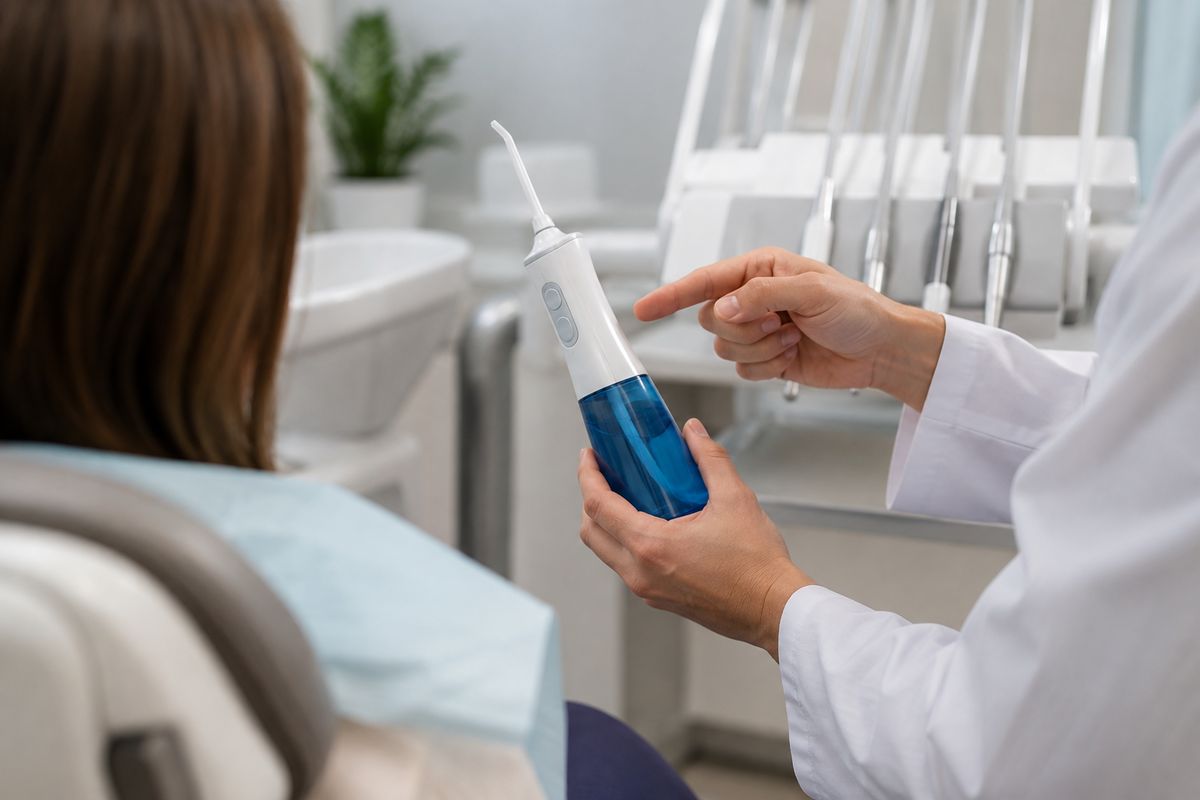
Clear, step-by-step patient instruction is highly recommended for ensuring the safe and effective daily use of water flossers in UAE dental clinics. Many patients are unfamiliar with proper technique, and without targeted guidance, they may not achieve optimal cleaning or could misuse the device. Evidence suggests that water flossers can be an effective alternative to dental floss, particularly for individuals with manual dexterity challenges, though correct use and understanding of their limitations are important for optimal benefit (W2).
Studies indicate that water flossers, when used alongside manual toothbrushing, may help reduce plaque and improve gingival health, though they may not fully remove all interdental plaque compared to string floss in every case (W5, W2). This protocol is designed to support dental professionals in delivering clear, evidence-based instructions, ultimately enhancing patient compliance, safety, and oral health outcomes in the diverse UAE population.
Understanding Water Flossers: Evidence and Indications
Recent clinical reviews indicate that water flossers, when used alongside manual toothbrushing, can be an effective alternative to string floss for reducing plaque and improving gingival health, particularly in patients with manual dexterity challenges (see water flosser recommendations for special cases).1,2,3 Studies suggest that water flossers may benefit individuals who struggle with traditional flossing methods, such as those with orthodontic appliances, implants, or limited mobility.1 Typical indications for water flosser use include patients with fixed bridges, braces, or arthritis, while contraindications may include those prone to oral infections or with open wounds in the oral cavity. Dental professionals should assess each patient’s needs, as water flossers may not fully remove all interdental plaque compared to string floss in every case.1
Selecting the Right Water Flosser in UAE Clinics
Choosing a suitable water flosser for patients in UAE clinics requires consideration of several device features: tank size, pressure settings, and portability. Larger tanks reduce refill frequency, which is useful for thorough cleaning, while adjustable pressure settings allow customisation for sensitive gums or orthodontic appliances. Portability is especially relevant for patients who travel frequently or have limited bathroom space.
Models available in the UAE include corded countertop units and cordless portable versions. Waterpik Water Flosser WP-660 and Oracura Countertop Smart Water Flosser are countertop devices with larger reservoirs and multiple pressure settings. For portability, options like the Waterpik Cordless Express Water Flosser Wf-02e2 and Oracura Smart Plus Water Flosser offer compact designs and battery operation.
The Oracura OCE01 Eco Water Flosser and iVismile Water Flosser are designed for interdental cleaning using a water stream, and may be considered by patients seeking an alternative to string floss.
| Model | Tank Size | Pressure Settings | Portability |
|---|---|---|---|
| Waterpik WP-660 | Large | Multiple | Countertop |
| Waterpik Cordless Express | Small | Dual | Portable |
| Oracura Countertop Smart | Large | Multiple | Countertop |
| Oracura Smart Plus | Medium | Multiple | Portable |
| Oracura OCE01 Eco | Medium | 3 Modes | Portable |
| iVismile Water Flosser | Medium | Not specified | Portable |
Step-by-Step Instructions: How to Use a Water Flosser Correctly
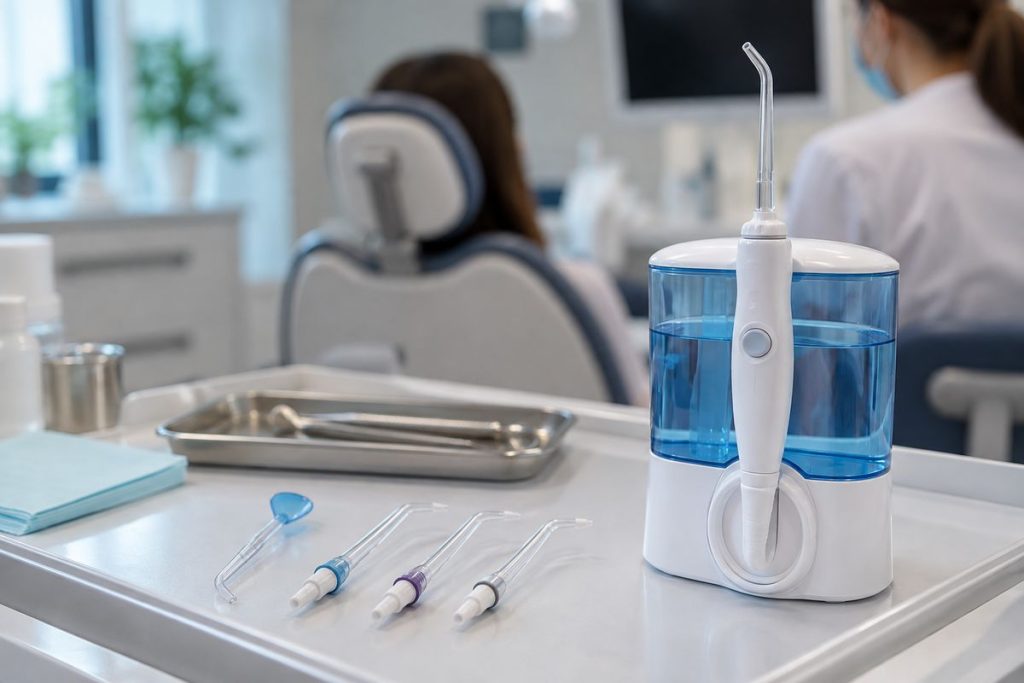
Clear, systematic instruction is essential for patients to achieve effective interdental cleaning with a water flosser. Begin by filling the reservoir with lukewarm water, which can enhance comfort during use. Patients should select the appropriate tip—standard tips are suitable for most users, while specialised tips may be recommended for implants or orthodontic appliances. Attach the tip securely to the handle before starting.
Set the device to a low or medium pressure setting initially, especially for first-time users, and adjust as comfort allows. Lean over the sink and place the tip in your mouth before switching on the device to minimise splashing. It is recommended to close lips slightly to control the flow, letting water drain freely from the mouth.
Start cleaning at the molar area and follow a consistent pattern along the gumline, pausing briefly between teeth. Systematic movement—such as proceeding from the back teeth on one side, around the arch, to the opposite side—helps ensure thorough plaque removal and avoids missing areas. The iVismile Water Flosser can be used following these steps for daily interdental cleaning. Always refer to the device’s specific instructions for tip insertion and pressure adjustment.
Daily Care and Maintenance of Water Flossers
Proper maintenance of water flossers is essential to ensure hygiene, device longevity, and effective performance. Patients should be advised to empty the water reservoir after each use and rinse it thoroughly with lukewarm water to prevent bacterial buildup. Using lukewarm water in the reservoir is recommended for comfort and to avoid thermal shock to oral tissues (W7). Weekly, the reservoir and internal components should be cleaned according to manufacturer guidance, which typically involves running a diluted solution of mild soap or vinegar through the system, followed by thorough rinsing (W9).
Water flosser tips require special attention: after each use, rinse the tip under running water and allow it to air dry. Tips should be replaced regularly, as recommended by the manufacturer or if signs of wear appear. Emphasising these steps during patient instruction can help maintain device effectiveness and support oral health outcomes.
Patient Communication: Addressing Limitations and Safety
When instructing patients on water flosser use, it is essential to clarify that while these devices can support interdental cleaning, studies suggest they may not fully remove all interdental plaque compared to string floss in every case. Patients with manual dexterity challenges may benefit most, but water flossers are not universally suitable. For example, individuals with open wounds, recent oral surgery, or certain cardiac conditions should seek tailored advice before use. Safety guidance includes starting with the lowest pressure setting, aiming the tip at a 90-degree angle to the gumline, and never forcing the stream into tight spaces. Common errors to avoid include using excessively hot water, neglecting to empty and clean the reservoir, or sharing tips between users. Children and those with limited cognitive ability should only use water flossers under supervision to minimise risk and ensure effective cleaning.
Improving Compliance: Practical Tips for UAE Dental Teams
To optimise compliance, dental teams in the UAE should adapt water flosser instructions to each patient’s language and literacy level. Consider using simple, visual aids and multilingual handouts to support understanding, especially for patients from diverse backgrounds. During chairside demonstrations, follow a structured checklist: show device assembly, demonstrate water filling, select and attach the appropriate tip, explain pressure adjustment, and model correct mouth positioning and technique. Encourage patients to ask questions and repeat the demonstration. Provide clear, pictorial handouts for home reference. Regular follow-up—either in-person or via telehealth—enables dental teams to reinforce correct technique, address patient concerns, and troubleshoot common issues such as splashing, discomfort, or improper use. This approach helps ensure that water flossers are used safely and effectively as part of daily oral hygiene routines.
Integrating Water Flossers into Comprehensive Oral Hygiene Plans
Water flossers should be positioned as a supplementary tool within a patient’s daily oral hygiene routine. Toothbrushing remains essential for removing plaque from accessible surfaces, while string floss and other interdental aids are critical for cleaning between teeth, as toothbrush bristles alone cannot effectively reach these areas (W4). Water flossers may be recommended as an adjunct for patients who struggle with traditional floss due to dexterity limitations or orthodontic appliances. In some cases—such as with sensitive gingiva or complex dental restorations—a water flosser may serve as an alternative when string floss use is impractical or contraindicated. For further guidance on selecting the most appropriate device for patients with implants or braces, see this detailed overview of water flosser options for special cases.
Conclusion
Clear, step-by-step patient instruction is highly recommended for ensuring the safe and effective daily use of water flossers in UAE dental clinics. Evidence supports that, when used properly, water flossers can be a valuable adjunct to toothbrushing for reducing plaque and supporting gingival health, especially in patients with manual dexterity challenges (W2, W5, W8). A structured protocol—covering device selection, technique, maintenance, and safety—empowers patients to achieve better oral hygiene outcomes and minimises common errors.
To optimise results, dental teams should:
- Demonstrate correct water flosser use chairside with clear, culturally sensitive instructions
- Provide written or visual handouts tailored to patient needs and literacy levels
- Emphasise the importance of regular device cleaning and tip replacement
- Encourage consistent daily use and systematic technique, starting at the molars (W1)
- Schedule periodic follow-up to address questions and reinforce good habits
Continued patient education and proactive follow-up are key to integrating water flossers effectively into comprehensive oral hygiene plans and supporting long-term oral health.
Frequently Asked Questions
Can everyone use a water flosser?
Most patients can use a water flosser, but some may need supervision or alternative methods based on their oral or medical condition.
Are water flossers safe for daily use?
Studies suggest water flossers are generally safe for daily use when used as instructed.
What are the main disadvantages of water flossers?
Water flossers may not remove all plaque as effectively as string floss in some cases, and improper technique can reduce effectiveness.
How do I instruct patients to clean their water flosser?
Advise daily emptying and rinsing of the reservoir, weekly cleaning, and regular tip replacement as per manufacturer instructions.
References
- Comparing the effectiveness of water flosser and dental floss in plaque …
- How to Use a Water Flosser
- Harnessing The Power Of Water to Achieve Optimal Oral Health
Last updated: 2026-11-23
Related products at Nutrident


Dentist, Iran Medical Council registration No. 233463 · Last reviewed: 23 November 2026
Nutrident educational content is based on credible sources and reviewed under his supervision. This article is for professional education and does not replace clinical examination or the judgement of the treating dentist.