




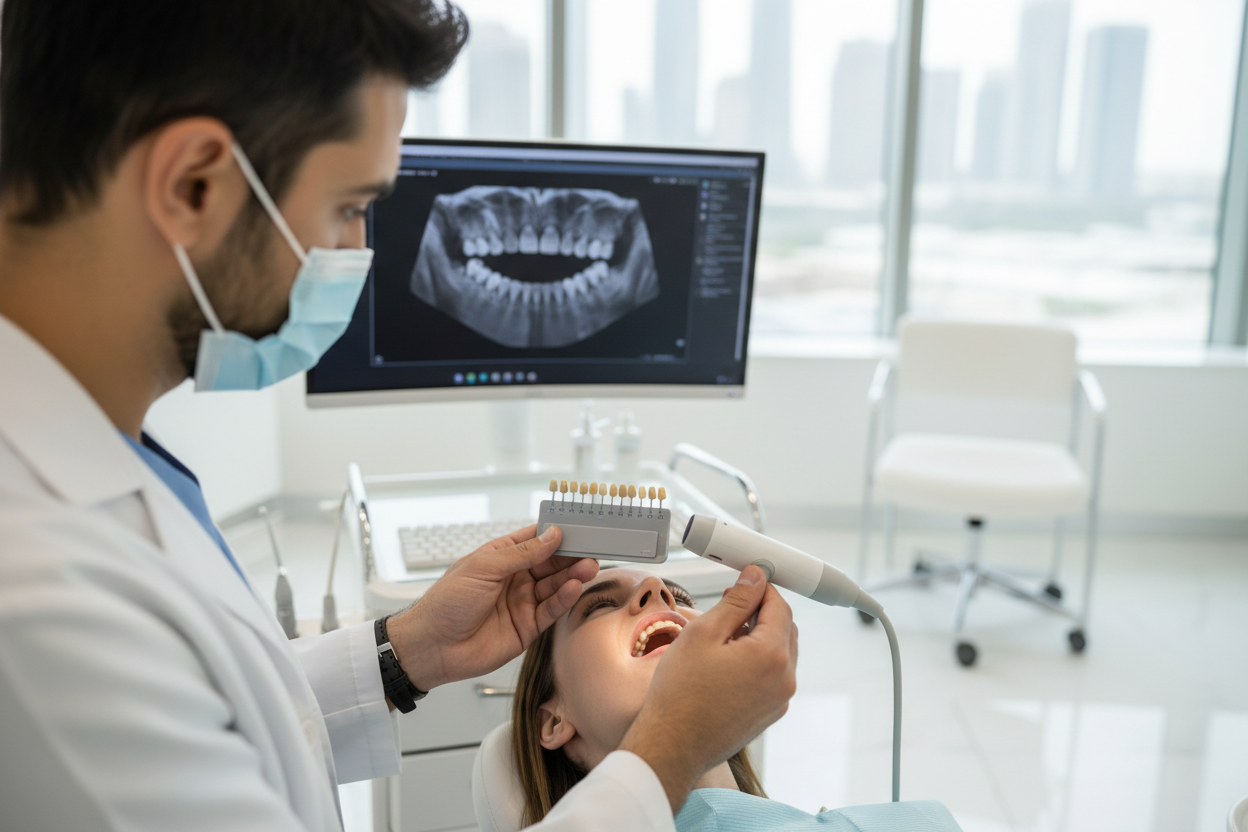
Veneer shade selection is a foundational step in achieving esthetic success in restorative dentistry, particularly for dentists practicing in the UAE. The region’s unique patient demographics, characterized by a wide range of skin tones and diverse esthetic preferences, make accurate shade matching both challenging and essential. Additionally, the intense sunlight and variable lighting conditions common in the UAE can significantly influence color perception, increasing the risk of visible mismatches if protocols are not carefully followed.
Meeting the high esthetic expectations of UAE patients demands a systematic, evidence-based approach to shade selection for both composite and ceramic veneers. This article provides a practical, stepwise protocol grounded in current evidence and clinical recommendations, addressing the nuances of material choice, patient factors, and environmental considerations to support predictable, natural-looking outcomes in daily practice.
Understanding Shade Selection: UAE-Specific Challenges
Veneer shade selection in the UAE presents distinct challenges due to the region’s intense sunlight, wide range of patient skin tones, and evolving esthetic preferences. High sun exposure, especially in cities like Abu Dhabi and Dubai, can alter the perceived brightness and undertones of dental restorations, making it crucial to account for ambient lighting during shade selection (S7). Furthermore, the UAE’s diverse patient demographic—encompassing a spectrum of skin and lip tones—requires clinicians to tailor their shade choices, as certain shades may appear more or less natural depending on the individual’s complexion (W9). These factors mean that protocols developed in other regions may not always yield optimal results locally. Therefore, a systematic, evidence-based approach is essential to minimize subjective errors and ensure predictable esthetic outcomes in this unique clinical environment (W2).
Scientific Principles of Shade Selection: Value, Chroma, Hue
The Order of Shade Selection
Successful veneer shade selection relies on understanding three core color dimensions: value, chroma, and hue. Value refers to the lightness or darkness of a tooth and is considered the most critical factor for esthetic integration. Chroma describes the intensity or saturation of the color, while hue indicates the basic color family (such as yellow, brown, or gray). Evidence-based protocols recommend selecting value first, followed by chroma, and finally hue, as this sequence ensures the most predictable esthetic outcomes (W2, W5).
These principles apply to both composite and ceramic veneer cases, as both materials must harmonize with the natural dentition. Common errors include choosing hue or chroma before value, which can lead to mismatched restorations that appear too bright or dull in the final result (W2).
Stepwise Protocol for Veneer Shade Selection
Preparation, Tools, and Environment
Effective veneer shade selection begins with a systematic, evidence-based protocol. Selection should be performed prior to tooth dehydration, as hydrated teeth display their true shade and dehydration can lead to inaccurate results (W5). Control ambient lighting by using natural daylight or standardized operatory lights, and position the patient upright at eye level to minimize color distortion (W8).
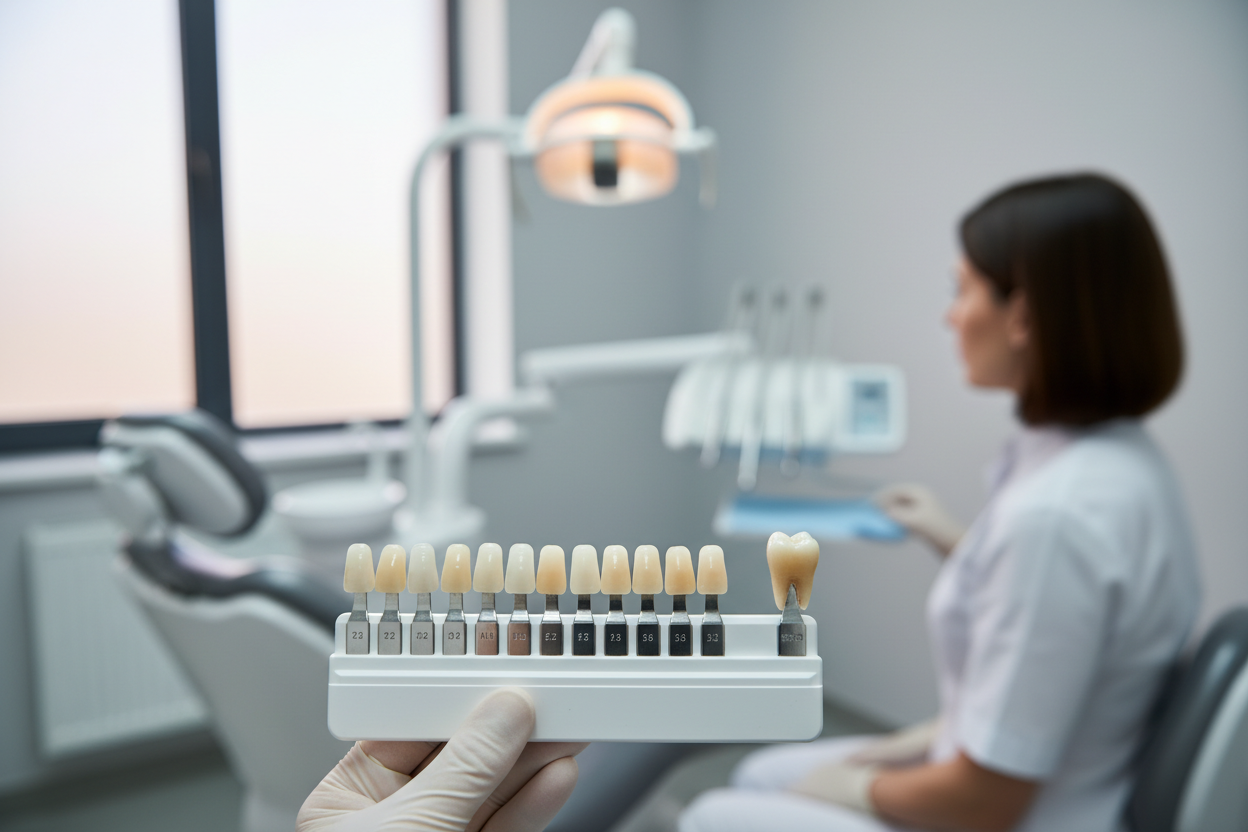
Start with value selection (lightness), followed by chroma (saturation), and finally hue (color family), as this sequence reduces common errors and improves accuracy (W2). The VITA Classical veneer shade guide remains a widely used tool, organizing shades into families for systematic comparison (W3). For enhanced objectivity, consider digital shade matching devices such as the Vita Easy Shade Advance 5 V Digital Shade Guide, which may help reduce subjective bias and standardize results across clinical teams.
Composite vs Ceramic Veneers: Shade Selection Considerations
Material-Specific Protocols
Material selection significantly affects shade matching, color stability, and clinical workflow in veneer cases. Ceramic veneers, such as lithium disilicate or zirconia, are generally more color-stable and wear-resistant than composite veneers, tending to maintain their shade and resist staining better in the oral environment. In contrast, composite veneers may be more susceptible to discoloration and wear, requiring careful long-term maintenance (S1). Ceramics often offer greater translucency and masking ability, making them suitable for cases where underlying tooth color must be neutralized (S8). The choice of material determines the protocol for shade selection: ceramics often require consideration of both core and veneering materials, while composites demand close attention to layering and brand-specific shade variations (W10).
| Property | Ceramic Veneers | Composite Veneers |
|---|---|---|
| Color Stability | High | Moderate |
| Translucency | Superior | Variable |
| Masking Ability | Excellent | Limited |
| Shade Selection | Core + Veneer | Layering, brand-specific |
| Maintenance | Minimal | Regular polishing |
Patient Factors: Skin Tone, Age, and Smile Design
Patient-specific factors such as skin tone, lip color, and age play a central role in veneer shade selection. Matching the shade to the patient’s skin tone and overall facial features is essential for a natural result; for example, fair-skinned individuals may benefit from slightly darker veneer shades, while those with darker complexions often achieve the most harmonious results with neutral tones (W9). Lip color and surrounding facial structures should also be assessed to ensure the selected shade complements the entire smile, not just the teeth (W6). Age is another consideration, as overly bright shades can appear unnatural in older patients, whereas a subtle gradation better reflects age-related changes (W6). Integrating smile design protocols and facial analysis—such as evaluating the patient’s smile line and midline—helps refine shade choices. Open communication regarding expectations and visual aids during consultations can further align patient desires with realistic outcomes (W4).
Try-In and Final Assessment: Avoiding Common Pitfalls
Verification in Clinical Settings
Accurate shade verification during the try-in stage is essential for achieving predictable esthetic outcomes with veneers. Try-in pastes, such as Choice 2 Try-In paste, allow clinicians to simulate the final appearance of veneers before cementation, helping both dentist and patient assess the color match under real clinical conditions. It is important to conduct provisional assessment under multiple lighting environments, as shades may appear differently in natural daylight versus operatory lighting. Common pitfalls include verifying shade after tooth dehydration, which can cause a misleading lighter appearance, and neglecting to assess the restoration from multiple viewing angles. To avoid these errors, shade evaluation should be performed promptly after isolation is removed, with the patient upright and in ambient light. Meticulous try-in protocols support optimal esthetic integration and patient satisfaction.
Documentation and Communication with Dental Laboratories
Accurate documentation is essential for predictable veneer shade outcomes. Best practices include capturing high-quality photographs with shade tabs positioned adjacent to the tooth, ensuring consistent lighting and camera settings. Detailed records of the selected shade, along with any modifications, should be included in patient files. Digital scans can further enhance precision by providing the laboratory with three-dimensional color and morphological data. Studies highlight that photographs and shade selection data are routinely documented to support communication between clinicians and laboratories (S5). Clear, calibrated communication—such as sharing images, shade tab references, and digital scans—enables the laboratory to replicate the clinical scenario more accurately, reducing the risk of remakes or esthetic dissatisfaction. Digital workflows also facilitate efficient data transfer, minimize errors, and streamline collaboration, making them increasingly valuable in contemporary veneer cases.
Conclusion
Achieving optimal esthetic outcomes with veneers in UAE clinics requires a systematic, evidence-based approach to shade selection. The interplay of clinical protocols, patient-specific factors, and clear laboratory communication forms the foundation for predictable results. Dentists should consistently apply stepwise protocols—beginning with value selection, followed by chroma and hue—and control environmental variables such as lighting and tooth hydration for reliable shade matching. Attention to individual characteristics, including skin tone and age, as well as effective patient communication, further enhances satisfaction and esthetic integration.
Ongoing calibration within the dental team and the integration of digital shade-matching tools can support consistency and accuracy in daily practice. Regular documentation, including photographs and digital scans, strengthens communication with dental laboratories, reducing the risk of remakes and miscommunication. By adopting these best practices, clinicians in the UAE can meet high patient expectations and deliver veneers that harmonize with each individual’s smile and facial features.
- Follow a stepwise, evidence-based protocol for shade selection
- Control lighting and perform selection before tooth dehydration
- Consider patient-specific factors: skin tone, age, and smile design
- Document and communicate shade choices clearly with the laboratory
- Utilize digital tools for enhanced accuracy and consistency
Frequently Asked Questions
What is the first step in veneer shade selection?
The first step is to assess and select the value (lightness) before considering chroma and hue, ideally before tooth dehydration.
How do lighting conditions in Dubai affect shade selection?
Strong sunlight and indoor lighting variations can alter perception of dental shades, so controlled, consistent lighting is recommended during selection.
Are digital shade guides necessary for UAE clinics?
While not mandatory, digital shade guides can improve accuracy and consistency, especially in clinics serving a diverse patient population.
Can composite veneers achieve the same shade stability as ceramics?
Ceramics are generally more color-stable than composites, which may influence long-term esthetic outcomes.
References
- The Concept of Crown Shortening: Combination of Vertical Edgeless Preparation Technique and Modified Coronally Advanced Tunnel. (2026)
- Optical properties of zirconia ceramics for esthetic dental restorations: A systematic review (2018)
- Innovative Materials for High-Performance Cladding: The Future of Green Urban Facades (2026)
Last updated: 2026-10-24
Related products at Nutrident


Dentist, Iran Medical Council registration No. 233463 · Last reviewed: 24 October 2026
Nutrident educational content is based on credible sources and reviewed under his supervision. This article is for professional education and does not replace clinical examination or the judgement of the treating dentist.