




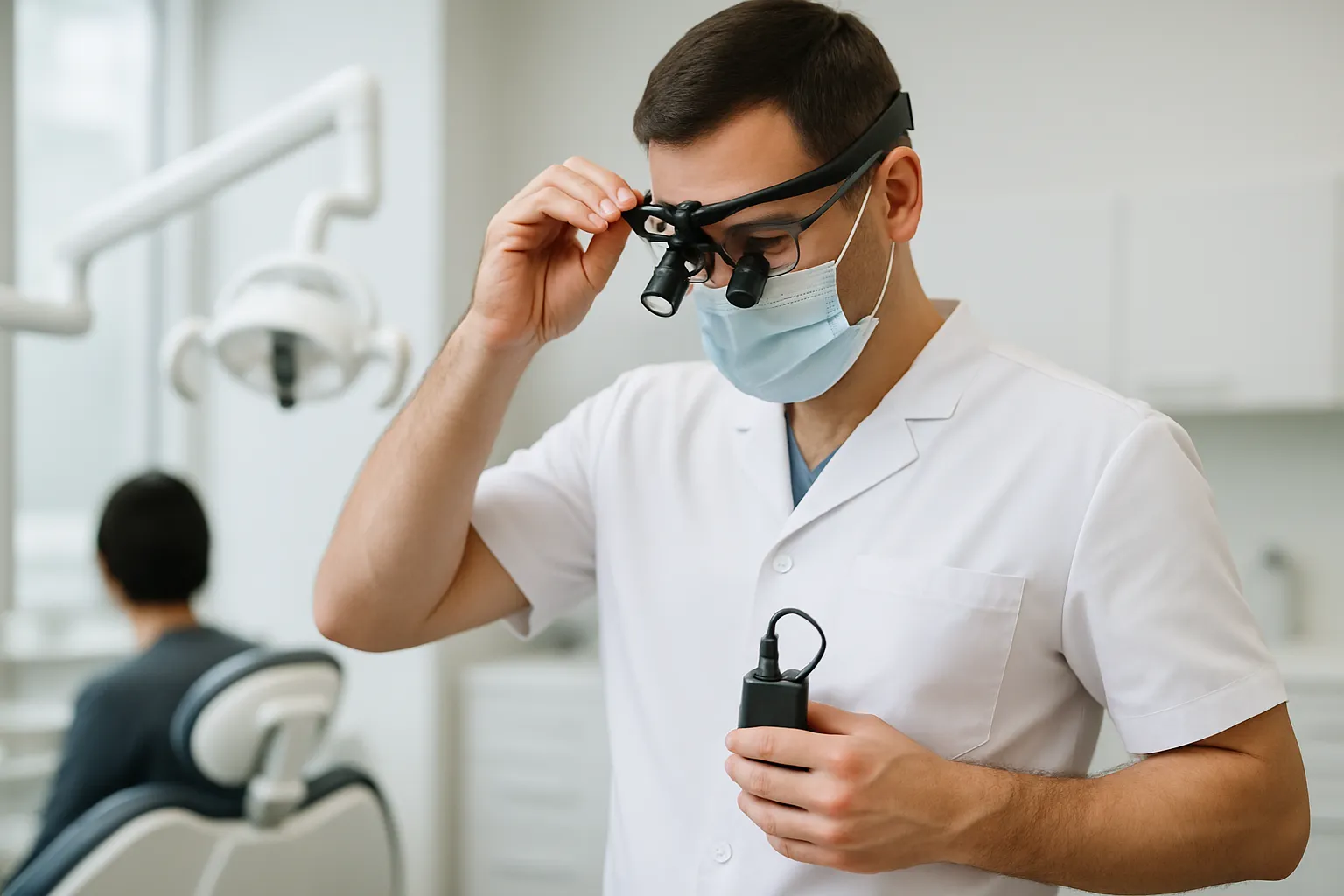
Dental loupe headlight battery selection plays a pivotal role in performance and practicality for clinicians. The right battery system can determine how long you work uninterrupted, how comfortable your loupes feel throughout the day, and how seamlessly your workflow proceeds from patient to patient. Key factors to consider include runtime, weight, charging requirements, and compatibility with your loupe and headlight models.
These elements directly influence both clinical workflow and practitioner comfort. For example, insufficient runtime may require mid-procedure battery changes, while excessive battery weight can contribute to fatigue during extended sessions. Charging protocols and battery design—such as whether the battery is integrated or external—also affect portability and ergonomics. Ultimately, understanding these factors helps clinicians choose a battery system that supports both efficiency and comfort in daily practice.
Understanding Dental Loupe Headlight Battery Systems
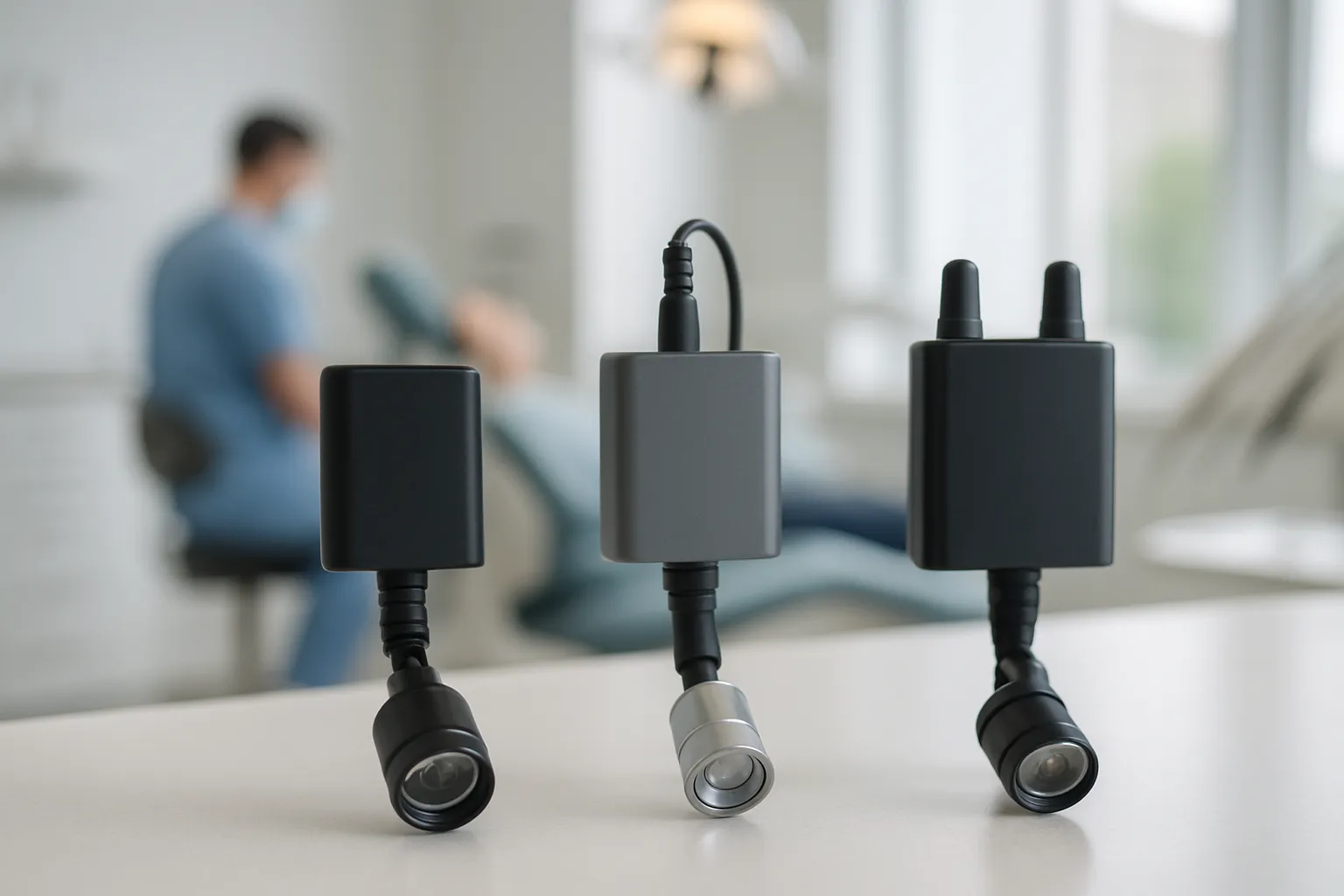
Dental loupe headlights rely on three main battery system types: internal (integrated), external battery packs, and wireless modules. Internal batteries are built into the headlight or frame, offering streamlined portability and eliminating the need for external cords. External battery packs, commonly clipped to the belt or placed in a pocket, connect via cable and often provide longer runtimes but can add weight or restrict movement. Wireless modules are designed to detach the headlight from a specific frame or loupe, enhancing flexibility and reducing cable management demands.1,2
The choice of power source directly impacts ergonomics and workflow. Integrated batteries minimize tethering but may require more frequent charging, while external packs can shift weight away from the head but may affect practitioner comfort during long procedures. Leading brands such as Lumadent, Surgitel, and Amtech offer a range of these configurations to suit diverse clinical preferences.
Clinical Workflow: Runtime and Charging Cycles
Battery runtime is a critical factor in maintaining smooth clinical workflow with dental loupe headlights. Studies and manufacturer data indicate that typical runtimes for modern systems range from approximately 6 to 12 hours on a full charge, depending on the specific model and brightness setting (W2, W10). For example, many wireless headlights—including options like the Lumadent AirLux Wireless Headlight—are engineered to provide up to 6 hours of runtime, which may cover a typical clinical workday for many practitioners (W2, W10). If runtime falls short, clinicians may experience interruptions or need to swap batteries mid-procedure, impacting efficiency (S1).
Charging cycles also influence daily workflow. Manufacturer guidelines recommend fully charging batteries between uses and avoiding frequent partial charges to help preserve overall battery lifespan (W1). Adhering to these recommendations can maximize longevity and reduce the need for premature replacements, supporting uninterrupted clinical sessions and long-term cost efficiency.
Loupe Headlight Battery Life: Evidence and User Experience
Battery life is a key factor influencing user satisfaction with dental loupe headlights. A published study reported that satisfaction scores were affected by both the time required to recharge batteries and the actual battery life during clinical use, highlighting battery performance as a significant practical concern for clinicians (S1). Several factors influence battery longevity, including the brightness setting selected, frequency and duration of use, and charging habits. For example, using headlights at maximum brightness may reduce overall runtime, while following manufacturer guidelines for charging cycles—such as avoiding frequent partial charges—may help preserve long-term battery health (W1). Despite these considerations, there is notable variability in reported battery life between different loupe headlight models, and direct comparisons are often limited by differences in study design and product features (S4). This variability underscores the importance of clinicians considering both manufacturer specifications and real-world user experience when selecting a headlight system.
Weight, Comfort, and Ergonomics: Clinical Impact
The weight and placement of loupe headlight batteries play a significant role in practitioner comfort, especially during lengthy procedures. Integrated battery systems, such as those found in some digital loupe models, reduce the need for external packs and may help minimize strain by distributing weight more evenly across the frame (S2). In contrast, external battery packs—typically clipped to the belt or pocket—can add bulk and restrict movement, though they often offer longer runtimes (S2). Wireless and modular designs are increasingly popular, as they free clinicians from cables and improve ergonomics by reducing head and neck fatigue (S5). To optimize comfort, clinicians can adjust headband tension, select lightweight frames, and position cables to avoid pressure points. Regularly assessing battery placement and choosing the lightest compatible option are practical steps to enhance daily ergonomics in clinical settings.
Compatibility: Matching Batteries with Loupes and Headlights
Ensuring battery compatibility with your dental loupes and headlights is essential for reliable performance and workflow efficiency. Most leading brands, such as Lumadent, Surgitel, and Amtech, offer modular systems designed to fit a variety of loupe frames and headlight models. Modular battery designs allow clinicians to upgrade or replace the battery pack without needing an entirely new headlight system, supporting both longevity and cost-effectiveness (S5). When selecting a battery, check manufacturer specifications for connector type, voltage, and mounting options to ensure a secure fit. For example, Lumadent and Surgitel both provide interchangeable battery modules compatible with multiple headlight models, while Amtech offers universal mounts for a range of loupe designs. Assessing upgradeability and modularity helps clinicians adapt to evolving practice needs without compromising compatibility or workflow.
Comparison Table: Battery Systems for Leading Dental Headlights
Choosing the right battery system for loupe headlights involves balancing runtime, weight, and compatibility. The table below compares key features of battery systems for Lumadent Headlight, Surgitel Headlight, and Amtech Headlight. This overview helps clinicians quickly identify which system aligns with their workflow and ergonomic needs.
| Brand/Model | Battery Type | Reported Runtime | Weight | Compatibility |
|---|---|---|---|---|
| Lumadent Headlight | External Rechargeable Pack | Approx. 6 hours | Lightweight pack | Compatible with multiple loupe frames |
| Surgitel Headlight | External Rechargeable Pack | Approx. 6 hours | Lightweight pack | Compatible with Surgitel loupes and select frames |
| Amtech Headlight | Wireless Module | Approx. 3 hours (manufacturer estimate; actual runtime may vary) | Integrated, minimal added weight | Designed for Amtech loupes |
Clinicians should consider whether longer runtime or lighter, wireless operation best fits their daily practice. Compatibility with existing loupes and the ability to swap batteries during busy schedules can also influence the optimal choice.
Loupe Battery Maintenance and Replacement Tips
Proper battery care is essential for maintaining the performance and longevity of dental loupe headlights. Manufacturers recommend following specific charging routines to extend battery life. For example, it is advised to avoid frequent partial charges and instead follow the charging cycle guidelines provided by the manufacturer to help preserve battery health (W1). However, occasional partial charges are not considered harmful, and keeping the battery above 30% charge is generally regarded as good practice (W7).
Signs that a loupe headlight battery may need replacement include noticeably reduced runtime, inconsistent power delivery, or the battery failing to hold a charge. Clinicians should also be aware of manufacturer instructions regarding safe handling, as well as recommended disposal methods for spent batteries to ensure both user safety and environmental compliance. Regular inspection and timely replacement can help avoid workflow interruptions during clinical sessions.
Conclusion
Choosing the right battery system for dental loupe headlights can influence daily clinical workflow, practitioner comfort, and long-term equipment costs. Battery runtime and charging cycles can affect the ability to complete uninterrupted procedures and influence overall satisfaction with loupe headlights (S1). The weight and design of the battery—whether integrated, external, or wireless—also impact ergonomics and comfort during extended use (S2, S5). Compatibility between the battery, loupe, and headlight models is essential for seamless integration and potential future upgrades (W2).
Clinicians can optimize their investment and daily experience by considering the following checklist:
- Assess typical clinical session lengths to match battery runtime requirements
- Evaluate headlight and battery weight for comfort during prolonged procedures
- Follow manufacturer-recommended charging practices to extend battery life
- Confirm compatibility of batteries with current and future loupe/headlight models
Ultimately, selecting a battery system tailored to your workflow and equipment ensures reliable illumination, minimizes interruptions, and supports practitioner well-being throughout the workday.
Frequently Asked Questions
How long do dental loupe headlight batteries typically last?
Battery life varies by model and usage, but many systems offer several hours of continuous use per charge.
Can I use any battery with my loupe headlight?
No, compatibility depends on the headlight and loupe model; always check manufacturer recommendations.
What maintenance extends battery life?
Following charging guidelines and avoiding frequent deep discharges can help prolong battery lifespan.
How do I know when to replace my loupe headlight battery?
Replacement is generally needed if the battery no longer holds sufficient charge for a typical work session.
References
- DENTAL TRIBUNE (2018)
- A technical review on Surgeons Headgear systems: The past, present and future. (2011)
- Factors contributing to student satisfaction with dental loupes and headlights (2020)
Last updated: 2026-10-07
Dentist, Iran Medical Council registration No. 233463 · Last reviewed: 7 October 2026
Nutrident educational content is based on credible sources and reviewed under his supervision. This article is for professional education and does not replace clinical examination or the judgement of the treating dentist.