




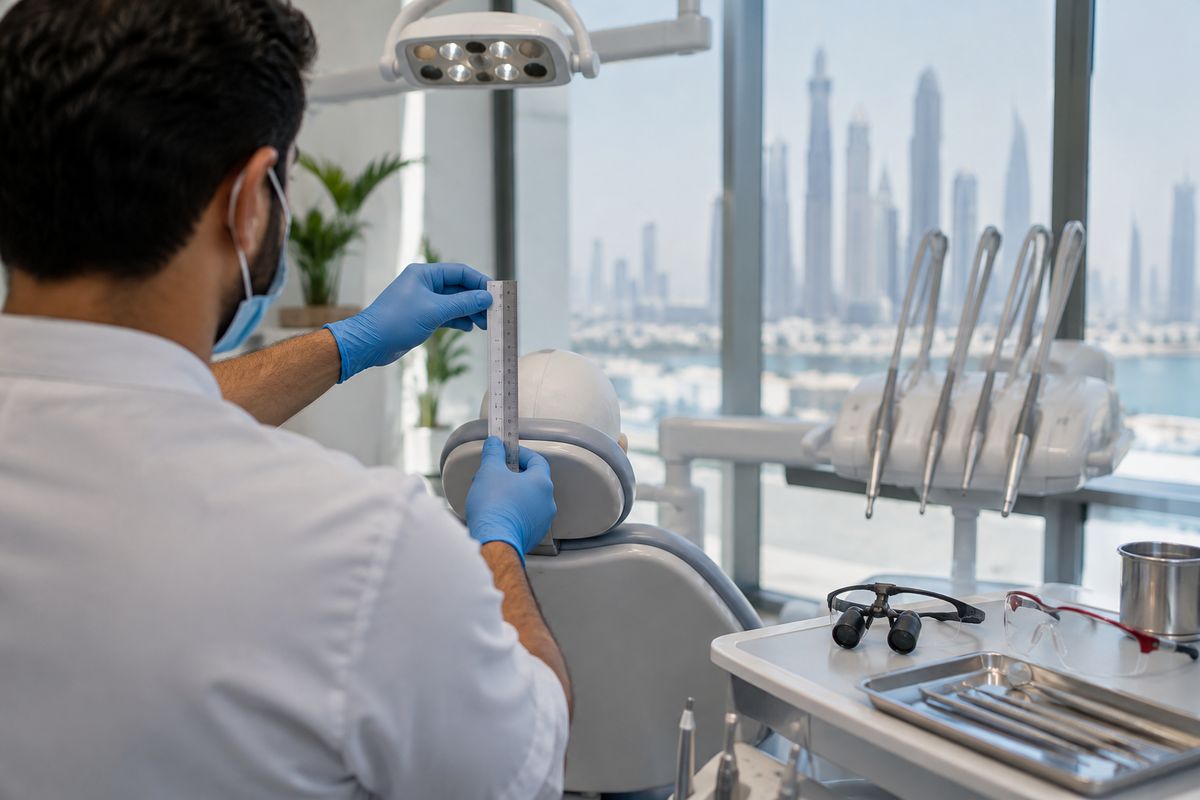
Proper measurement and fitting of dental loupes is crucial for achieving optimal ergonomics and clinical comfort. An individualized loupe fit supports healthy posture and may help reduce musculoskeletal strain during dental procedures, while poorly fitted loupes may compromise ergonomics, potentially leading to neck and back discomfort, eye strain, and reduced clinical efficiency. Studies indicate that ergonomic benefits from loupe use are maximized when loupes are precisely fitted for factors such as working distance, interpupillary distance, and declination angle, rather than relying on generic or off-the-shelf models (S1, S5, S6, W1, W2).
Unfortunately, common consequences of improper loupe fitting include persistent discomfort, suboptimal posture, and even increased risk of work-related musculoskeletal disorders (S1, S5, S6). This guide provides a practical, evidence-based protocol for measuring and fitting dental loupes, tailored to the needs of UAE and international clinical settings. It offers step-by-step instructions, addresses regional considerations, and highlights key ergonomic factors to help clinicians achieve a comfortable, custom fit for their daily practice.
Understanding Ergonomic Dental Loupe Fitting: Why Precision Matters
Ergonomic dental loupe fitting involves customizing the loupe’s optical and physical properties to the clinician’s unique working posture and facial features. Properly fitted loupes are designed to support musculoskeletal health by promoting a neutral spine and reducing neck and back flexion during clinical procedures. Key ergonomic factors include working distance (the space between eyes and the operative field), declination angle (the downward tilt of the optics), interpupillary distance (IPD), and frame fit—all of which directly influence posture and visual comfort (see detailed guide). Studies indicate that loupes lacking individualized adjustment, particularly in declination angle and working distance, may not deliver the intended ergonomic benefits and could compromise posture improvements [S1, S5, S6, W1, W7]. Therefore, optimal results require loupes to be tailored to each practitioner’s measurements and clinical environment.
Essential Measurements for Dental Loupe Fitting
Working Distance
Accurately measuring your working distance is the foundation of ergonomic loupe fitting. This distance should be determined while seated in your natural clinical posture at the dental chair, with your back straight and arms at a comfortable position. Using a ruler or tape measure, record the distance from the bridge of your nose to the patient’s oral cavity. This ensures optimal focus and reduces the risk of leaning forward, which may contribute to musculoskeletal discomfort (W8, W7).
Interpupillary Distance
Interpupillary distance (IPD) is the measurement between the centers of your pupils. Proper IPD alignment is essential for clear, single vision through both oculars. This is typically measured with a pupillary ruler or by a professional, and should be communicated to the manufacturer for custom assembly (W2).
Declination Angle
The declination angle refers to how steeply the optics tilt downward from the horizontal. An appropriate declination angle helps maintain a neutral neck posture, minimizing strain. Studies suggest that both working distance and declination angle are critical for ergonomic benefit (W9, W1).
Frame Size & Fit
Frame size must accommodate individual facial dimensions, especially for clinicians with small or large faces. In the UAE and international settings, regional facial variations and PPE compatibility are important considerations. Consulting a detailed dental loupe measurement and fitting guide and sharing accurate measurements with the manufacturer supports optimal comfort and performance (W4).
Step-by-Step Protocol: How to Measure Dental Loupes for Custom Fit
Preparation
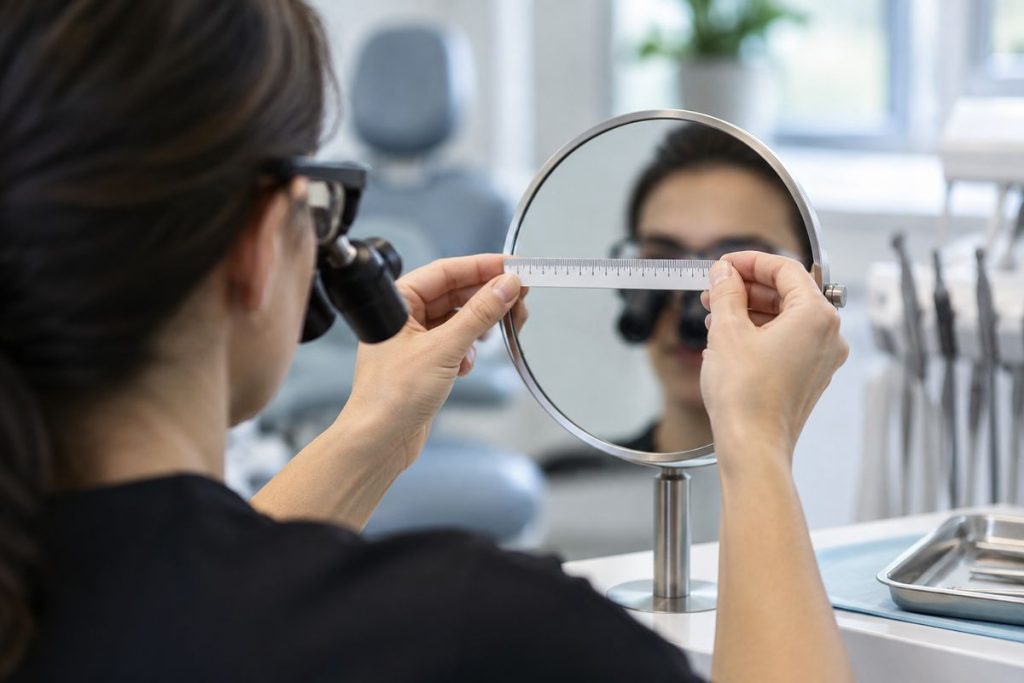
Begin by gathering essential tools: a ruler or measuring tape, a mirror, and, ideally, an assistant. Sit in your natural working posture at the dental chair, ensuring your back and neck are neutral and relaxed. This position is crucial for accurate ergonomic measurements and should reflect your typical clinical stance (see detailed loupe measurement and fitting guide).
Recording Measurements
Measure your working distance from the eyes to the patient’s oral cavity while maintaining neutral posture. Next, determine your interpupillary distance (IPD) for proper optical alignment. Note your preferred declination angle—how far downward your eyes naturally gaze without bending your neck. Assess frame fit by considering your face size and any prescription eyewear.
Manufacturer Communication
Document all measurements clearly. Share these details with your chosen loupe manufacturer to enable a custom fit. Providing precise data helps optimize ergonomic benefits and reduces the risk of postural strain during clinical use.
Comparison Table: Fitting Features Across Leading Brands
Leading dental loupe brands offer a range of ergonomic adjustment options and fitting protocols. Customization of working distance, interpupillary distance (IPD), declination angle, and frame size is essential for optimal ergonomics. Brands such as Lumadent, Surgitel, Amtech, and SDDENT differ in their approach to measurement and adjustment. Surgitel, for example, uses a manual process that includes individual measurement of IPD, head width, vertical placement, and working distance, while others may follow manufacturer-guided protocols. The table below summarizes key fitting features:
| Brand | Customizable Working Distance | Customizable IPD | Declination Angle Adjustment | Frame Size Options | Measurement Protocol |
|---|---|---|---|---|---|
| Lumadent | Yes | Yes | Yes | Yes | Manufacturer-guided |
| Surgitel | Yes | Yes | Yes | Yes | Manual, detailed (IPD, head width, vertical, distance) |
| Amtech | Yes | Yes | Yes | Yes | Manufacturer-guided |
| SDDENT | Yes | Yes | Yes | Yes | Manufacturer-guided |
Consulting each brand’s fitting guide and sharing precise measurements with the manufacturer is recommended for personalized results.1,2,3
Practical Tips for Fitting Dental Loupes in UAE and International Clinics
Clinic Workflow
When fitting dental loupes in busy UAE and international clinics, ensure measurements are taken in a natural, upright posture at the dental chair to reflect real working conditions. Accurate measurement and communication of working distance and interpupillary distance with the manufacturer are essential for optimal optical alignment and ergonomic benefit (W4). For clinicians who wear prescription glasses, measurements should be taken while wearing them to avoid misalignment.
Common Mistakes
Frequent errors include measuring in a slouched position, neglecting to account for eyewear, or failing to document accurate working distances. These can compromise posture and reduce the ergonomic benefits loupes are designed to provide (W9).
Cultural/Regional Considerations
Face size variation is significant in the UAE and globally; selecting frames that accommodate both small and large faces is important for comfort and stability (W4). Consider compatibility with PPE and the impact of local climate—lighter frames may be preferable in hot, humid environments. First-time users may experience an adaptation period of two to four weeks as they adjust to new visual fields (W6).
Adjusting and Evaluating Your Fitted Dental Loupes
Initial Adjustment
Once your dental loupes arrive, begin by verifying that the working distance and interpupillary distance match your measurements. Fine-tune the nose pads, temple arms, and, if available, the declination angle to ensure the optics align with your natural line of sight. Sit in your typical clinical posture and confirm that the loupes allow you to maintain a neutral neck and back position without excessive tilting or hunching. Proper focus alignment should be checked while seated upright and looking straight ahead, as recommended in fitting protocols (W8).
Posture Checks
During initial use, observe your posture for signs of strain. An optimal fit should support an upright head and relaxed shoulders. If you notice persistent forward head tilt or discomfort, reassess adjustments and repeat posture checks as small deviations can impact ergonomic benefit (S7).
Adaptation Period
Clinicians can expect an adaptation period of two to four weeks as they adjust to the altered visual field provided by magnification loupes. During this time, monitor for eye strain or musculoskeletal discomfort, which may signal suboptimal fit requiring further adjustment (W6).
When to Reassess or Refit: Signs and Solutions
Recognizing when dental loupes require reassessment is essential for maintaining ergonomic benefits and clinical comfort. Common signs indicating a need for refitting include persistent neck or back discomfort, eye strain, headaches, or a noticeable shift in posture while working. These issues may arise if the working distance, declination angle, or frame fit is no longer optimal for your clinical habits or physical changes over time (S5). If such symptoms develop, clinicians should remeasure their working distance and interpupillary distance (IPD) in a neutral posture and document any changes. Sharing updated measurements and feedback with the manufacturer is recommended for a precise refit (W4). Most reputable manufacturers offer support for adjustments and may provide warranty services for frame or optical realignment. Timely communication with the supplier ensures continued ergonomic protection and helps prevent long-term musculoskeletal problems (W9).
Conclusion
Properly fitted dental loupes play a crucial role in supporting clinician ergonomics and comfort at the chairside. Studies suggest that loupes measured and adjusted for each user’s working distance, interpupillary distance, and declination angle may help promote healthier posture and reduce musculoskeletal strain associated with dental practice (S1, S6, W1). To achieve these benefits, clinicians are encouraged to follow a systematic, evidence-based protocol for loupe measurement and fitting, always maintaining a neutral working posture during the process (S3, W8).
- Measure working distance and interpupillary distance in your natural clinical posture.
- Select a declination angle that supports a neutral neck position.
- Check frame fit for comfort and compatibility with PPE.
- Share precise measurements with the manufacturer for tailored fabrication.
- Reassess loupe fit periodically or if discomfort or posture issues develop.
Regular communication with manufacturers and periodic reassessment are essential to ensure your loupes continue to meet your ergonomic needs throughout your career (W4, W2). By prioritizing proper fit and ongoing evaluation, clinicians can maximize both the clinical and ergonomic value of their dental loupes.
Frequently Asked Questions
How do I measure my working distance for dental loupes?
Sit in your normal clinical posture and measure the distance from your eyes to the treatment area using a ruler or tape measure.
Why is declination angle important in dental loupe fitting?
The declination angle helps maintain a neutral head and neck posture, reducing musculoskeletal strain.
How often should I reassess my dental loupe fit?
Reassessment is recommended if you experience discomfort, posture issues, or after significant changes in your clinical routine.
Can I fit dental loupes myself or do I need professional help?
Many measurements can be self-recorded, but consulting manufacturer or supplier guidelines is advised for optimal fit.
References
- Magnification loupes influence on neck and trunk flexion of dental hygienists while scaling—a pilot study (2021)
- The effect of magnification loupes on dental hygienists’ posture while exploring (2017)
- The effect of magnification loupes on spontaneous posture change of dental students during preclinical restorative training (2019)
Last updated: 2026-11-24
Dentist, Iran Medical Council registration No. 233463 · Last reviewed: 24 November 2026
Nutrident educational content is based on credible sources and reviewed under his supervision. This article is for professional education and does not replace clinical examination or the judgement of the treating dentist.