




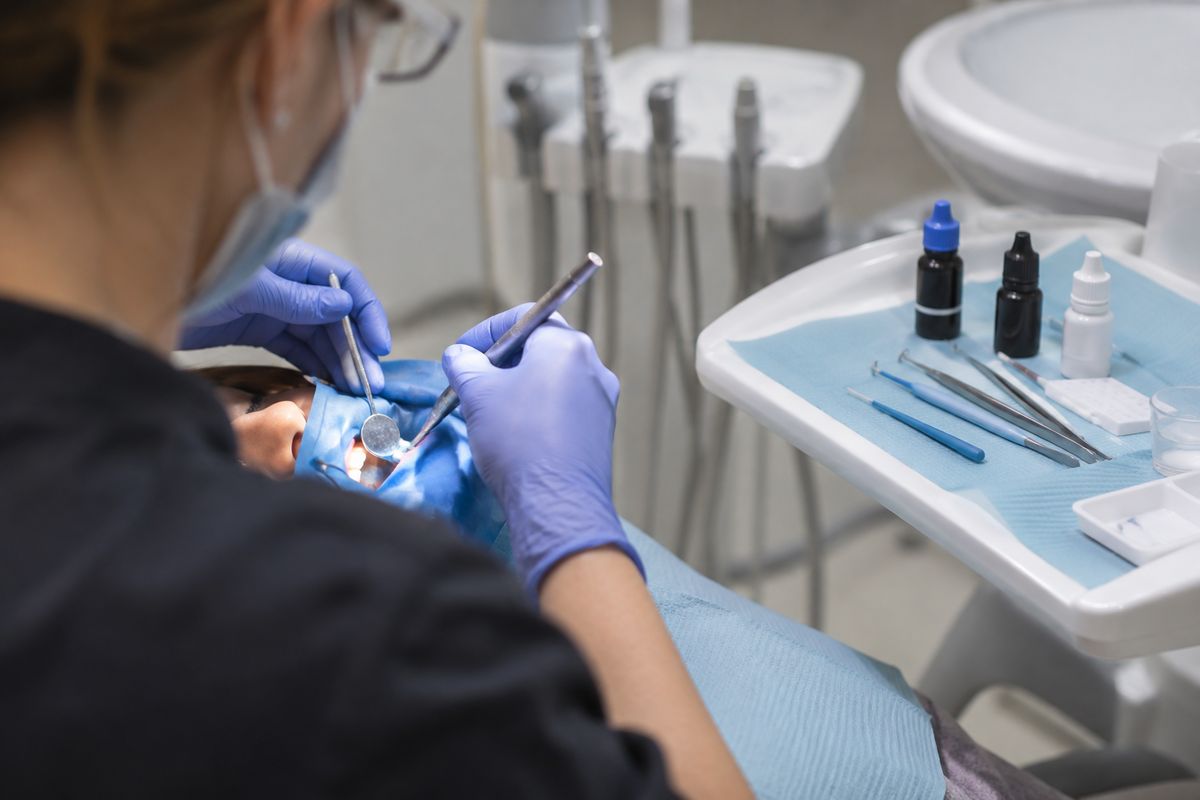
Adhesive selection remains a pivotal factor in the long-term success of restorative dental procedures, directly influencing retention, marginal adaptation, and the incidence of post-operative sensitivity. Universal dental adhesives, designed for use in self-etch, total-etch, or selective-etch protocols, offer clinicians versatility beyond traditional total-etch (etch-and-rinse) and self-etch systems. Unlike earlier generations, universal adhesives can be adapted to a wider range of substrates and clinical situations, streamlining workflow and reducing the need for multiple adhesive products.
Given the diversity of restorative cases encountered in UAE dental practice, an evidence-based comparison of adhesive systems is essential. Clinical studies and systematic reviews indicate that universal adhesives may provide comparable clinical performance to established systems when applied according to appropriate protocols. For UAE dentists, understanding these nuances supports informed product selection and optimises patient outcomes in a context of evolving materials and regulatory standards.
Adhesive System Classifications: Universal, Total-Etch, and Self-Etch
Dental adhesive systems are commonly classified as total-etch (etch-and-rinse), self-etch, and universal adhesives. Total-etch adhesives require a separate phosphoric acid etching step followed by rinsing and application of primer and adhesive, offering strong enamel bonding but increased technique sensitivity. Self-etch adhesives incorporate acidic monomers, eliminating the rinsing step by combining etching and priming, which may reduce post-operative sensitivity but can result in less effective enamel etching. Universal adhesives represent the latest generation, designed for use in multiple etching modes (self-etch, total-etch, or selective-etch) and on various substrates, including enamel, dentin, and indirect restorations. Their formulation typically includes functional monomers such as 10-MDP, allowing for chemical interaction with tooth structure and increased application flexibility. The evolution towards universal adhesives aims to streamline clinical workflow by offering a single bottle system adaptable to different clinical situations and operator preferences.
Clinical Performance of Universal Adhesives: What Does the Evidence Show?
Recent meta-analyses and clinical trials indicate that universal adhesives demonstrate comparable clinical performance to traditional etch-and-rinse and self-etch systems in terms of retention and marginal adaptation. A 2024 systematic review found no significant differences in retention or marginal adaptation between universal adhesives and other adhesive systems over follow-up periods up to five years (S6). Post-operative sensitivity rates were also similar across adhesive types in these studies (S6). Regarding etching modes, a randomized clinical trial reported that universal adhesives applied in the etch-and-rinse mode showed improved long-term clinical behavior compared to the self-etch mode, while selective enamel etching was associated with favorable outcomes for marginal adaptation (S10). Other studies suggest that the choice of etching protocol may not significantly affect short-term outcomes, but selective-etch or etch-and-rinse strategies could enhance enamel bond durability in the longer term (S1, S4).
Universal vs Total-Etch vs Self-Etch: Clinical Indications and Limitations
Universal adhesives are designed for versatility, allowing application in self-etch, total-etch, or selective-etch modes. Their main indications include direct composite restorations, indirect bonding procedures, and non-carious cervical lesions (NCCLs) (S5, S6, S7). Total-etch adhesives are often preferred for enamel bonding, especially in situations requiring strong micromechanical retention, such as Class IV restorations or when bonding to uncut enamel (S3, S5). Self-etch systems may be considered for dentin bonding and when minimizing post-operative sensitivity is a priority, such as in NCCLs (S5, S6).
Evidence suggests universal adhesives may perform better in selective-etch or total-etch modes on enamel, while self-etch mode may be adequate for dentin (S10). Limitations include potential technique sensitivity in total-etch protocols and possible reduced enamel bond strength in self-etch mode (S3, S10). For a detailed comparison of adhesive strategies and their integration with restorative materials, see our composite bonding cement comparison guide for UAE dentists.
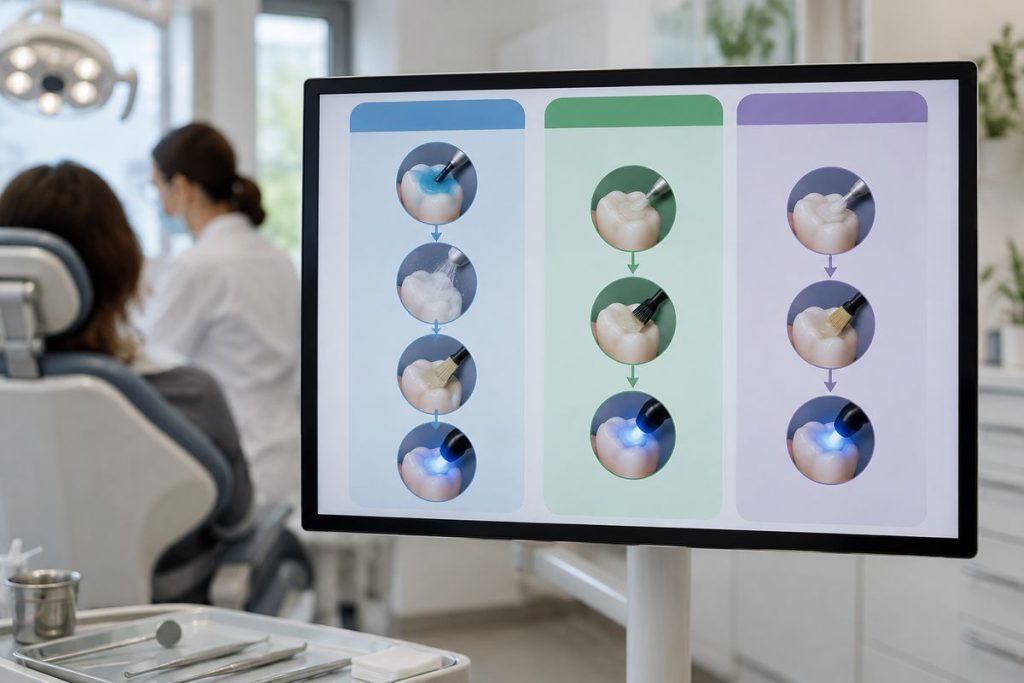
Table: Evidence-Based Comparison of Adhesive Strategies
The following table summarises key clinical attributes of universal, total-etch (etch-and-rinse), and self-etch adhesive systems, with a focus on application steps, main indications, evidence-supported advantages, and limitations relevant to UAE dental practice.
| Criteria | Universal Adhesives | Total-Etch (Etch-and-Rinse) | Self-Etch |
|---|---|---|---|
| Application Steps | Flexible: self-etch, total-etch, or selective-etch; single bottle | Phosphoric acid etch, rinse, adhesive application | Adhesive applied directly, no separate etching step |
| Clinical Indications | Direct/indirect restorations, non-carious cervical lesions, multiple modes | Enamel/dentin bonding, direct/indirect restorations | Non-carious cervical lesions, dentin bonding, minimal enamel involvement |
| Evidence-backed Advantages | Versatility; similar retention and marginal adaptation to other systems; reduced steps | Reliable enamel bond; long-term data | Reduced post-op sensitivity; simplified protocol |
| Limitations | Technique sensitivity in etch mode; variable enamel bond if not selectively etched | Technique sensitive; risk of over-etching dentin | Lower enamel bond; not ideal for large enamel surfaces |
| UAE Context | Suitable for diverse cases; aligns with UAE regulatory standards | Common in established protocols; widely available | Useful for hypersensitive patients; may require careful case selection |
Selection Criteria for Dental Adhesives in UAE Practice
Effective adhesive selection in UAE dental practice requires balancing clinical demands, substrate type, and workflow efficiency. A practical checklist includes: (1) identifying the restorative procedure (e.g., direct composite, indirect bonding), (2) assessing the bonding substrate (enamel, dentin, or mixed), and (3) considering the preferred etching approach (self-etch, total-etch, or selective-etch). Universal adhesives offer flexibility for all three etching techniques, which can streamline inventory and protocols in busy clinics (S5). Manufacturers recommend following the specific instructions for each adhesive, paying close attention to application time, solvent evaporation, and curing to optimise bond strength (W3, W9). In the UAE, clinicians should also ensure that selected adhesives are locally registered and compatible with the restorative materials in use. Product availability, as well as compatibility with composites and cements, is critical for seamless integration into the restorative workflow (S5).
Technique Tips and Common Pitfalls in Adhesive Application
Optimising adhesive bonding outcomes requires strict adherence to recommended protocols and careful attention to technique. Universal adhesives can be applied using self-etch, total-etch, or selective-etch approaches, but each protocol has specific steps to maximise effectiveness. For example, manufacturers advise ensuring thorough coverage of the substrate, gentle agitation of the adhesive for the recommended time, and careful air thinning to avoid pooling and solvent entrapment. Proper light curing—according to the adhesive’s instructions—remains essential for optimal polymerisation and bond strength (W9, W6).
Common pitfalls include over-etching enamel or dentin, inadequate solvent evaporation, insufficient curing, and using the incorrect protocol for the substrate. Inadequate air drying can lead to reduced bond strength, while over-etching may increase post-operative sensitivity or compromise dentin bonding (W9, W8). Manufacturer guidance also emphasises the importance of following specified etching times and avoiding cross-contamination between steps (W9).
Integrating Adhesive Selection into Restorative Treatment Planning
Adhesive selection is a foundational step that directly influences the performance of composite restorations and the long-term success of cemented indirect restorations. The compatibility between the chosen adhesive and restorative material—whether a direct composite or an indirect restoration—should be confirmed according to manufacturer guidance and the specific clinical scenario. For instance, some universal adhesives are designed for use with both light-cured and dual-cured resin cements, but may require a separate activator for compatibility with self- or dual-cure materials. When planning treatment, clinicians should assess the tooth substrate, restoration type, and anticipated isolation challenges to select the most suitable adhesive protocol. Integrating adhesive selection with composite and cement choices ensures a streamlined workflow and optimised outcomes. For a detailed comparison of composite and cement options relevant to UAE practice, see our composite and cement selection guide.
Conclusion
Choosing the right dental adhesive is a critical step in restorative dentistry, directly influencing the longevity and clinical success of restorations. Evidence from recent systematic reviews and clinical trials indicates that universal adhesives offer comparable clinical performance to traditional total-etch and self-etch systems in a range of indications, provided they are used with appropriate protocols and substrate considerations (S1, S6, S8). For UAE dentists, an evidence-based approach—considering case type, etching mode, and substrate—remains essential.
Key takeaways for clinical adhesive selection:
- Match adhesive strategy to clinical indication and tooth substrate (enamel vs. dentin).
- Follow manufacturer instructions for etching mode and application steps.
- Consider workflow efficiency and compatibility with available restorative materials.
- Stay updated on regulatory guidance and product availability in the UAE.
Finally, as adhesive technologies and clinical evidence continue to evolve, ongoing professional education and regular review of new product data are recommended to maintain optimal standards of care in restorative dentistry.
Frequently Asked Questions
Which dental adhesive is best for composite restorations?
There is no universally ‘best’ adhesive; universal adhesives and traditional systems can both perform well depending on the clinical scenario and technique (S1, S10).
What is the main difference between total-etch and self-etch adhesives?
Total-etch adhesives require separate phosphoric acid etching, while self-etch systems incorporate the etching step into the adhesive application (W1, S3).
Can universal adhesives be used in both self-etch and etch-and-rinse modes?
Yes, universal adhesives are designed for flexibility and can be used in self-etch, total-etch, or selective-etch protocols (S5, W7).
Are there special considerations for adhesive selection in the UAE?
Dentists in the UAE should consider product availability, local regulatory approvals, and manufacturer instructions when selecting adhesives.
References
- An update on universal adhesives: indications and limitations (2022)
- Comparative clinical performance of universal adhesives versus etch-and-rinse and self-etch adhesives: a meta-analysis (2025)
- Adhesive dentistry: Current concepts and clinical considerations (2021)
Last updated: 2026-11-10
Dentist, Iran Medical Council registration No. 233463 · Last reviewed: 10 November 2026
Nutrident educational content is based on credible sources and reviewed under his supervision. This article is for professional education and does not replace clinical examination or the judgement of the treating dentist.