




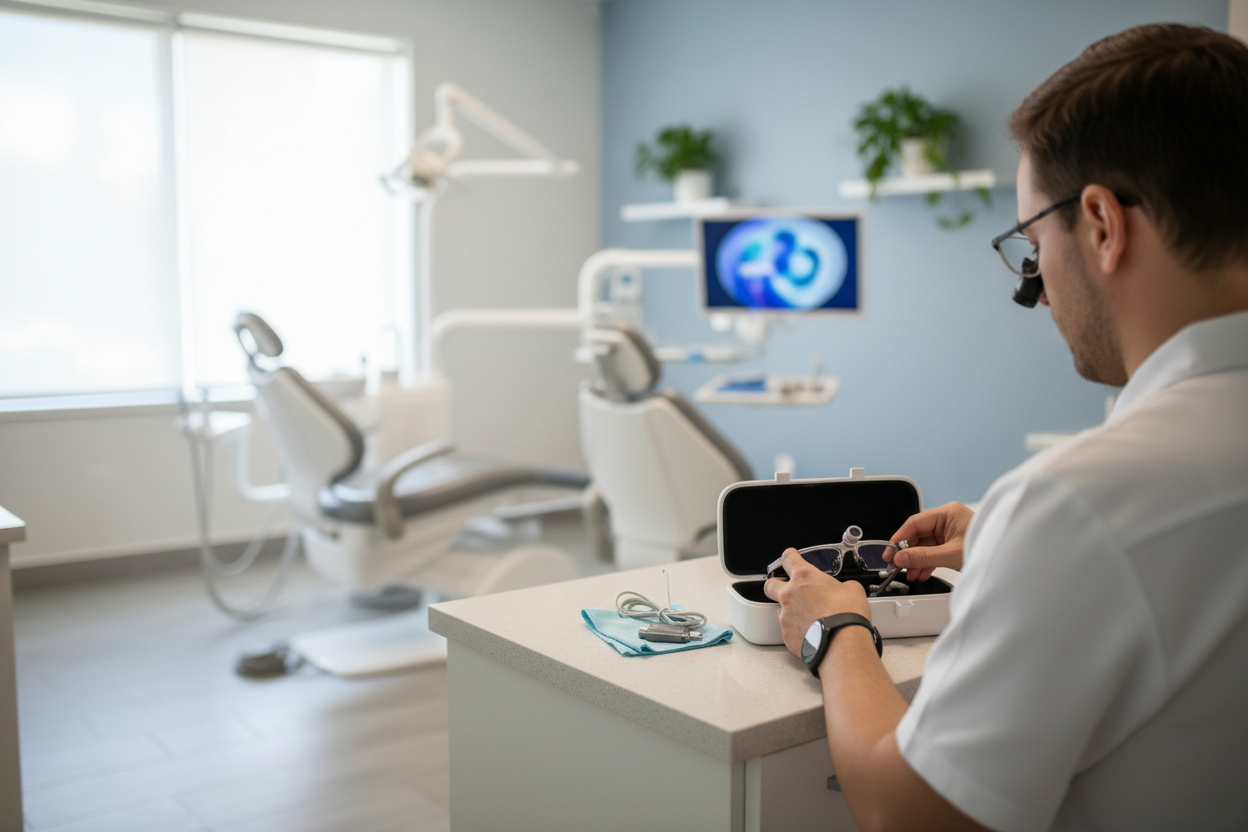
Regular care of dental loupes is essential for clinicians in the UAE to ensure optimal optical performance, infection control, and to protect a significant investment in clinical equipment. Neglecting cleaning, maintenance, or proper storage can lead to degraded visual clarity, increased risk of cross-contamination, and premature wear or failure of the loupe components. Evidence and manufacturer guidance highlight the importance of daily cleaning using appropriate agents, routine inspection for mechanical issues, and storing loupes in protective cases away from heat, humidity, and dust to extend their useful lifespan and maintain hygiene standards.
Following a structured care protocol not only helps preserve loupe optics and coatings but also supports consistent clinical outcomes and practitioner comfort. Adhering to recommended cleaning agents, avoiding harsh chemicals, and performing regular maintenance checks are key practices supported by both published studies and manufacturer recommendations for dental professionals.
Understanding Loupe Lifespan: What to Expect
The typical lifespan of dental loupes is influenced by both manufacturer guidance and advances in optical technology. Institutional recommendations, such as those from the US Navy, suggest that loupes generally require replacement every seven years to remain aligned with evolving technology and to ensure optimal performance (W3). However, actual longevity can vary based on several factors. Frequent use, inconsistent cleaning routines, and exposure to harsh disinfectants may accelerate wear, particularly affecting lens coatings and mechanical joints. Conversely, regular maintenance and adherence to recommended cleaning protocols can help preserve loupe function. Build quality, including the robustness of hinges and optical coatings, also plays a significant role in determining how long a loupe remains effective. Dentists should periodically review both manufacturer and institutional guidelines to assess when replacement or professional servicing is warranted, as outdated or poorly maintained loupes may compromise clinical outcomes.
Daily Cleaning: Step-by-Step Protocols
Safe Cleaning Agents
Before handling dental loupes, clinicians should perform thorough hand hygiene to prevent transferring contaminants to the optics and frame (W7). For cleaning, only use agents specifically recommended for loupes or magnifying lenses. Manufacturer and expert guidance advises against ammonia, bleach, alcohol, iodophors, glutaraldehyde-based products, and household cleaners, as these can damage lens coatings and reduce optical clarity (W4, W6). Water-resistant lens coatings, if present, may facilitate easier and safer cleaning (S1).
Lens and Frame Care
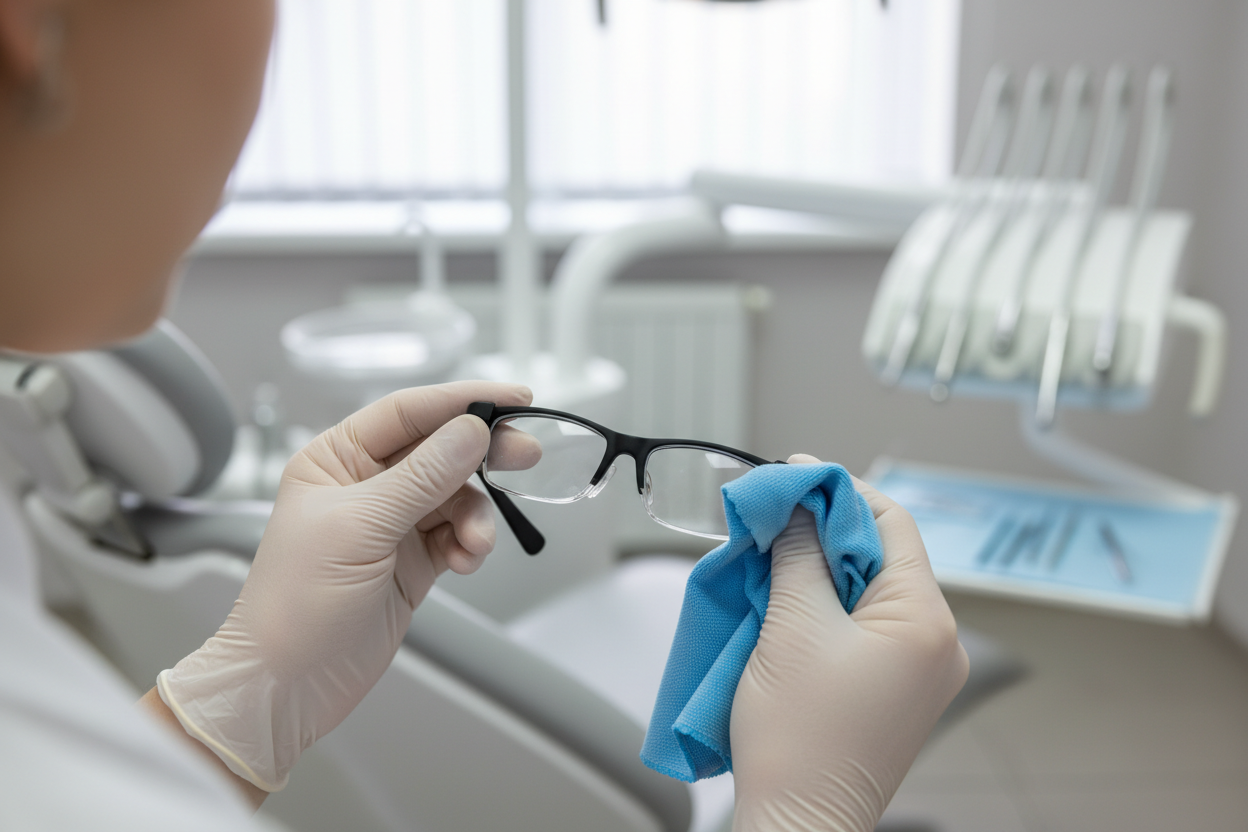
A stepwise protocol is advised: first, use compressed air or a soft brush to gently remove dust and debris from the lenses and frame (W9). Next, clean the lenses with a manufacturer-approved solution and a soft, lint-free cloth, avoiding circular motion that could scratch coatings. Finally, wipe the frames with a damp cloth, ensuring no moisture enters the optics. Avoid excessive moisture and harsh chemicals to preserve both lens coatings and frame integrity (W4, W6).
Disinfection and Infection Control
Routine disinfection of dental loupes is essential for maintaining infection control in clinical practice. Despite standard cleaning protocols, evidence suggests that residual contamination may persist on loupes after routine cleaning, underscoring the importance of thorough disinfection procedures (S2). When selecting disinfectants, it is crucial to use only those recommended by the loupe manufacturer or specifically intended for magnifying lenses; harsh chemicals such as alcohol, bleach, or phenol may risk damaging lens coatings or optical surfaces (W6, W7). For safe disinfection, practitioners should first wash and sanitize their hands, then gently wipe the loupe surfaces with an approved disinfectant using a soft, lint-free cloth. Avoid excessive moisture and ensure that liquid does not seep into hinges or optical joints. These steps help protect both the user and the integrity of the loupe optics while supporting effective infection control in the dental setting.
Routine Maintenance: Inspections and Adjustments
Regular maintenance inspections are essential to ensure the continued performance and ergonomic fit of dental loupes. Routine checks are typically recommended at least every six months, or more frequently if loupes are used daily in busy clinical environments (W2). During these inspections, clinicians should carefully examine hinges for smooth operation and signs of loosening, check screws for tightness, and assess lens alignment to prevent visual distortion. Frame integrity must also be evaluated for cracks or warping that could compromise comfort or stability (W2).
Minor adjustments, such as tightening screws or realigning nose pads, can often be performed in-clinic following manufacturer instructions. However, persistent issues with lens clarity, recurring misalignment, or structural damage warrant professional servicing to prevent further deterioration (W2). Common signs indicating the need for attention include difficulty maintaining focus, wobbly frames, or visible damage to optical components.
Proper Storage: Protecting Your Investment
Storage Environments
Manufacturers recommend storing dental loupes in a dedicated, hard-shell case when not in use to protect them from accidental drops, dust, and physical damage. Loupes should be kept away from direct sunlight, excessive heat, and humidity, all of which can degrade lens coatings and frame materials over time. In the UAE, where elevated temperatures and humidity are common, it is especially important to avoid leaving loupes in vehicles or near windows. Between patients, place loupes in a clean, dry area or their case to reduce the risk of contamination and exposure to airborne particles.
Transport Tips
When transporting loupes within or outside the clinic, always use the manufacturer-provided case. This minimizes the risk of misalignment, scratches, and impact damage. Avoid placing loupes in crowded bags or pockets, as rough handling can compromise optical precision and frame integrity. These storage and transport precautions help maintain loupe performance and extend their functional lifespan.
Loupe Care Mistakes to Avoid
Several common mistakes can significantly reduce the lifespan and clarity of dental loupes. Using improper chemicals—such as ammonia, bleach, alcohol, iodophors, glutaraldehyde-based products, and household cleaners—can damage lens coatings and degrade optical quality. Manufacturer advisories consistently warn against these agents, recommending only solutions specifically intended for magnifying lenses (W4). Neglecting regular cleaning allows debris and contaminants to accumulate, which may scratch lenses during later cleaning attempts and compromise vision. Rough handling, including dropping loupes or applying excessive force during adjustments, can misalign lenses, loosen hinges, or damage frames, leading to costly repairs or replacement. Reports from UAE dentists and manufacturers highlight that improper storage and hurried disinfection with unsuitable agents are frequent errors. Ultimately, these practices not only impair loupe performance but can also necessitate premature replacement, underscoring the importance of following evidence-based and manufacturer-recommended care protocols.
Loupe Care Features: Comparing Leading Models
For UAE dentists, selecting dental loupes with care-friendly features can simplify cleaning and extend device longevity. A key feature is water-resistant lens coatings, which may help facilitate thorough cleaning and reduce the risk of moisture damage—an attribute specifically recommended for dental environments (S1). Models with replaceable parts, such as nose pads or temple arms, also support easier maintenance and customization.
| Model | Water-Resistant Coating | Replaceable Parts | Manufacturer Cleaning Guidance |
|---|---|---|---|
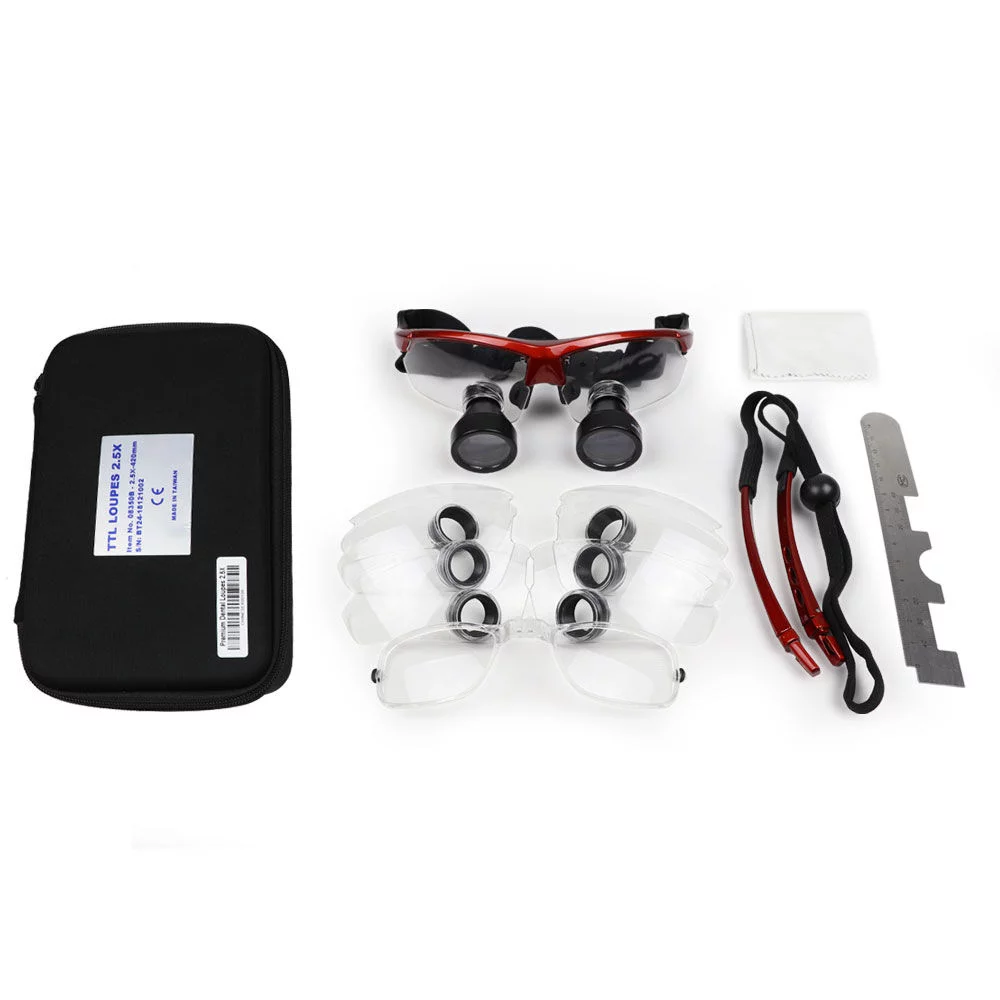
| Premium TTL Dental Loupes 2.5X (420mm Working Distance) | Scratch-resistant silica glass (easy to clean) | Adjustable PD controls, flexible temples | Wipe lenses with soft cloth, avoid harsh chemicals |
| Endoking Dental Loupes With Frame ( LED Headlight Free ) | Manufacturer guidance on gentle cleaning | Frame-integrated, some replaceable parts | Use non-abrasive agents, avoid soaking |
| Lumadent Loupe | Manufacturer offers water-resistant models | Some replaceable parts | Recommend soft cloth, avoid solvents |
| Surgitel Loupe | Water-resistant options available | Replaceable nose pads, temples | Clean with approved lens wipes |
| Amtech Loupe | Standard lens protection | Basic replaceable parts | Follow basic lens cleaning protocols |
When choosing a loupe, consider models with water-resistant coatings and replaceable components for easier maintenance.
Conclusion
Consistent, careful care of your dental loupes is important for maintaining their optical performance and extending their working life in the UAE clinical environment. Evidence and manufacturer guidance highlight the importance of a structured approach that includes daily cleaning with suitable, non-abrasive agents, routine disinfection, regular maintenance checks, and proper storage in protective cases. Avoiding harsh chemicals and rough handling helps preserve lens coatings and mechanical integrity, while periodic inspections can identify early signs of wear before they affect function.
Loupe care checklist:
- Wash hands thoroughly before handling loupes.
- Use recommended cleaning solutions and soft cloths for lenses and frames.
- Disinfect routinely with manufacturer-approved agents.
- Inspect hinges, screws, and alignment regularly.
- Store loupes in a protective case away from heat, humidity, and direct sunlight.
- Transport loupes securely within and outside the clinic.
Adhering to these best practices, as supported by current evidence and manufacturer recommendations, can help UAE dentists protect their investment and maintain optimal loupe performance throughout their expected lifespan.
Frequently Asked Questions
How often should I clean my dental loupes?
Clean loupes daily and disinfect them regularly according to manufacturer and infection control recommendations.
Can I use alcohol or bleach to clean my loupe lenses?
Most manufacturers advise against alcohol, bleach, or harsh chemicals as they can damage lens coatings. Use approved solutions only.
What is the typical lifespan of dental loupes?
Loupes generally require replacement every 7 years to keep pace with technology and maintain optical performance.
What is a good way to store dental loupes?
Store loupes in a protective case away from heat, moisture, and direct sunlight to prevent damage.
References
- Magnification in dentistry: useful tool or another gimmick? (2003)
- Disinfection of dental loupes: A pilot study (2019)
- Loupes Maintenance as a Clinical and Ergonomic Control
Last updated: 2026-11-07
Related products at Nutrident

Dentist, Iran Medical Council registration No. 233463 · Last reviewed: 7 November 2026
Nutrident educational content is based on credible sources and reviewed under his supervision. This article is for professional education and does not replace clinical examination or the judgement of the treating dentist.