




Precise veneer shade and shape selection is fundamental to achieving optimal esthetic outcomes, as the harmony of tooth color and form directly influences the perceived naturalness and attractiveness of a patient’s smile. A systematic approach allows clinicians to address individual esthetic goals and facial features, which is especially important in diverse regions such as the UAE, where patient expectations often span a spectrum from subtle enhancement to dramatic transformations. Dentists in Dubai, the UAE, and worldwide must navigate a range of preferences—balancing requests for very bright or uniquely shaped teeth with the need for results that complement skin tone, facial proportions, and smile lines.
Digital tools and structured protocols have become essential in managing these challenges, providing objective methods for evaluating facial reference lines, tooth proportions, and simulating potential outcomes. The integration of digital smile design and mock-ups not only increases predictability and consistency in veneer cases but also enhances patient communication and satisfaction by allowing clear visualization of proposed changes before irreversible procedures are undertaken.
Understanding Esthetic Goals and Patient Preferences
A thorough esthetic assessment and patient interview are foundational steps in any smile design protocol. This process involves understanding the patient’s expectations, lifestyle, and preferred esthetic outcomes, which can vary widely—particularly in cosmopolitan regions like Dubai and the UAE, where patients may request either a natural appearance or a brighter, more pronounced smile. Shape preferences, such as rounded versus squared incisal edges, should also be discussed in detail to align the final result with the patient’s vision.
Before starting veneer shade selection, it is essential to document the baseline shade and shape of the teeth, the position of the smile line, and key facial features. Accurate photographic records and shade mapping provide a reference point for both the clinician and the dental laboratory, supporting predictable and patient-centered outcomes in veneer cases.
Clinical Protocol for Veneer Shade Selection
Lighting, Environment, and Material Factors
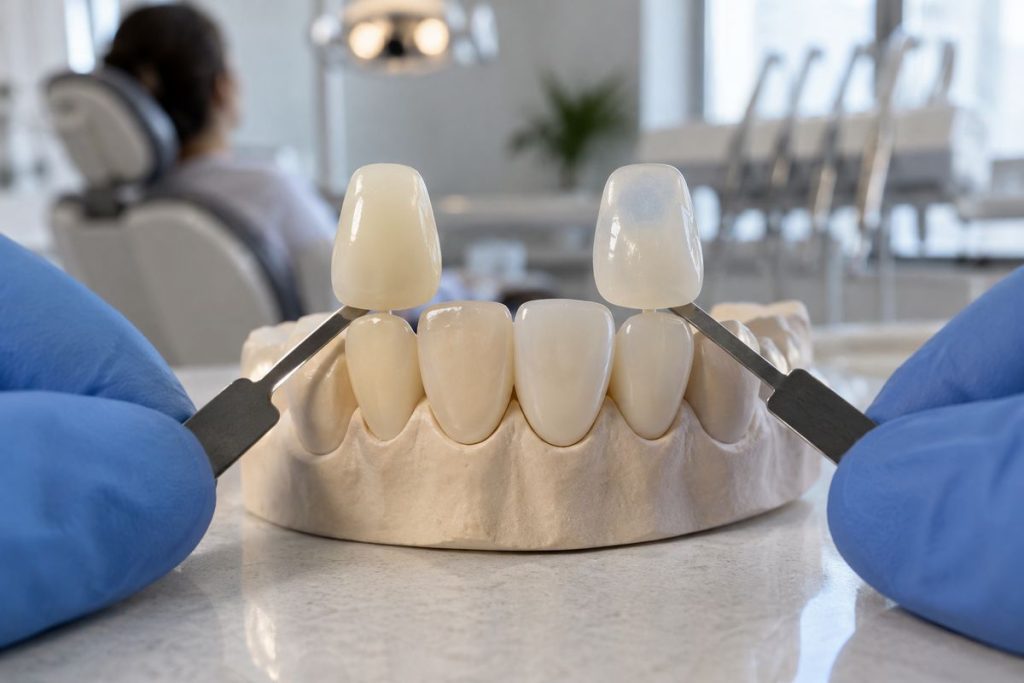
Effective veneer shade selection follows a systematic sequence: value is chosen first, followed by chroma and then hue, as outlined in established protocols (Veneer Shade Selection UAE Guide). This order maximizes accuracy, since value differences are most perceptible to the human eye and strongly influence the final esthetic result1,2. Standard lighting is crucial; natural daylight or color-corrected operatory lights are recommended to minimize metamerism and avoid eye fatigue, which can compromise shade perception3,4. Shade matching should be performed early in the appointment to reduce the risk of visual fatigue. Material choice also impacts shade selection: ceramic veneers’ translucency and layering can create subtle optical effects, while composite veneers may require more direct shade matching due to their different optical properties4. Both traditional shade guides and digital shade-matching devices can be valuable tools for improving reliability and reproducibility in clinical practice2,3.
Digital Smile Design and Mock-Ups: Enhancing Predictability
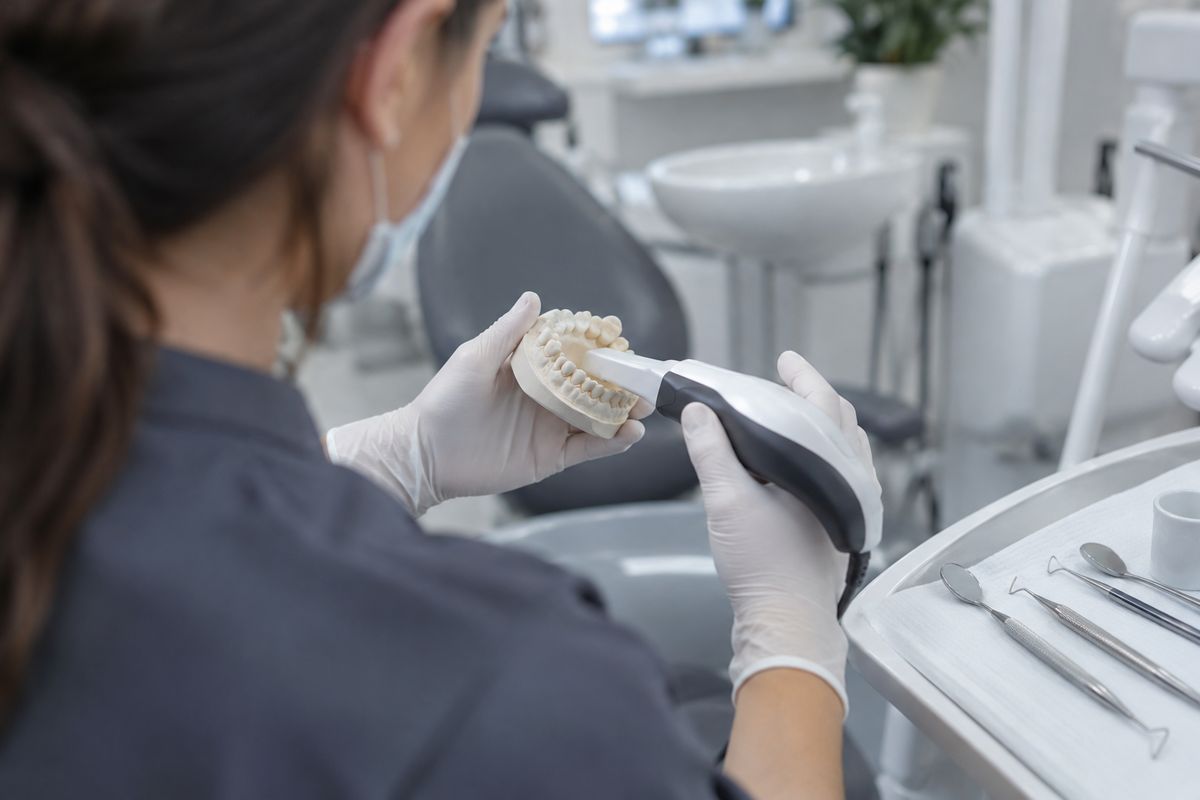
Digital Smile Design (DSD) protocols offer a systematic approach to veneer planning by integrating facial and dental reference lines, smile curves, and tooth proportions into the esthetic workflow. Digital tools—such as dedicated DSD software—allow clinicians to evaluate these parameters precisely and simulate final outcomes before initiating treatment. Intraoral scans and high-quality photographic documentation are fundamental components, providing accurate records for digital analysis and communication with the dental laboratory. Mock-ups, created either directly in the mouth or indirectly on models, play a critical role in verifying proposed shade and shape selections. They enable both clinicians and patients to visualize and assess the planned changes, facilitating informed feedback and improving case acceptance. The combination of digital planning and physical mock-ups enhances predictability and supports more consistent esthetic results in veneer cases.
Composite vs Ceramic Veneers: Material Considerations in Shade and Shape Selection
Composite and ceramic veneers each present unique considerations for shade and shape selection. Ceramic veneers, such as lithium disilicate, generally offer better color stability and higher translucency, which can allow for more lifelike layering and long-term esthetic predictability. In contrast, composite veneers may be more susceptible to discoloration over time and generally offer less translucency, which can limit the depth and vitality of the final shade. However, composites allow for easier chairside adjustments and incremental layering, making them practical for minor modifications and immediate results. The selection of material impacts the achievable esthetic outcome, with ceramics often preferred for cases demanding high naturalism and color stability, while composites may be chosen for conservative or interim treatments.
| Property | Ceramic Veneers | Composite Veneers |
|---|---|---|
| Color Stability | High | Moderate |
| Translucency | Higher | Lower |
| Layering Options | Multiple, natural effect | Incremental, limited depth |
| Shape Customization | Laboratory-based, precise | Chairside, easily modified |
| Esthetic Longevity | Long-term | Short to medium-term |
Step-by-Step Chairside Protocol for Veneer Shade Matching
Begin with a standardized pre-operative photograph to document the patient’s baseline shade and smile. Initial shade selection should follow the recommended sequence: value first, then chroma, then hue, using a shade guide under natural daylight whenever possible to reduce metamerism and eye fatigue. After selecting the preliminary shade, proceed with a try-in using either a mock-up or try-in paste; this step allows both clinician and patient to visualize the proposed outcome in situ. It is advisable to assess the shade in multiple lighting conditions, including natural and operatory lights, to ensure consistency across environments. Gather patient feedback on both shade and shape, making adjustments as needed before final verification. Thoroughly document the chosen shade and shape, along with photographic records, and communicate these details clearly to the dental laboratory to support predictable results.
Regional Esthetic Preferences and Cultural Considerations in the UAE
In Dubai and across the UAE, patients often express a preference for brighter, highly reflective smiles, sometimes requesting shades lighter than those typically found in natural dentition. However, not every white is suitable for every patient; the ideal veneer shade should complement the individual’s skin tone and facial features to avoid an artificial look (W4). Dentists may encounter requests for specific tooth shapes—such as square or rounded edges—reflecting diverse cultural influences and personal style trends in the region. To address these preferences while maintaining natural esthetics, it is important to guide patients using digital previews and mock-ups, which visually demonstrate how proposed shades and shapes will appear in context. This approach helps manage expectations and supports collaborative decision-making, ensuring that the final result harmonizes with the patient’s overall facial appearance (W4, W5).
Common Pitfalls and Practical Tips for Reliable Results
Several common errors can compromise the esthetic outcome of veneer cases. One frequent pitfall is disregarding the influence of lighting conditions; shade selection under inconsistent or artificial lighting may lead to mismatches, as natural daylight provides the highly accurate color perception (W3). Another issue is underestimating the impact of tooth translucency and opaqueness, which can result in veneers that appear less lifelike or fail to blend with adjacent teeth (W3). Eye fatigue and prolonged viewing can also negatively affect shade discernment (W3).
To minimize these errors, practitioners should perform shade selection at the start of the appointment, use standardized lighting, and compare shades quickly to prevent eye fatigue (W7). Utilizing digital documentation and mock-ups further enhances predictability (S4).
Final verification checklist before cementation:
- Assess shade and shape in natural daylight
- Confirm with mock-up or try-in paste
- Seek patient feedback
- Photographically document final selection
- Communicate details clearly to the dental laboratory
Conclusion
Establishing a systematic protocol for veneer shade and shape selection is highly recommended for achieving predictable, esthetically pleasing results in modern dental practice. A stepwise approach—beginning with a thorough esthetic assessment, careful sequence in shade selection (value, chroma, hue), and the use of both analog and digital tools—helps minimize errors and align outcomes with patient expectations (W1). Digital smile design protocols and mock-ups further enhance communication, allowing both clinician and patient to visualize and refine the proposed outcome before finalization (S1, S4).
Clear documentation and ongoing dialogue with the dental laboratory ensure that the selected shade and shape are accurately translated into the final restoration (S8). Regular calibration of clinical techniques and adaptation to evolving regional esthetic trends support continued success, especially in diverse and demanding markets.
- Follow a structured shade selection sequence.
- Utilize digital planning and mock-ups for better predictability.
- Communicate clearly with both patients and the laboratory.
- Stay attuned to local esthetic preferences and update protocols as needed.
Frequently Asked Questions
How do dentists choose the shade for veneers?
Dentists follow a systematic protocol, typically selecting value, then chroma, then hue, using shade guides or digital devices and considering lighting and material factors.
Is digital smile design necessary for veneer cases?
Digital smile design is not mandatory but can enhance predictability and patient communication, especially for complex or highly esthetic cases.
Do composite and ceramic veneers require different shade selection approaches?
Yes, due to differences in translucency, color stability, and layering, each material may need specific strategies for optimal esthetic results.
What are common mistakes in veneer shade selection?
Common mistakes include poor lighting, eye fatigue, neglecting patient skin tone, and inadequate communication with the lab.
References
- Aesthetic smile evaluation-a non-invasive solution (2011)
- Digital Smile Design-Guided Anterior Esthetic Rehabilitation With Lithium Disilicate Veneers: A Case Report (2026)
- Digital smile design and mock-up technique for esthetic treatment planning with porcelain laminate veneers (2018)
Last updated: 2026-11-28
Dentist, Iran Medical Council registration No. 233463 · Last reviewed: 28 November 2026
Nutrident educational content is based on credible sources and reviewed under his supervision. This article is for professional education and does not replace clinical examination or the judgement of the treating dentist.