




Effectively communicating informed consent is especially crucial when introducing new dental technologies, as these innovations often bring greater complexity and heightened patient uncertainty. Digital workflows, such as intraoral scanners and artificial intelligence (AI)-supported diagnostics, introduce novel risks, data privacy considerations, and ethical questions that go beyond traditional dental procedures. Patients may feel increased anxiety or confusion when confronted with unfamiliar devices or digital processes, making transparent, patient-centred dialogue essential for building trust and ensuring true understanding (S1, S2, S5).
In the UAE and internationally, best practices for digital dentistry informed consent are shaped by evolving legal, ethical, and cultural standards. UAE regulations require clear consent documentation and attention to language and cultural diversity, while international frameworks emphasize clinician oversight and ongoing patient engagement. In this context, informed consent is not just a signed form, but a dynamic process of communication tailored to each patient and technology (S4, S7).
Why Informed Consent Is Evolving in Digital Dentistry
The introduction of digital tools such as intraoral scanners, digital anesthesia systems, and artificial intelligence is changing the landscape of informed consent in dental practice. These technologies can increase the complexity of procedures, requiring clinicians to clearly explain their purpose, benefits, potential risks, and limitations to patients. As digital workflows become standard, patients often experience heightened anxiety or uncertainty, especially when unfamiliar devices or data-driven approaches are involved. Evidence suggests that effective, patient-centred communication is essential to address these concerns and foster genuine collaboration in the consent process, rather than treating it as a mere administrative step (S1). Moreover, the ethical and legal dimensions of consent are expanding, particularly with respect to data privacy, human oversight, and the integration of AI into clinical decision-making (S2, S4, S7). In this evolving environment, transparent dialogue and ongoing clinician-patient engagement are central to ethical dental care.
Essential Elements of Informed Consent for New Dental Technology
Effective informed consent for new dental technologies requires more than a patient’s signature; it is a dynamic communication process. Clinicians must clearly disclose the purpose of the technology, anticipated benefits, potential risks, limitations, and available alternatives in language the patient can understand. This includes discussing how the device works and any uncertainties or limitations in its performance. Assessing patient understanding is essential—open dialogue should be encouraged, with clinicians addressing patient questions and confirming comprehension before proceeding. Documentation should reflect the entire consent conversation, not simply record agreement. Importantly, human oversight remains central: even with digital tools or AI-augmented systems, the clinician’s role in facilitating understanding and shared decision-making is ethically and legally indispensable. This patient-centred approach supports trust and aligns with contemporary standards in digital dentistry.
Adapting Consent Procedures for UAE Regulations
In the UAE, consent procedures for new dental technologies must comply with both national legal frameworks and international ethical standards. Clinics are required to provide clear, documented consent that goes beyond a simple signature, emphasising a transparent communication process with patients. The UAE Ministry of Health and Prevention outlines that informed consent should detail the technology’s purpose, benefits, risks, and alternatives, and must be documented in a way that protects patient confidentiality and data security. Multinational clinics must also consider language barriers and cultural sensitivities—using plain language and, when appropriate, translated materials to ensure full patient understanding. Aligning with international best practices, such as those discussed in ethical patient acquisition in Dubai, helps clinics meet both local and global expectations for patient-centred care. Regular staff training and review of consent protocols are recommended to maintain compliance as technologies evolve.

Practical Communication Strategies for Digital Dentistry Consent
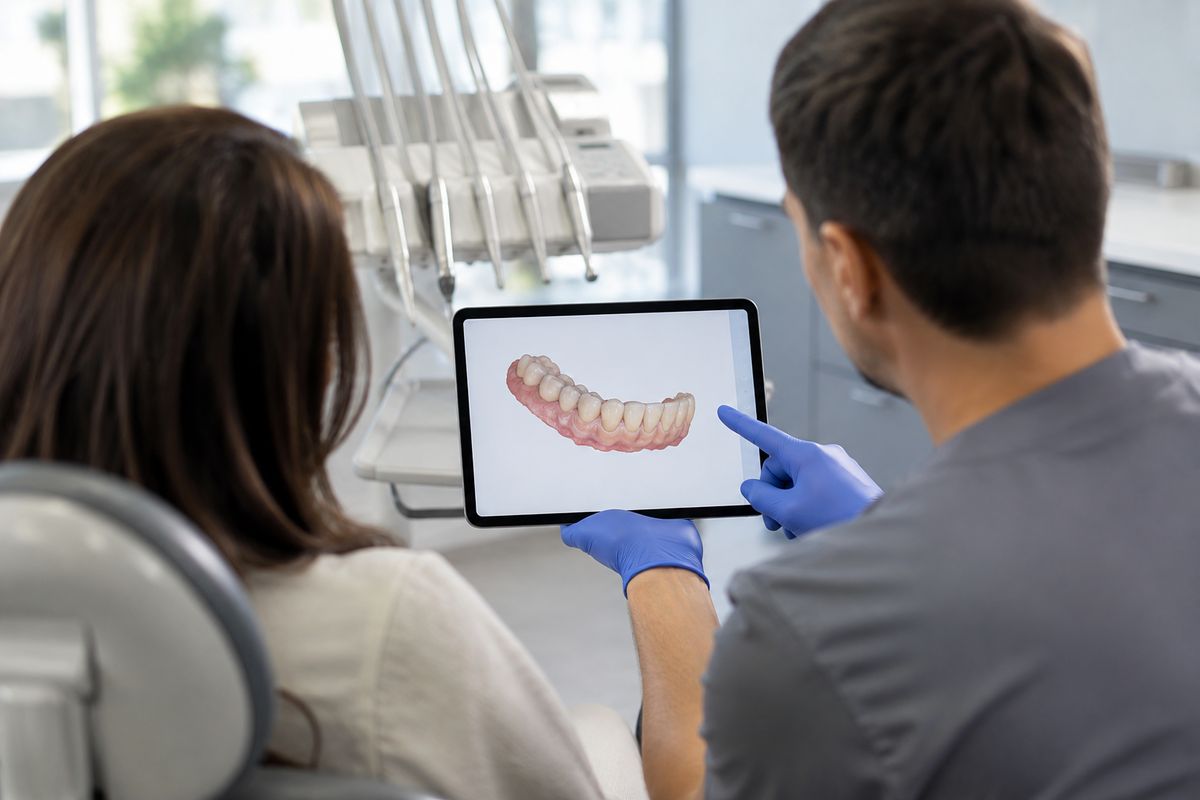
Effective communication is crucial when obtaining informed consent for digital dental technologies. Visual aids, such as diagrams, 3D models, and digital simulations, can help patients grasp complex procedures by transforming abstract concepts into tangible information. Studies suggest that these tools may improve patient comprehension and engagement during the consent process (S3). Plain language explanations, tailored to each patient’s knowledge level, are essential for ensuring understanding and reducing anxiety (S9). Interactive digital consent platforms—featuring e-signatures and multimedia content—offer a user-friendly way to present information, standardize communication, and create accurate records of consent (W5, W9). Encouraging patients to ask questions and provide feedback further supports a collaborative, patient-centred approach, fostering trust and shared decision-making in digital dentistry (W8).
Case Examples: Consent for Intraoral Scanners and Digital Anesthesia
When introducing intraoral scanners such as the Medit Intraoral Scanner or Panda Intraoral Scanner, clinicians should explain their purpose (digital impressions), potential benefits (comfort, speed), and any limitations per manufacturer guidance. Patients often ask about accuracy, data use, or whether traditional impressions are still an option. For digital anesthesia devices like Soga Digital Anesthesia and Topmed Digital Anesthesia, address misconceptions about pain, safety, and manual oversight. Best practice guidelines and some manufacturer instructions suggest discussing device limitations and clarifying that clinician judgment remains essential. Effective consent includes visual explanations, plain language, and documenting patient understanding, as recommended in recent reviews (S3, S4).
| Technology | Key Disclosure Points | Common Patient Questions |
|---|---|---|
| Intraoral Scanner | Purpose, benefits, limitations, alternatives | Accuracy, comfort, data privacy |
| Digital Anesthesia | How it works, safety, manual oversight | Pain, reliability, device role |
Documenting and Auditing the Consent Process
Transitioning to digital consent forms offers several advantages for dental clinics adopting new technologies. Electronic forms create a clear, time-stamped record of patient consent, which can be obtained either in-person or remotely, and help practices maintain accurate documentation for compliance and audit purposes (W3, W5). To further support transparency, digital consent platforms often include audit trails that track changes, signatures, and updates to consent documents.
Maintaining data privacy and confidentiality is critical when handling digital records. Clinics must ensure that patient information is securely stored and access is strictly controlled, in line with professional and legal standards (S4, W7). As dental technologies and associated risks evolve, it is essential to periodically review and update consent materials to reflect new procedures, device updates, or regulatory changes, ensuring ongoing patient understanding and protection (S4, W7).
Addressing Common Challenges and Patient Concerns
Introducing new dental technologies often heightens patient anxiety, particularly when tools like AI or digital devices are unfamiliar. Evidence suggests that empathetic, clear communication is critical for alleviating this anxiety and fostering a collaborative environment for informed consent (S1). When patients have concerns about artificial intelligence, data privacy, or device safety, clinicians should transparently explain the technology’s purpose, the role of AI in their care, and the safeguards in place for data security. Ensuring patients understand that AI tools operate under clinician supervision can improve their trust and comfort (W2, S10). It is also important to revisit consent discussions whenever there are significant technology updates or new findings, so patients remain informed and can renew their consent as needed (S5). Proactive, patient-centred dialogue helps address uncertainties and supports ongoing trust in the dental care process.
Conclusion
Establishing a structured, patient-centred consent process is essential as dental technologies advance and clinical workflows become more digital. Informed consent is not merely a regulatory requirement—it is a dynamic, ongoing communication process that supports patient autonomy, trust, and safety (S4). Clear, empathetic dialogue tailored to each patient’s needs helps reduce anxiety and fosters collaborative decision-making (S1, S8). Regular team training and periodic review of consent protocols are recommended to ensure that all staff stay current with evolving technologies and legal standards (S4, S8).
- Use plain language and visual aids to explain new technologies.
- Actively assess patient understanding and invite questions.
- Document the consent process thoroughly, not just the signature.
- Address data privacy, device limitations, and human oversight in discussions.
- Update consent materials and team knowledge as technology evolves.
By prioritizing clear, patient-focused communication and ongoing staff education, clinics can reinforce patient trust and uphold the highest possible standards of care in digital dentistry (S1, S4, S8).
Frequently Asked Questions
What must be included in informed consent for digital dental procedures?
Patients should be informed about the procedure, its purpose, risks, benefits, alternatives, and any technology-specific considerations.
How can I ensure patients understand new dental technologies?
Use plain language, visual aids, and encourage questions to assess comprehension.
Is electronic consent valid in UAE dental clinics?
Electronic consent is increasingly accepted, provided it meets documentation and patient understanding requirements.
When should consent be revisited in digital dentistry?
Consent should be updated whenever there are significant changes in technology, procedure, or new evidence emerges.
References
- Ethical and Legal Aspect of Digital Dentistry in Conservative Dental Practice (2024)
- Transforming dental care through empathetic and clear communication: A comprehensive review and implementation framework (2026)
- … : a digital transformation tool to enhance the patient consent process in oral surgery: Augmented reality: a digital transformation tool to enhance the patient consent … (2025)
Last updated: 2026-11-16
Dentist, Iran Medical Council registration No. 233463 · Last reviewed: 16 November 2026
Nutrident educational content is based on credible sources and reviewed under his supervision. This article is for professional education and does not replace clinical examination or the judgement of the treating dentist.