




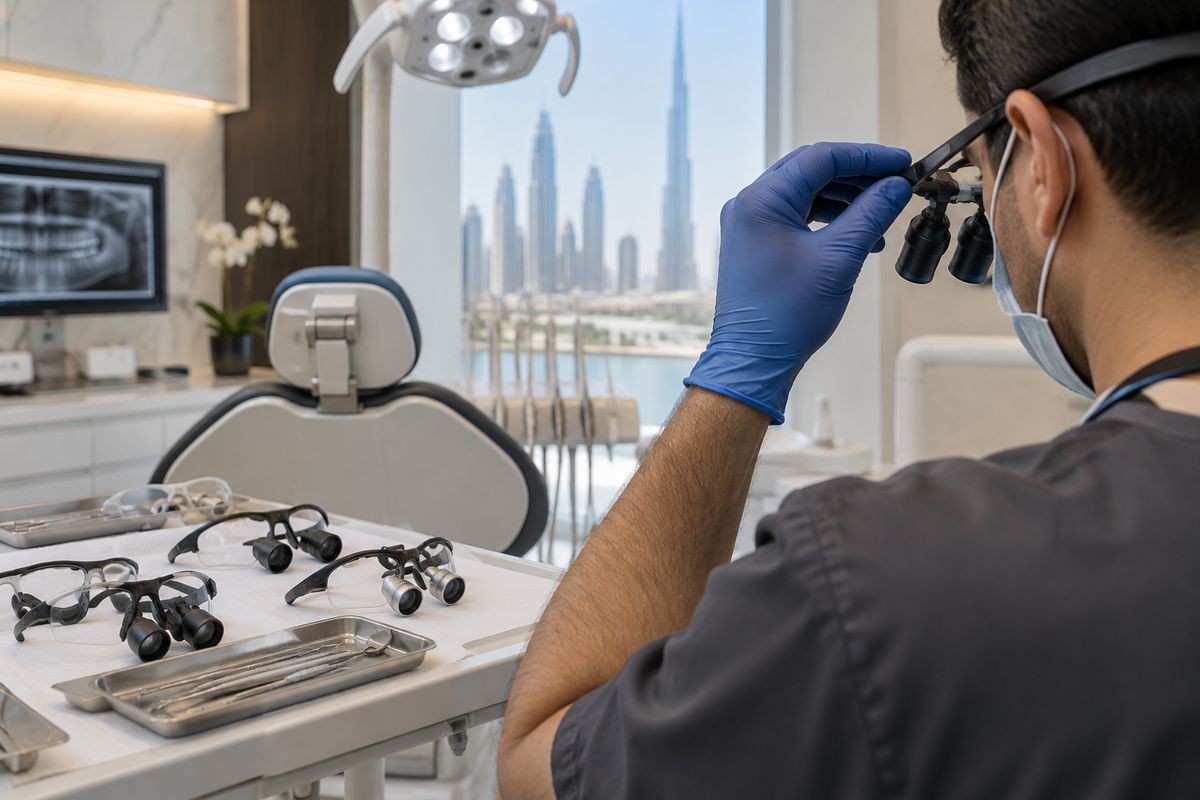
Selecting the ideal magnification for dental loupes is a critical decision that directly impacts both clinical outcomes and practitioner ergonomics. The right level of magnification may enhance visibility of fine details, support more precise procedures, and contribute to improved posture during treatment sessions (S4, W4). However, the choice of magnification is not one-size-fits-all; it depends on factors such as the type of dental procedure, the clinician’s experience, and the specific demands of the clinical setting (W2, W5).
This guide is designed to help UAE dentists—and their international colleagues—navigate the practical considerations and current evidence for selecting loupe magnification. By synthesizing research findings and manufacturer recommendations, it aims to support informed, context-specific decisions that balance clinical needs, ergonomic health, and workflow efficiency.
Understanding Dental Loupe Magnification: Key Concepts
Magnification in dental loupes is indicated by a number followed by “x” (such as 2.5x, 3.5x, or 4.5x), representing how many times larger the viewed object appears compared to the naked eye. In dental practice, commonly available magnification levels range from 2.5x to 6x, with most clinicians selecting between 2.5x and 4.5x for routine procedures (W8). Higher magnification provides greater detail but comes with a reduced field of view and a shallower depth of field, meaning less of the operative area is visible and in focus at once (W10). Evidence suggests that using dental loupes can enhance visibility and may improve clinical performance, especially for tasks requiring precision, such as cavity preparation (S1, S4). In the UAE, brands like Lumadent, Surgitel, and Amtech offer loupes in these typical magnification ranges, supporting a variety of procedural needs (W10).
Clinical Performance and Magnification: What the Evidence Shows
Recent systematic reviews and studies indicate that the use of dental loupes may enhance clinical performance in several aspects. Evidence suggests that magnification can improve the accuracy of cavity preparation, particularly among undergraduate dental students, by aiding in the distinction of margins and reducing preparation errors (S1, S3, S4). Enhanced visibility provided by loupes is associated with improved treatment quality and may contribute to better professional health by promoting ergonomic posture (W4). However, the degree of benefit appears to depend on user experience; undergraduate students often show more pronounced improvements, while experienced clinicians may see subtler gains. The literature supports integrating loupe magnification into dental education, though outcomes can vary based on task complexity and user adaptation (S1, S3). Overall, the evidence points to a positive association between magnification and treatment quality, especially for less experienced operators, without guaranteeing universal improvement in all scenarios.
Magnification Selection by Procedure: General, Endodontic, and Surgical Use Cases
Choosing the optimal dental loupe magnification depends on the clinical procedure and user needs. For general dentistry, 2.5x to 3.5x magnification is commonly recommended, offering a balance between enhanced visibility and a workable field of view (W6, W10). In endodontics, higher magnification—typically 4x to 5x—may help clinicians identify fine anatomical details and improve precision during procedures such as locating calcified canals (W2, S2). Surgical applications, including implantology and microsurgery, often benefit from magnification levels of 5x or above, where increased detail is crucial, though this comes with a reduced field of view and depth of field (W2, W6). Lower magnification is generally preferred for routine examinations and restorative work, as it reduces eye strain and allows for a broader view of the operating field. In contrast, higher magnification is reserved for tasks requiring meticulous detail but may require more experience and adaptation.
| Procedure | Recommended Magnification | Key Benefit | Possible Limitation |
|---|---|---|---|
| General Dentistry | 2.5x–3.5x | Good balance of field and detail | May miss fine details |
| Endodontics | 4x–5x | Enhanced detail for canals | Narrower field, adaptation needed |
| Surgical/Implant | 5x and above | Maximum precision | Small field, shallow depth |
Comparing 2.5x vs 3.5x Loupes: Practical Implications
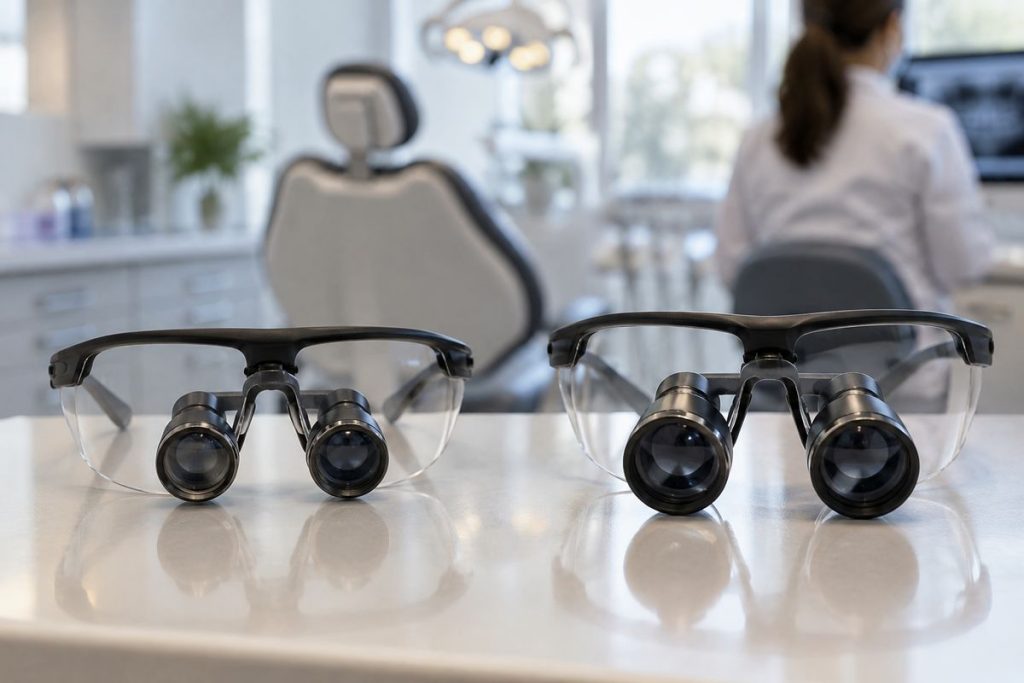
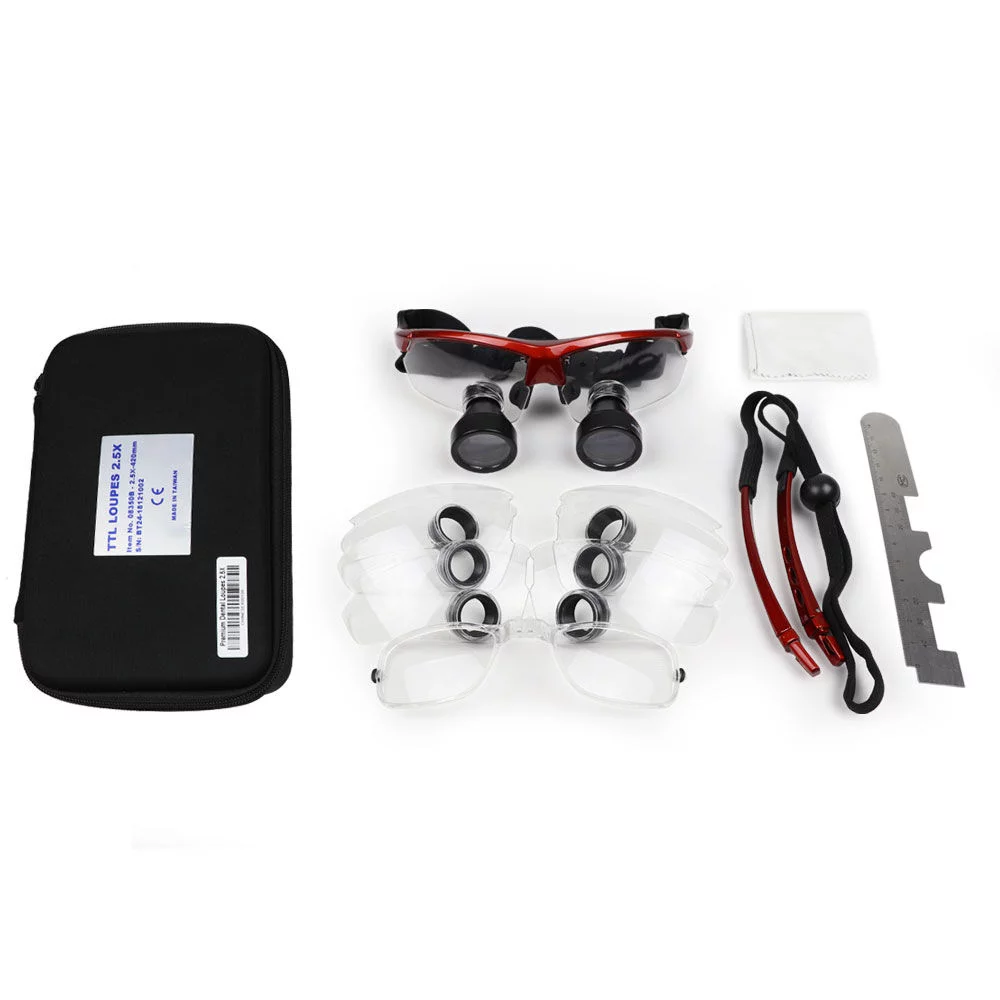
When selecting between 2.5x and 3.5x dental loupes, it is essential to weigh the trade-offs in field of view, depth of field, and clinical utility. 2.5x loupes, such as the Premium TTL Dental Loupes 2.5X (420mm Working Distance), offer a wider field of view and greater depth of field, supporting easier visual orientation and instrument handling—particularly beneficial for new users and general dental procedures (W5). In contrast, 3.5x loupes, like the Dental Binocular Loupes with 3.5X High Quality Magnification, provide enhanced detail, which may support more precise work in endodontic or surgical contexts, though with a narrower field and shallower depth (W6). Manufacturer guidance and academic recommendations often suggest starting with 2.5x for beginners and progressing to 3.0–3.5x as confidence and procedural demands increase (W5, W10).
| Feature | 2.5x Loupes | 3.5x Loupes |
|---|---|---|
| Field of View | Wider | Narrower |
| Depth of Field | Greater | Reduced |
| Recommended For | General dentistry, beginners | Detail work, advanced users |
| Example Product | Premium TTL Dental Loupes 2.5X | Dental Binocular Loupes 3.5X |
Product Options in the UAE: Lumadent, Surgitel, Amtech and More
UAE dentists have access to a diverse range of dental loupes from internationally recognised brands, including Lumadent Loupe, Surgitel Loupe, and Amtech Loupe. These brands typically offer magnification options spanning from 2.5x to higher levels (such as 3.5x and above), addressing the varied needs of general practice, endodontics, and surgical procedures. When selecting a loupe model, practical considerations include the intended clinical applications, the user’s prior experience with magnification, and the ergonomics of the frame and optics. Many UAE practitioners also weigh factors such as after-sales support, product availability, and compatibility with additional accessories like headlights. Trialing different magnifications and frame types is recommended to ensure comfort and optimal visual performance for daily clinical practice.
Step-by-Step Workflow for Selecting Dental Loupe Magnification
Choosing the right loupe magnification involves a structured approach. Start by assessing your primary procedures: general dentistry often benefits from lower magnification (e.g., 2.5x) for a wider field of view, while endodontic and surgical cases may require higher magnification for enhanced detail. Next, consider your experience level; first-time users are generally advised to select lower magnification loupes, as these offer greater depth of field and are easier to adapt to (W5). Ergonomics are critical: ensure the loupe’s working distance and declination angle support a neutral posture. Product availability also matters—trialing several models and magnifications, when possible, helps identify a suitable fit. Adjusting to new loupes requires a gradual increase in use and familiarization with the altered visual field. Finally, proper fitting and ongoing maintenance are essential for sustained comfort and optical performance. For detailed fitting guidance, refer to the Dental Loupe Fitting Guide (W9).
Summary Table: Loupe Magnification Selection by Clinical Need
Choosing the correct loupe magnification depends on the clinical procedure, user experience, and the desired balance between detail and field of view. The table below summarizes recommended magnification ranges for common dental scenarios, their main advantages and limitations, and example products available in the UAE.
| Clinical Scenario | Recommended Magnification | Pros | Cons | Example UAE Product |
|---|---|---|---|---|
| General Dentistry | 2.5x–3.5x | Wide field of view, easier adaptation, suitable for most daily procedures | Less fine detail than higher magnifications | Premium TTL Dental Loupes 2.5X (420mm Working Distance) |
| Endodontics | 3.5x–4.5x | Enhanced detail for canal location and instrumentation | Narrower field and depth of view, may require more adaptation | Endoking Dental Loupes With Frame ( LED Headlight Free ) |
| Surgery/Implants | 4.5x–6x+ | High precision for microsurgical tasks | Smallest field and depth of view, steep learning curve | Contact supplier for high-magnification options |
Conclusion
Selecting the appropriate dental loupe magnification is a key step toward improving clinical outcomes and practitioner ergonomics. Evidence indicates that matching magnification to the specific procedure and the user’s experience level can enhance visibility and may support treatment quality (S4, S1). For UAE dentists, a practical, evidence-informed approach ensures that the chosen loupe supports both daily general dentistry and more specialised procedures such as endodontics or surgery.
To make a suitable choice, consider the following checklist:
- Assess the primary procedures performed and their visual demands.
- Take into account your own experience with magnification tools.
- Balance the need for detail (higher magnification) with field of view and depth of field (lower magnification).
- Trial different magnifications when possible before purchasing.
- Ensure proper fitting and regular maintenance for long-term comfort and performance (W9).
As clinical needs and technology evolve, ongoing evaluation and adaptation of dental loupe magnification will help UAE dentists maintain high standards of care and practitioner well-being.
Frequently Asked Questions
What magnification is best for dental loupes?
The appropriate magnification depends on the procedure and user experience; 2.5x–3.5x is commonly recommended for general dentistry, while higher magnification may be considered for endodontics or microsurgery.
Is 2.5x or 3.5x magnification better for dentistry?
2.5x offers a wider field of view and is often preferred by beginners, while 3.5x provides more detail for experienced users or fine procedures.
Can I use high-magnification loupes for all procedures?
Higher magnification can limit field of view and depth of field, making them less suitable for general procedures or those requiring broader visualization.
How do I know if my loupe magnification is appropriate?
If you can work comfortably, see fine details without eye strain, and maintain good posture, your magnification is likely well matched to your needs.
References
- The impact of magnification on undergraduate dental students’ performance during cavity preparations: A systematic review (2024)
- Effect of the use of dental loupe on cavity size after removal of the aged composite resin restorations (2022)
- The impact of magnification on undergraduate dental students’ performance during cavity preparations: A systematic review (2024)
Last updated: 2026-11-25
Related products at Nutrident


Dentist, Iran Medical Council registration No. 233463 · Last reviewed: 25 November 2026
Nutrident educational content is based on credible sources and reviewed under his supervision. This article is for professional education and does not replace clinical examination or the judgement of the treating dentist.