




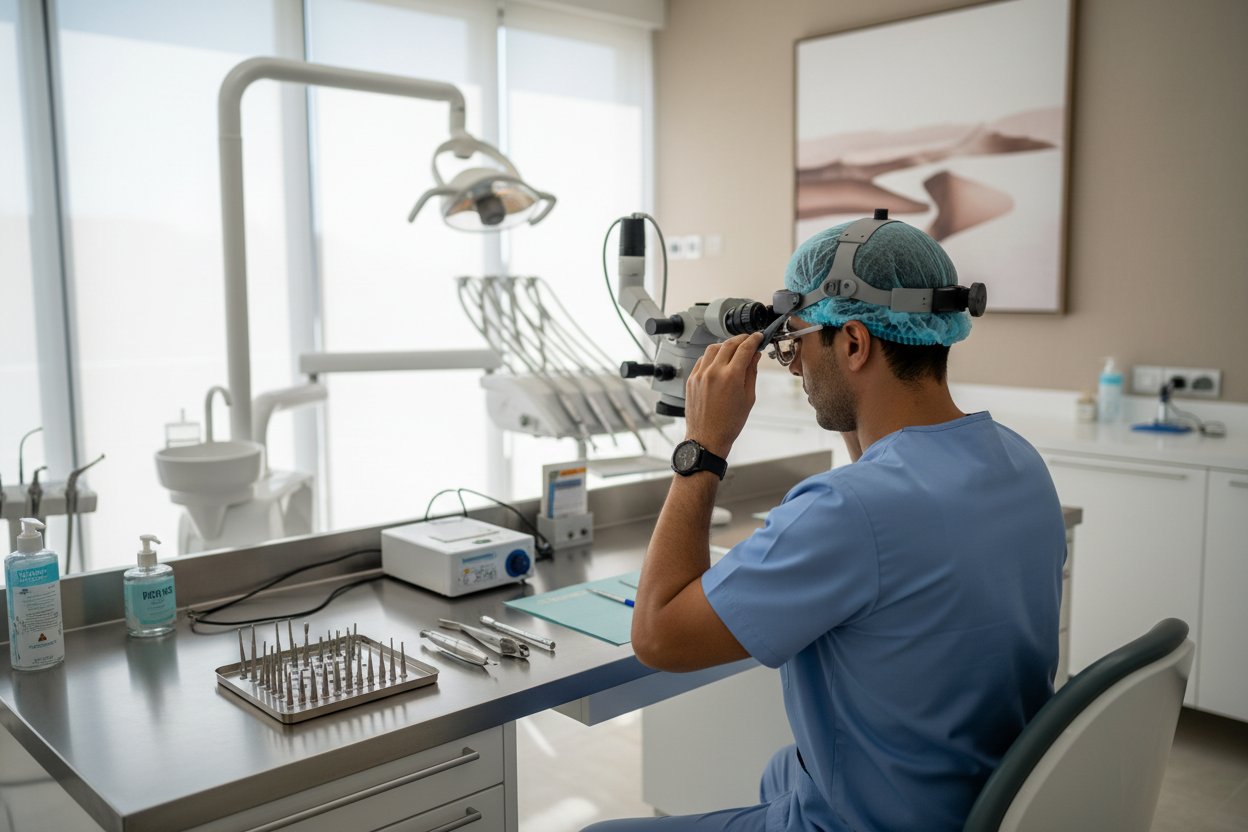
Choosing the right dental loupe for endodontic and microsurgical procedures requires careful consideration of the unique visual and ergonomic demands of these specialties. For UAE dentists, the selection process goes well beyond simply picking a magnification level—factors such as field of view, depth of field, working distance, and integration with clinic workflow all are important considerations in ensuring clinical precision and operator comfort. Evidence suggests that appropriate loupe selection can enhance procedural accuracy, improve ergonomics, and support better posture, which is especially relevant for the detailed work required in endodontics and microsurgery (S2, W2, W1).
This article provides a practical, stepwise approach for UAE clinicians, outlining how to match loupe features to specific procedural needs. We will address workflow integration, ergonomic considerations, and optical quality, guiding you through evidence-based criteria and practical tips for successful loupe adoption in the UAE dental setting.
Clinical Demands: Why Procedure Matters in Loupe Selection
Endodontic and microsurgical dental procedures require a level of visual acuity and precision that goes beyond standard restorative or preventive care. These treatments often involve working in confined spaces, identifying minute anatomical details such as canal orifices, microfractures, or accessory canals, and performing delicate manipulations that demand enhanced visibility. Unlike general dentistry, where lower magnification may suffice, both endodontics and microsurgery typically call for higher magnification and a narrower but more detailed field of view to support accuracy and clinical outcomes.
Evidence indicates that the use of dental loupes in endodontic and microsurgical settings can improve operating view, accuracy, and ergonomics, contributing positively to treatment results and practitioner comfort. Studies have reported that appropriate loupe use is associated with enhanced operator posture and may support improved outcomes in endodontic surgery, making loupes a valuable adjunct in these contexts.
Understanding Magnification: What Level Is Appropriate?
Endodontic Loupe Magnification Ranges
For endodontic procedures, evidence suggests that loupes with magnification levels between 2.5x and 4.0x are commonly used, offering a balance between visibility and practical workflow. Studies indicate that 2.5x is the most frequently used setting, providing sufficient detail for most endodontic tasks while supporting ergonomic posture and operator comfort (S3). Higher magnifications can improve visualisation but may reduce the field of view and depth of field, which are essential for efficient movement and orientation during procedures (S3).
Microsurgery Magnification Needs
Microsurgical procedures may require magnifications up to 6.0x, as greater detail is often necessary for precise manipulation of tissues (S3). However, excessive magnification can limit the field of view and depth of field, potentially hindering workflow by making it more difficult to maintain focus and spatial awareness (S3). Selecting the appropriate magnification should therefore consider both the visual requirements and the practical aspects of the procedure.
| Procedure | Recommended Magnification | Field of View | Depth of Field |
|---|---|---|---|
| Endodontics | 2.5x–4.0x | Moderate–Wide | Moderate |
| Microsurgery | Up to 6.0x | Narrower | Reduced |
Ergonomics and Workflow Integration in UAE Dental Clinics
Posture, Fatigue, and Productivity
Integrating dental loupes into endodontic and microsurgical practice offers clear ergonomic advantages. Evidence indicates that using magnifying loupes can significantly improve operator posture, supporting a more upright and natural working position and potentially reducing neck and back strain (W9). Studies also suggest that appropriate loupe use may help prevent or mitigate musculoskeletal issues by encouraging correct seating and reducing the need for repetitive, awkward movements (S2, W2, S7).
For UAE clinics, practical workflow integration involves an adaptation period, as clinicians and staff adjust to new visual perspectives and working distances. Operator training and careful selection of loupe specifications are essential for maximising ergonomic benefits and minimising fatigue (W10). Ongoing support and periodic reassessment can further enhance comfort and productivity, ensuring that the use of loupes becomes a seamless part of daily clinical routines.
Key Dental Loupe Selection Criteria: A Practical Checklist
Optical, Mechanical, and Clinical Factors
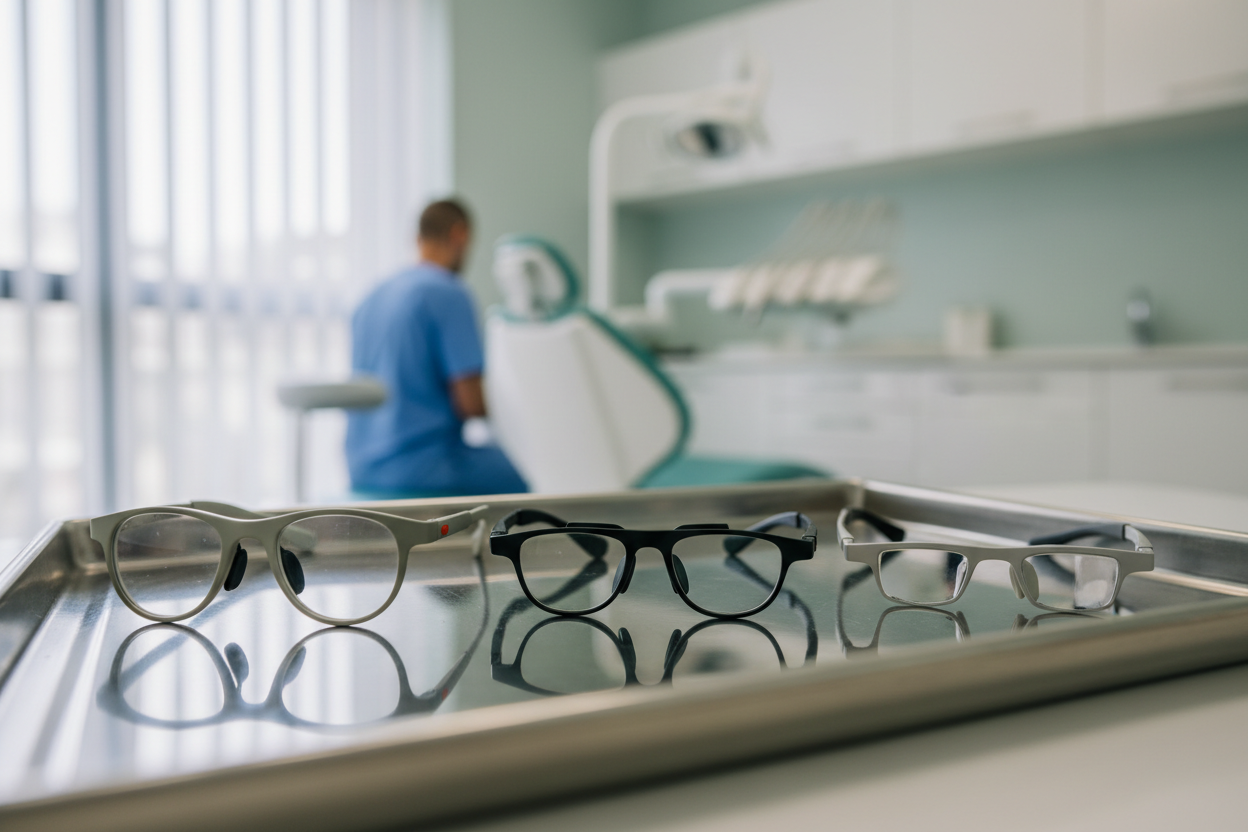
When choosing dental loupes for endodontic and microsurgical procedures, several criteria directly impact clinical performance and operator comfort. Magnification is central—evidence suggests 2.5x to 4.0x is suitable for endodontics, while microsurgery may require up to 6.0x, but higher magnification often reduces field of view and depth of field, affecting workflow (see prism vs. Galilean loupes) [S3]. Field of view and depth of field influence visibility and ease of movement; a balance is needed to avoid frequent repositioning [S7][W3]. Working distance should match the operator’s posture to promote ergonomics and reduce fatigue [S2]. Frame type and weight affect comfort during long procedures, while illumination compatibility is essential for visual clarity, especially in deep or narrow fields [S3][W5]. Trial and fitting are crucial, as individual anatomical differences can affect the effectiveness and comfort of any loupe system [W3].
Comparing Leading Loupe Brands: Lumadent, Surgitel, and Amtech
Product Features and Clinical Suitability
For UAE dentists performing endodontic and microsurgical procedures, Lumadent Loupe, Surgitel Loupe, and Amtech Loupe are all established options. Each brand offers models suitable for field magnification in dental treatments, supporting the visual precision required for these specialties. While specific optical designs and configurations may vary, all three brands offer models compatible with magnification ranges suitable for endodontic (typically 2.5x–4.0x) and microsurgical (up to 6.0x) needs. Their typical configurations often include adjustable working distances and are compatible with auxiliary illumination systems, supporting ergonomic and workflow considerations. The table below summarises their main comparative features relevant to endodontic and microsurgical use.
| Brand | Application Focus | Magnification Range | Optical Design | Illumination Compatibility |
|---|---|---|---|---|
| Lumadent Loupe | Dental field magnification | 2.5x–6.0x (typical) | Adjustable, procedure-oriented | Compatible |
| Surgitel Loupe | Dental field magnification | 2.5x–6.0x (typical) | Adjustable, procedure-oriented | Compatible |
| Amtech Loupe | Dental field magnification | 2.5x–6.0x (typical) | Adjustable, procedure-oriented | Compatible |
Practical Workflow Tips for UAE Dentists Adopting Loupes
Adaptation, Maintenance, and Team Training
Integrating dental loupes into endodontic or microsurgical workflows requires a structured approach. Dentists should expect a short adaptation period to adjust to magnification and working distance, as optimal posture and comfort depend on correct loupe selection and habitual use (W10). Regular staff training sessions can help the clinical team understand loupe handling, cleaning, and storage protocols, which is especially important in the UAE’s warm climate where humidity and dust may affect optical surfaces.
Routine maintenance—such as lens cleaning and periodic frame checks—ensures sustained optical quality. Supplier support is valuable for troubleshooting and ordering replacement parts. Evidence suggests that with consistent loupe use, clinicians may experience improved ergonomics and reduced operator fatigue over time, even if initial adaptation is needed (W9, S2). Ultimately, embedding loupes into daily workflow can contribute to more comfortable and precise procedures.
Summary Table: Loupe Selection Decision Guide for Endodontics & Microsurgery
Choosing the correct dental loupe for endodontic or microsurgical procedures requires balancing magnification, field of view, ergonomics, and illumination compatibility. The table below matches typical procedure types with recommended magnification levels and key selection factors, and provides sample configurations from leading brands such as Lumadent Loupe, Surgitel Loupe, and Amtech Loupe.
| Procedure Type | Recommended Magnification | Field of View / Depth | Ergonomics | Illumination | Sample Configurations |
|---|---|---|---|---|---|
| Endodontics | 2.5x–4.0x | Moderate; balance detail and overview | Supports upright posture | Compatible with fiber optic headlights | Lumadent Loupe 3.0x, Surgitel Loupe 3.5x, Amtech Loupe 2.5x |
| Microsurgery | 4.0x–6.0x | Narrower; maximises fine detail | Critical for precision tasks | High-intensity illumination recommended | Lumadent Loupe 4.5x, Surgitel Loupe 5.5x, Amtech Loupe 4.0x |
Trial fittings and user adaptation are recommended for optimal comfort and clinical outcomes.
Conclusion
Choosing the right dental loupe for endodontic and microsurgical procedures is a key factor in achieving clinical precision and maintaining operator comfort. As outlined, procedure-specific selection—considering magnification, field of view, and ergonomics—directly influences outcomes in these demanding disciplines. Evidence suggests that appropriate loupe use may improve visualization, enhance posture, and reduce musculoskeletal strain, supporting both clinical accuracy and long-term practitioner health (S2, S9, W2).
For UAE dentists, integrating loupes into daily workflow requires attention to adaptation, staff training, and compatibility with clinic infrastructure. Trialling different models and configurations, ideally with supplier support, is essential for optimal fit and functionality.
Practical Checklist:
- Match magnification level to procedure type (e.g., 2.5x–4.0x for endodontics, up to 6.0x for microsurgery)
- Assess field of view, depth of field, and working distance
- Prioritize ergonomic design and comfortable posture
- Ensure compatibility with illumination and clinic workflow
- Trial and fit loupes before final selection
By applying these evidence-based criteria and engaging with suppliers, UAE dentists can enhance both clinical results and practitioner wellbeing.
Frequently Asked Questions
What magnification is recommended for endodontic loupes?
Studies suggest a range of 2.5x to 4.0x magnification is commonly used for endodontic procedures.
Are higher magnification loupes always better for microsurgery?
Not necessarily; higher magnification can reduce field of view and depth of field, so selection should match the procedure’s needs.
How do I know if a loupe fits me ergonomically?
A proper ergonomic fit allows you to maintain a neutral posture without strain; a trial fitting is recommended.
Is there a difference between loupes for general dentistry and for endodontics or microsurgery?
Yes, endodontic and microsurgical procedures often require higher magnification, better illumination, and precise ergonomics.
References
- The advantages of the dental operative microscope in restorative dentistry (2020)
- Use of dental loupes among dental trainers and trainees in the UK (2013)
- Zooming into Precision: Power of Magnification in Dental Education (2027)
Last updated: 2026-10-28
Dentist, Iran Medical Council registration No. 233463 · Last reviewed: 28 October 2026
Nutrident educational content is based on credible sources and reviewed under his supervision. This article is for professional education and does not replace clinical examination or the judgement of the treating dentist.